Why a Glossary, and How to Use It
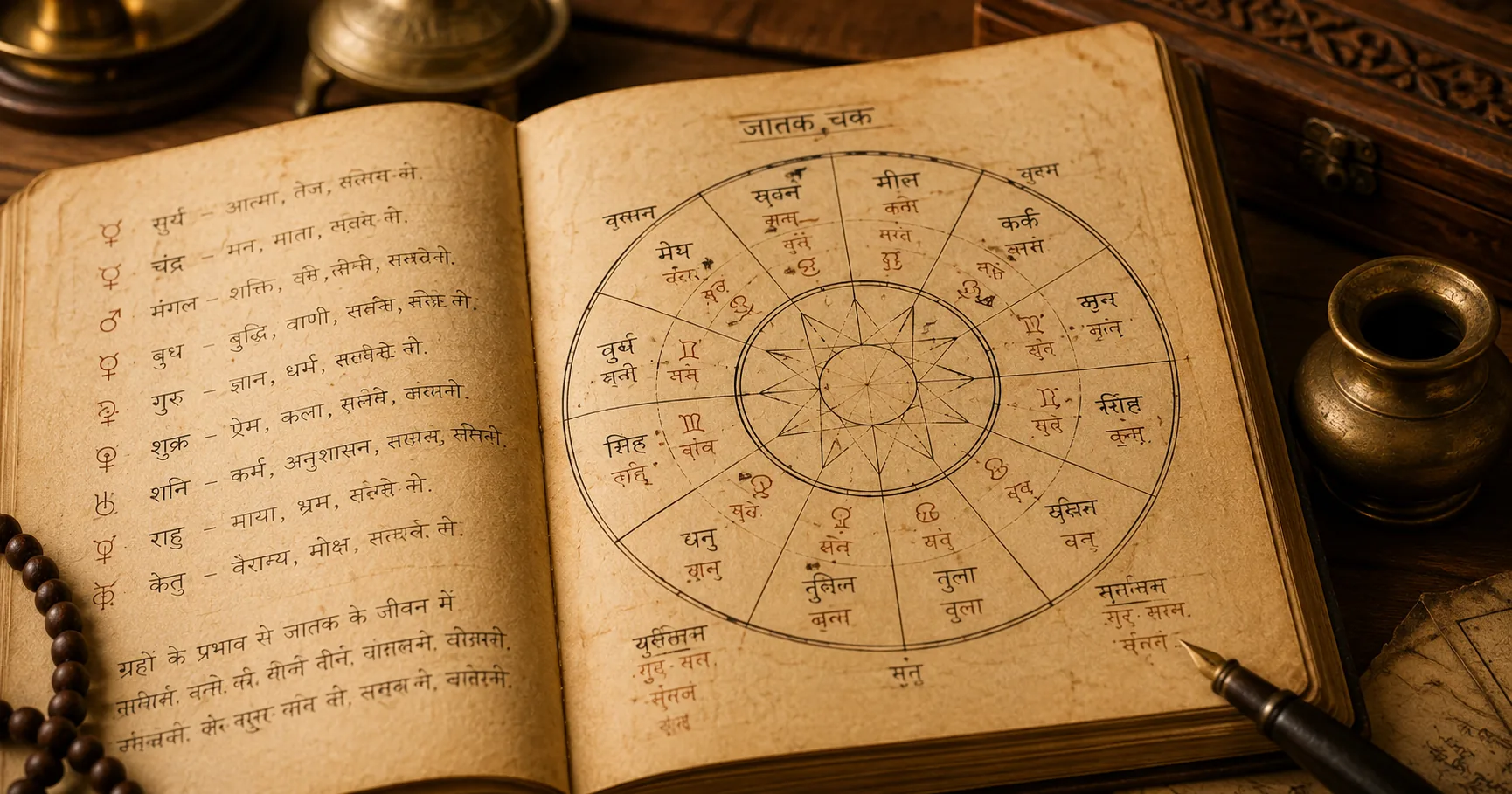
Vedic astrology has its own vocabulary, and most confusion for beginners comes not from the ideas themselves but from unfamiliar terms used without explanation. This glossary collects the 30 terms you'll encounter most often across our blog and tools, each defined in one or two plain sentences — no Sanskrit fluency required. Bookmark this page; every Fundamentals article on the blog links back here.
Chart & Structure Terms
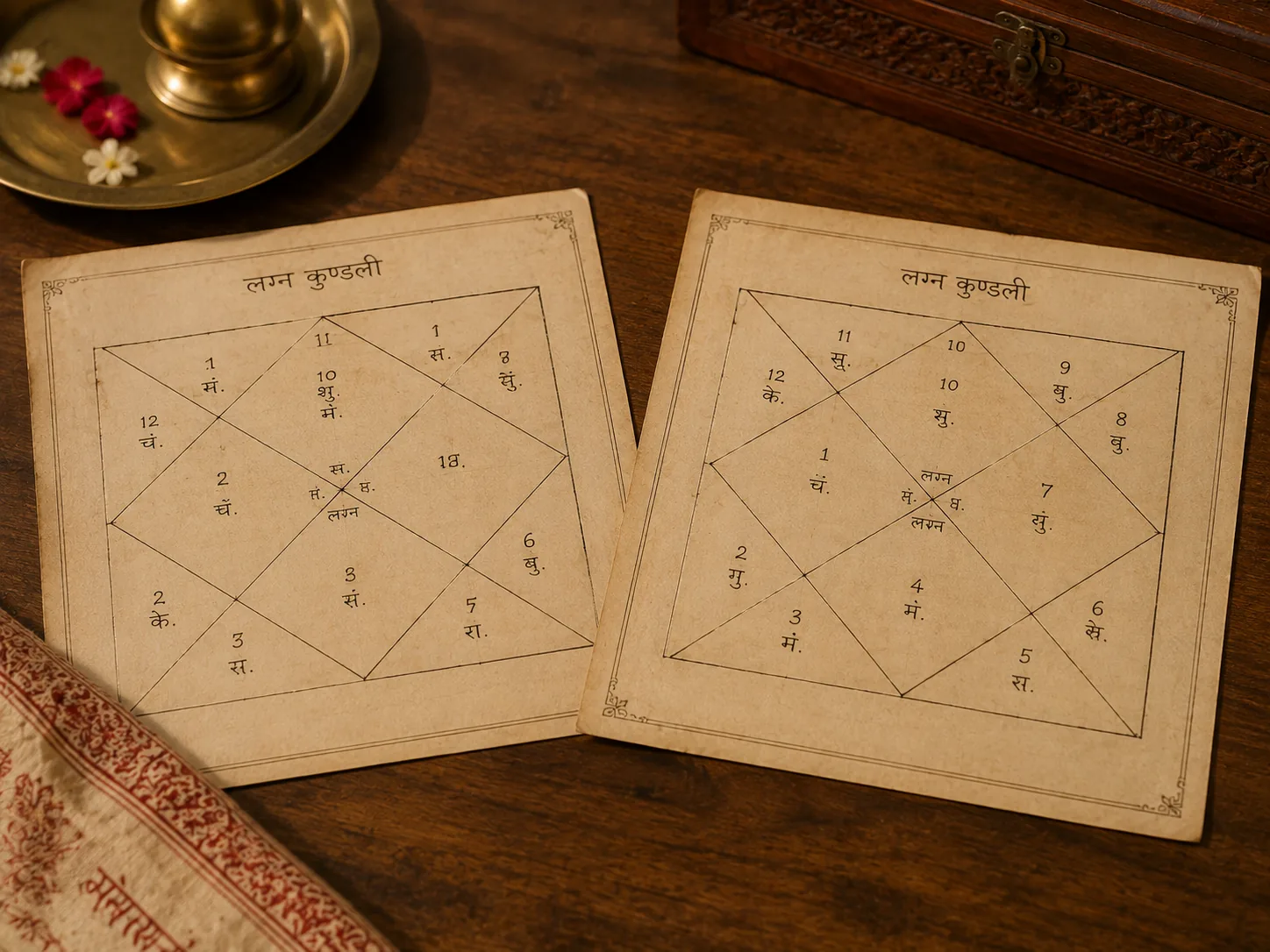
1. Kundli
Your Vedic birth chart: a map of planetary positions at your exact time, date, and place of birth.
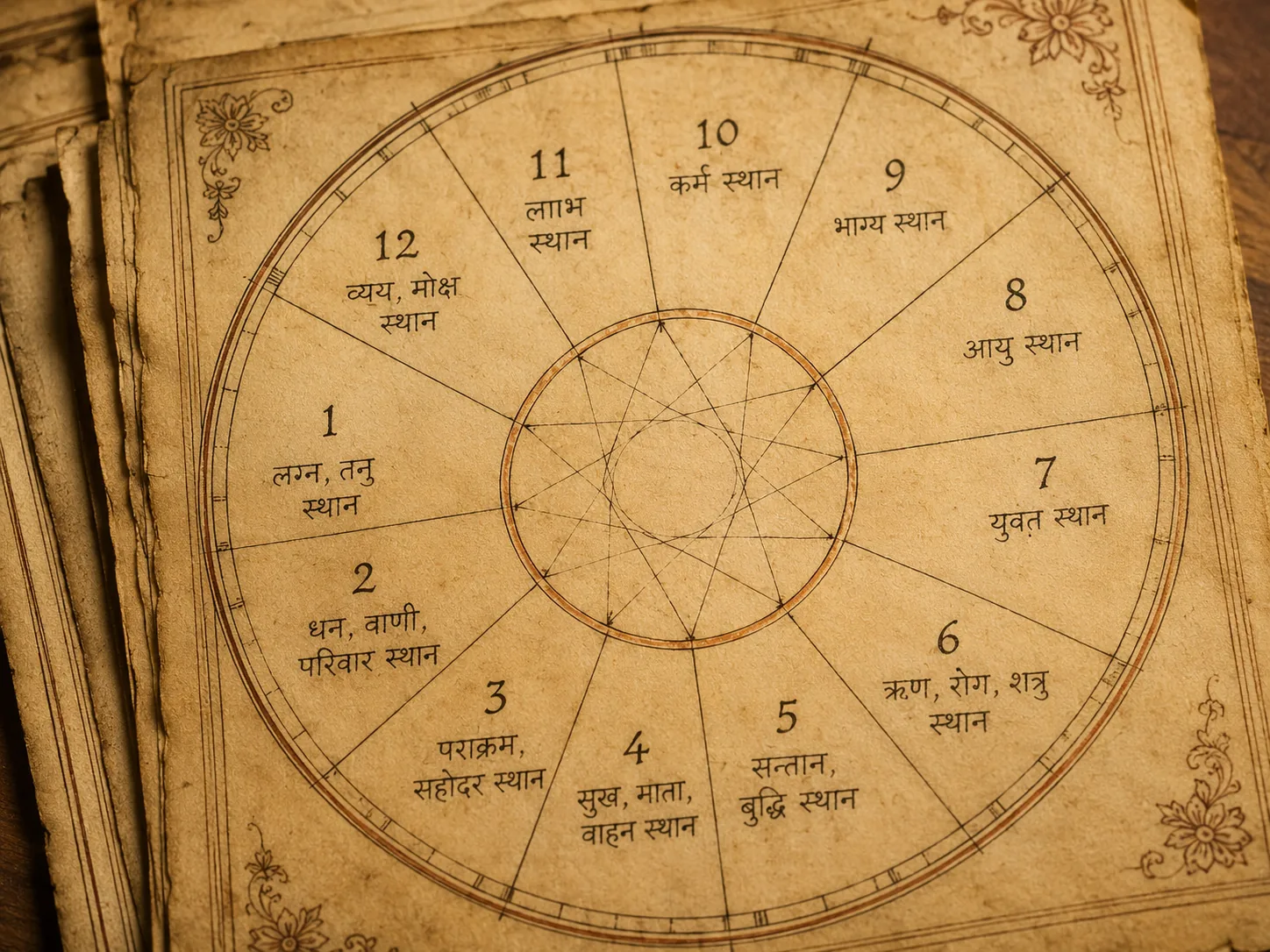
2. Bhava (House)
One of 12 divisions of the Kundli, each representing a life area such as career, relationships, or health.
3. Lagna (Ascendant)
The zodiac sign rising on the eastern horizon at your birth moment; it sets the starting point for reading your entire chart.
4. Rashi (Moon Sign)
The zodiac sign your Moon occupied at birth; in Vedic astrology, this often carries more weight than your Sun sign.
5. Navagraha
The nine "planets" used in Vedic astrology, including the Sun, Moon, and the lunar nodes Rahu and Ketu.
6. Bhava Chart vs. Rashi Chart
Two ways of mapping the same birth data: one organized by house, one by zodiac sign.
Planet & Period Terms
1. Dasha
A planetary period system that shows which planet's influence is considered dominant during a given phase of your life.
2. Mahadasha
The major (longer) planetary period within the Dasha system, often lasting several years.
3. Antardasha
A sub-period within a Mahadasha, refining the timing further.
4. Graha
The Sanskrit term for "planet" or celestial influence in Vedic astrology.
5. Rahu & Ketu
The lunar nodes, mathematical points rather than physical planets, associated with karmic themes.
6. Shadbala
A traditional method for measuring a planet's relative strength within a chart.
Sky & Timing Terms
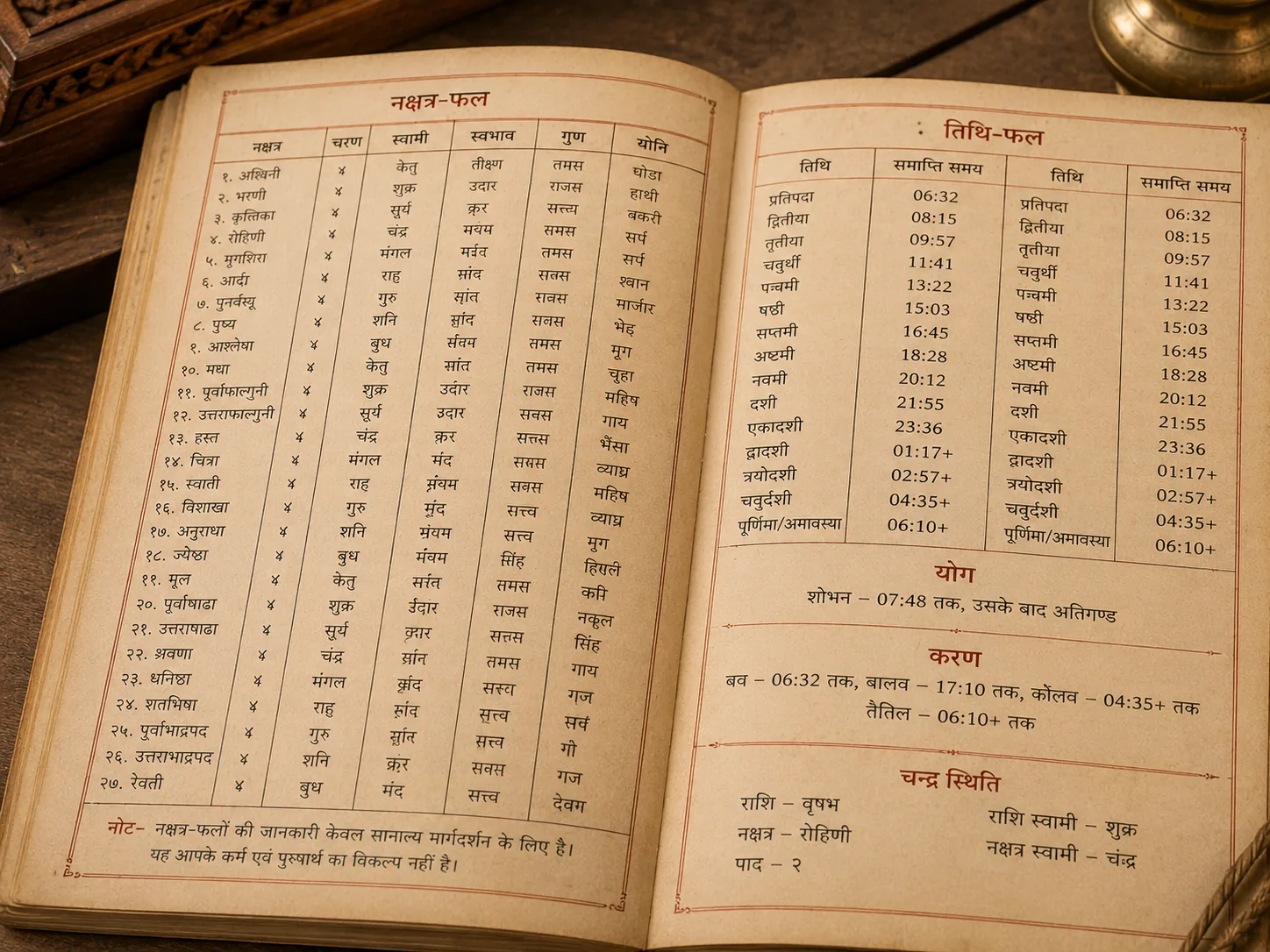
1. Nakshatra
One of 27 lunar "mansions" or segments the Moon passes through, each with its own qualities and ruling deity.
2. Panchang
The traditional Vedic almanac combining five elements — Tithi, Nakshatra, Yoga, Karana, and Vara — to determine auspicious timing.
3. Tithi
A lunar day in the Panchang, based on the angular relationship between the Sun and Moon.
4. Yoga
A calculated combination of Sun and Moon positions, distinct from "Yoga" as a planetary combination in chart reading.
5. Karana
Half of a Tithi, used for finer timing calculations in the Panchang.
6. Rahu Kaal
A daily inauspicious time window, calculated by dividing daylight hours, traditionally avoided for starting new ventures.
7. Choghadiya
A system dividing the day into auspicious and inauspicious time blocks for specific activities.
8. Muhurat
An auspicious, astrologically calculated time window for beginning an important event, such as a wedding.
Compatibility & Affliction Terms
1. Yoga (planetary combination)
A specific alignment of planets believed to produce a particular life outcome or tendency.
2. Dosha
A planetary affliction or imbalance in the chart, traditionally requiring context rather than alarm to interpret correctly.
3. Mangal Dosh (Kuja Dosha)
A specific placement of Mars believed to affect marital harmony; widely misunderstood as a guaranteed negative outcome.
4. Sade Sati
Saturn's roughly 7.5-year transit cycle relative to the natal Moon, often associated with a period of significant change.
5. Kaal Sarp Dosh
A chart condition where all planets fall between Rahu and Ketu; another commonly over-dramatized term.
6. Gun Milan (Ashtakoot Milan)
An 8-factor compatibility scoring system used in Kundli Matching for marriage compatibility.
7. Manglik
A term describing someone with Mangal Dosh in their chart, relevant to certain compatibility matching traditions.
8. Sarvashtakavarga
An advanced strength-scoring system across all planets and houses, used by more experienced practitioners.
9. Ayanamsa
The calculated offset between the sidereal (Vedic) and tropical zodiac systems, explaining why Vedic and Western astrology often place planets in different signs.
10. Vimshottari Dasha
The most commonly used Dasha system in Vedic astrology, based on a 120-year cycle.
11. Jyotish
The Sanskrit term for Vedic astrology itself, meaning "science of light."
FAQ
Q: What is the most important term to understand first in Vedic astrology?
A: Kundli — your birth chart is the foundation everything else (houses, planets, Dasha, Dosha) is read from.
Q: What's the difference between Rashi and Nakshatra?
A: Rashi is your Moon's zodiac sign (1 of 12); Nakshatra is a finer, 27-part division of the same lunar path, offering more specific detail.
Q: Is a Dosha always something to worry about?
A: No. A Dosha indicates a placement requiring context, not an automatic negative outcome — it's meant to be read alongside the rest of the chart.
Q: What does Ayanamsa mean, and why does it matter? A: Ayanamsa is the calculation gap between the sidereal system Vedic astrology uses and the tropical system Western astrology uses — it's why the same birth data can show a different sign in each system.
Conclusion
Thirty terms won't make anyone an astrologer, but they remove the single biggest barrier for beginners: not knowing what the words mean. Keep this page open alongside any Fundamentals article, and the rest of the chart starts to make sense a lot faster. Ready to see these terms in your own chart? Generate your free Kundli report and follow along with this glossary as your reference.