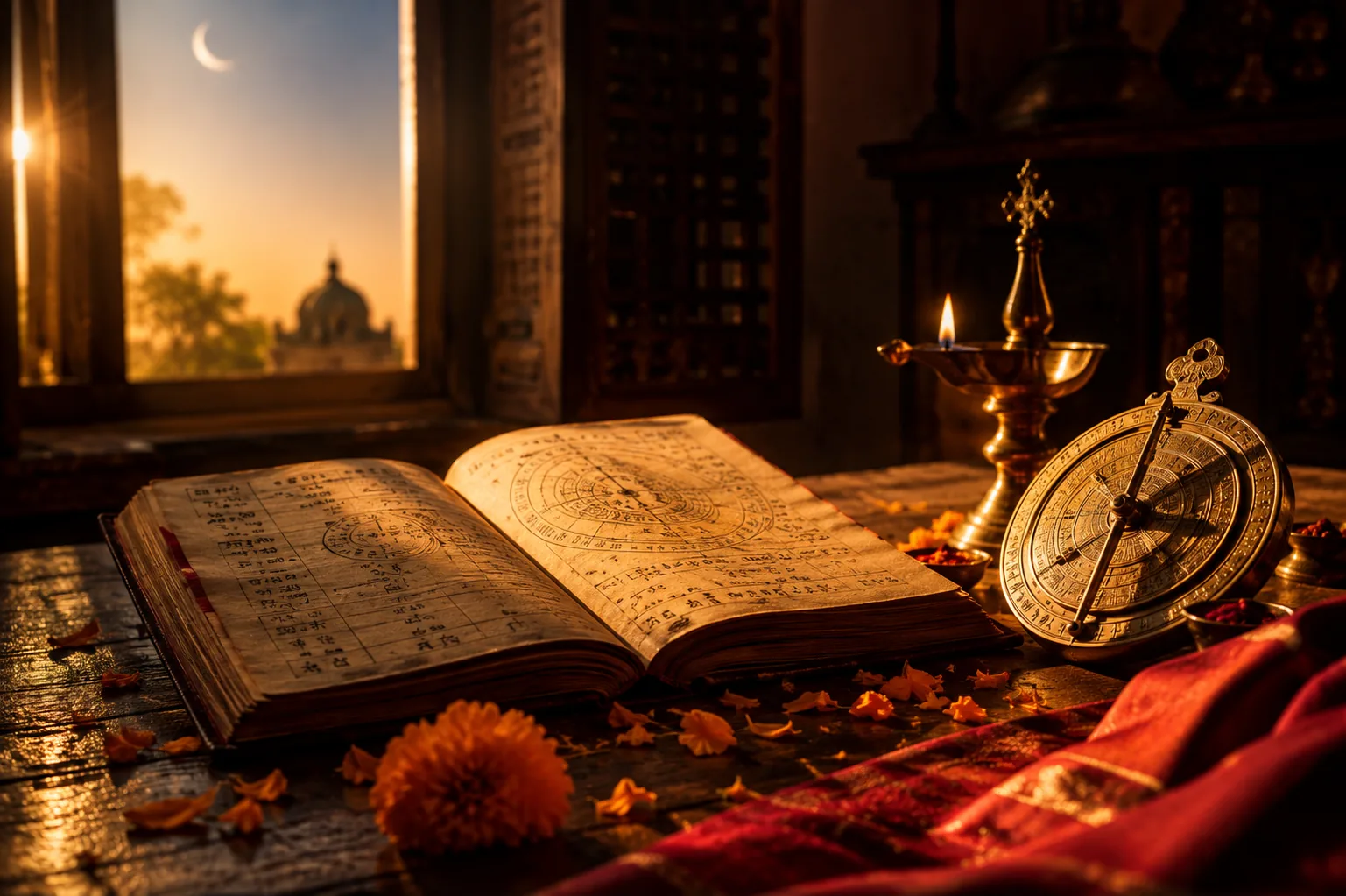
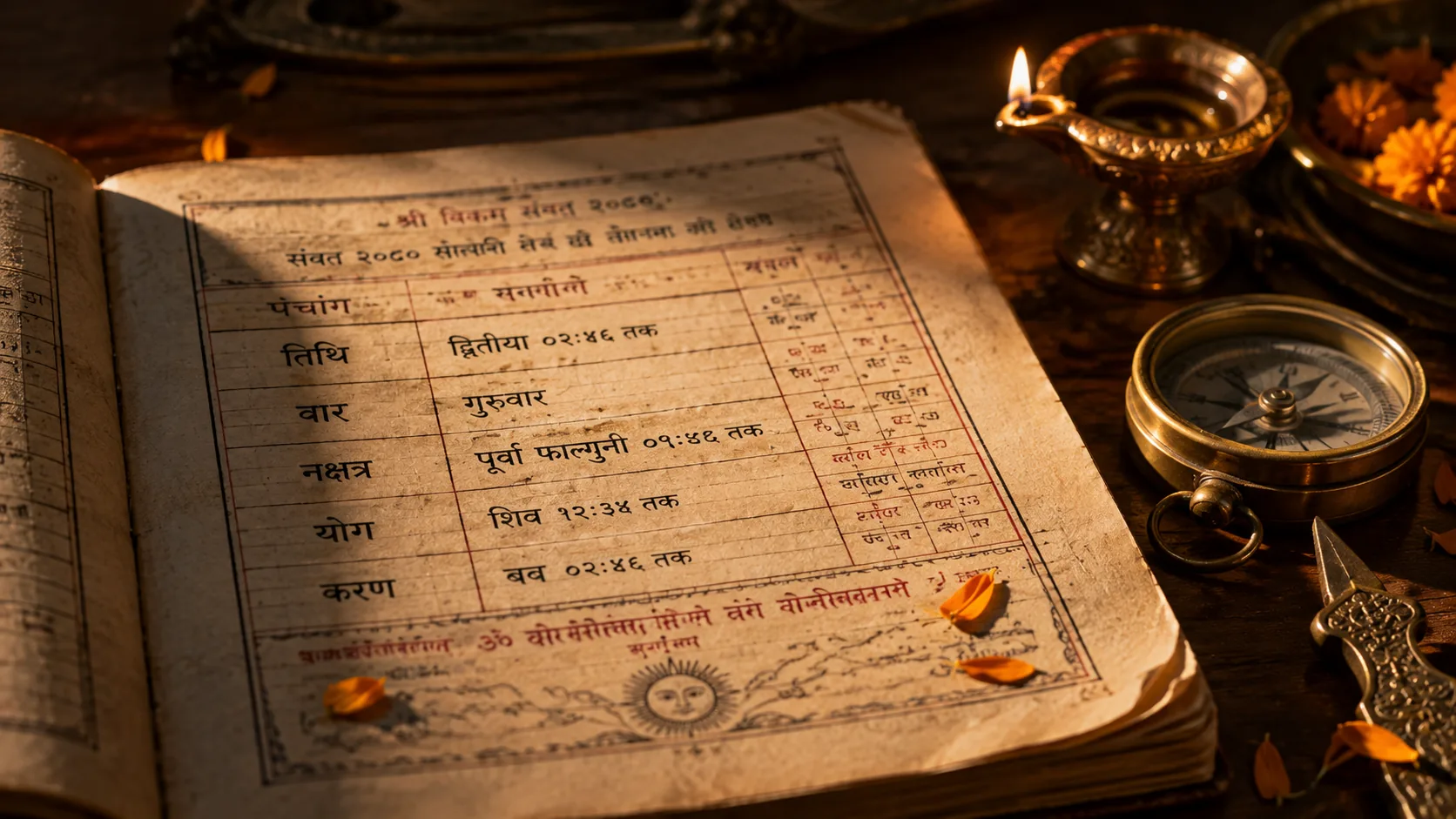
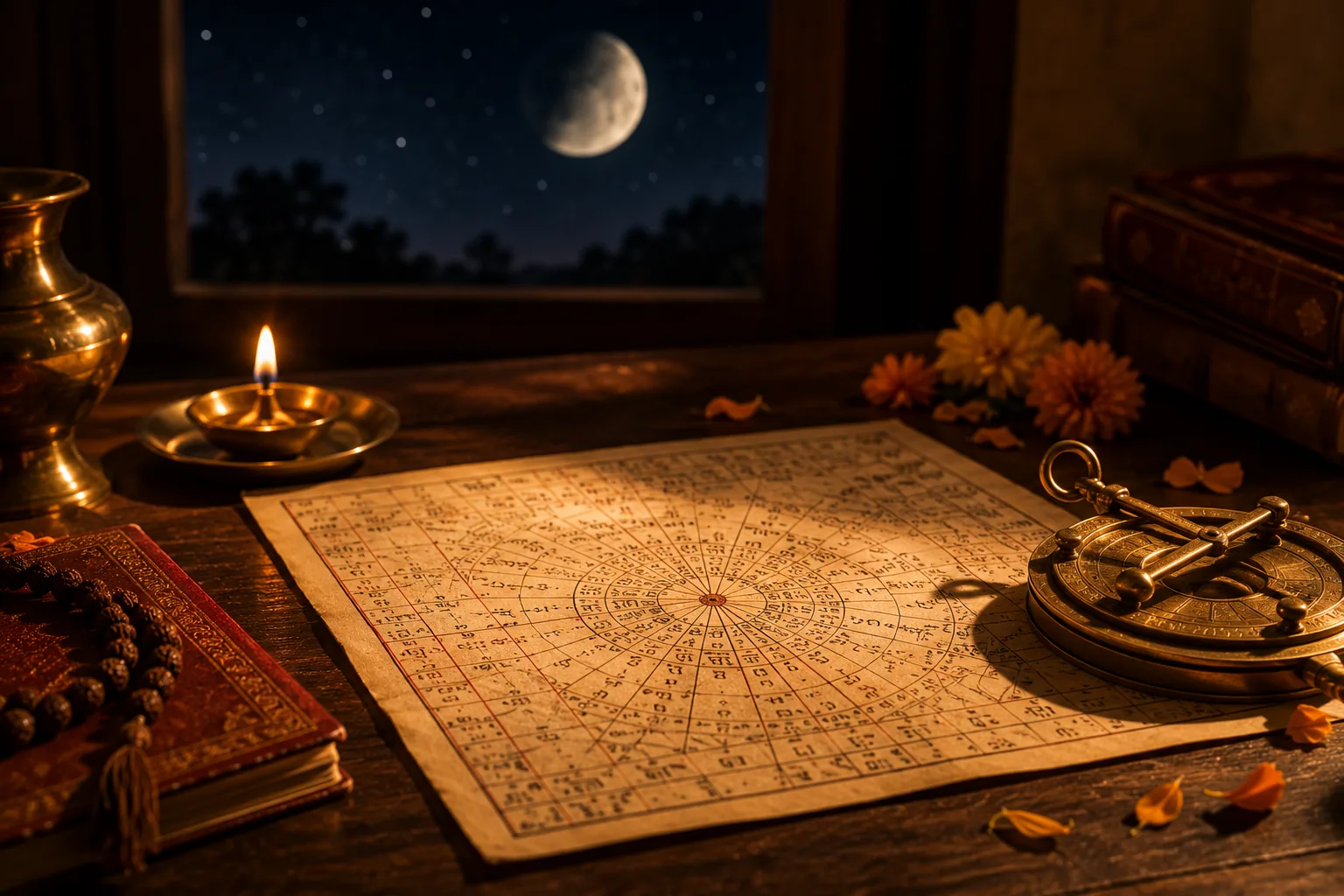
A Panchang is a traditional Vedic almanac — a daily calendar that tracks five specific astronomical measurements to describe the quality and character of each day. The word itself comes from panch (five) and anga (limb), referring to the five core elements it calculates. People use it to choose auspicious timings, understand the day's general energy, or simply follow a practice that's been maintained for centuries.
Three of those five elements — Tithi, Nakshatra, and Yoga — are the ones beginners run into most often, and they're what this guide focuses on.
The Five Limbs of Panchang (Quick Overview)
For context, the five limbs are: Tithi, Vara (weekday), Nakshatra, Yoga, and Karana. This article covers Tithi, Nakshatra, and Yoga in depth. Vara is simply the weekday, and Karana — a half-Tithi division — gets its own dedicated explainer later in this pillar.
Tithi: The Lunar Day
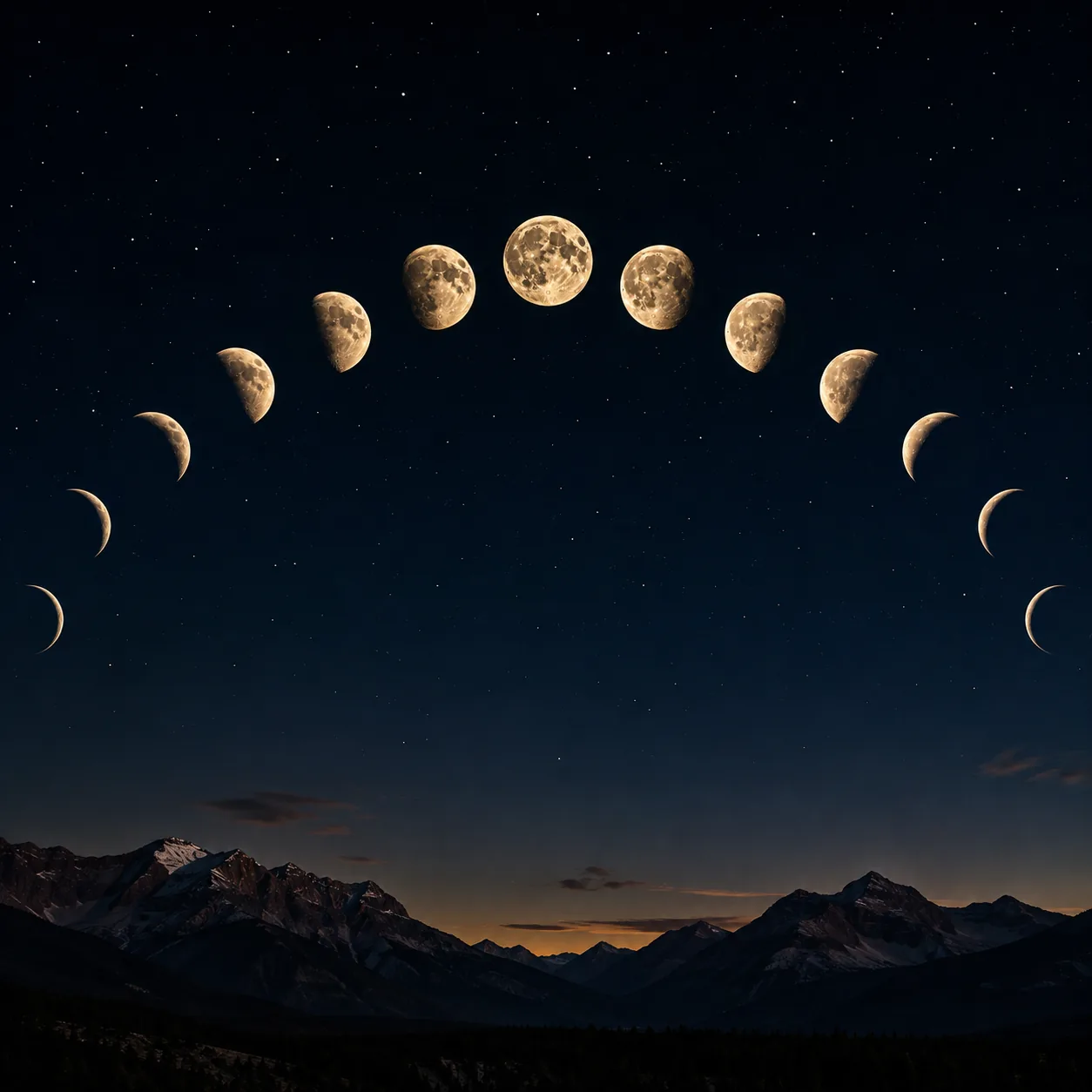
Tithi is a lunar day, based on the angular distance between the sun and moon rather than a fixed 24-hour period — which is why a Tithi's length can vary slightly from day to day. There are 30 Tithis in a full lunar month, split into a waxing half (Shukla Paksha) and a waning half (Krishna Paksha).
In practical terms, Tithi is often the single most-referenced element when someone asks, "is today a good day for X?" Many festival dates and ritual timings, including several covered elsewhere on this blog, are set by Tithi rather than the standard calendar date — which is part of why festival dates shift every year.
Nakshatra: The Lunar Mansion of the Day
Nakshatra here refers to which of the 27 lunar mansions the moon is passing through on a given day — the same 27-Nakshatra framework used in birth chart analysis, just applied to the day itself rather than a birth moment. Each daily Nakshatra is said to carry its own general character, which is why certain days are considered better suited to certain kinds of activities than others.
If the concept of Nakshatras is new to you, the [Internal Link: Astrology 101 Beginner's Guide] hub page introduces the idea in the context of your own birth chart, which makes the daily version easier to follow.
Yoga: The Combined Angle
Yoga, in the Panchang sense, is a calculated combination of the sun and moon's positions — not to be confused with the physical practice of yoga. There are 27 Panchang Yogas, each associated with a particular quality for the day, ranging from generally favorable to ones that call for more caution.
This is usually the least familiar of the three to beginners, largely because it's a derived calculation rather than something as directly observable as a Tithi or Nakshatra. It's worth knowing it exists, even if you don't track it daily yourself.
How These Three Work Together
None of these elements is read in isolation. A given day's overall character comes from the combination of its Tithi, Nakshatra, and Yoga together — plus Vara and Karana for a complete picture. This is also why two people asking "is today auspicious?" might get slightly different answers depending on which elements they're weighing most heavily, and why a single Panchang reading is more nuanced than a one-word yes or no.
How to Check Your Daily Panchang
You don't need to calculate any of this by hand. Vedic Shruti's Panchang tool generates the day's Tithi, Nakshatra, Yoga, Vara, and Karana automatically, based on your location — useful whether you're checking for personal reference or planning something time-sensitive.
FAQs
Q1. How often does the Tithi change?
A: Roughly once a day, though the exact timing shifts slightly because Tithi is based on lunar angle, not a fixed clock time.
Q2. Is the daily Nakshatra the same as my birth Nakshatra?
A: No. Your birth Nakshatra is fixed at birth; the daily Nakshatra in a Panchang changes as the moon moves through the sky.
Q3. Do I need to track Yoga every day?
A: Not necessarily — most people check Tithi and Nakshatra more often. Yoga becomes more relevant when planning something specific, like a Muhurat.
Q4. Can I read Panchang for any location?
A: Yes. Panchang timings shift slightly by location, so it's worth checking one calculated for where you actually are.
Q5. Is Panchang the same everywhere in India?
A: The five core elements are calculated the same way, but exact timings can vary slightly by region and calculation method — regional variations are covered separately on this blog.
Conclusion
Panchang can look intimidating at first — five terms, calculated daily, each with its own logic. But broken down one piece at a time, Tithi, Nakshatra, and Yoga are simply a structured way of describing what kind of day it is astronomically. You don't need to memorize the calculations; you just need to know what each term is pointing to.
Want today's Panchang without doing any of the math yourself? Check your daily Panchang with Vedic Shruti's free tool, calculated for your exact location.