What Is Vedic Astrology?
Vedic astrology, or Jyotish, is a system that maps the positions of the sun, moon, and planets at the exact moment of your birth, then uses that map — your Kundli, or birth chart — to describe patterns and tendencies in your life. It comes from ancient Indian tradition, but the way people use it today is simple and practical: as a lens for reflection, not a verdict on the future.
At Vedic Shruti, this page is your starting point. Every concept mentioned here has its own detailed article, linked below, so you can go as deep as you want, one term at a time.
Vedic Astrology vs. Western Astrology
The most common beginner confusion is mixing up your Vedic Moon Sign with the Sun Sign most people know from newspaper horoscopes. They're calculated differently and often land in different signs entirely. If this is confusing you right now, the Ascendant vs Moon Sign vs Sun Sign article breaks down exactly how each one is calculated and what it actually tells you.
The Building Blocks: Kundli, Houses, and Planets
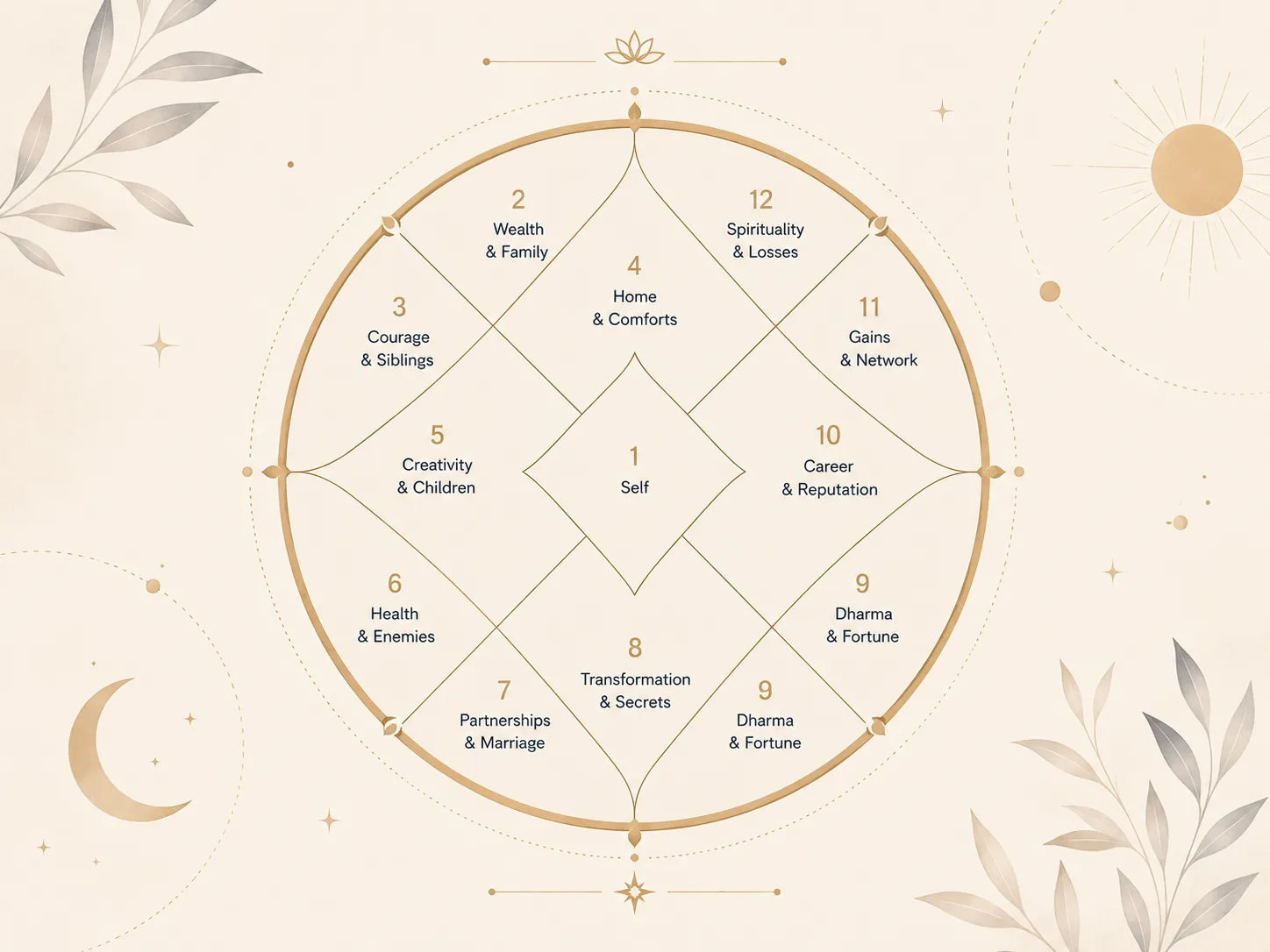
Your Kundli is a snapshot of the sky at your birth, organized into 12 Houses (Bhavas), each representing a life area — career, relationships, health, and so on — and populated by the 9 planets (Navagraha) recognized in Vedic astrology. Where a planet sits, and which house it occupies, is the raw material every reading is built from.
If you haven't yet, start with What is a Kundli — it walks through how to read your own chart section by section, without assuming any prior knowledge.
Nakshatras: The 27 Lunar Mansions
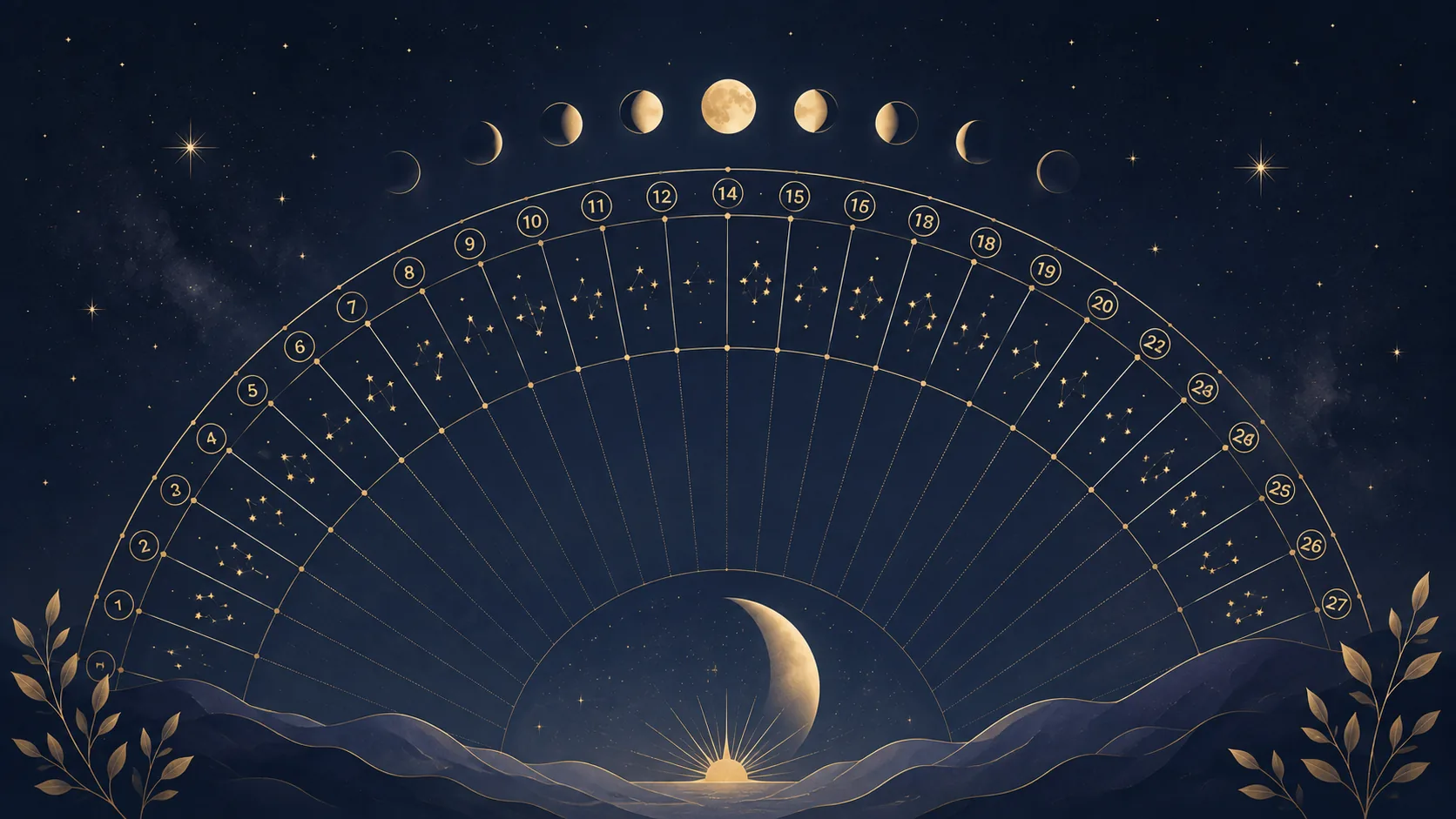
Beyond the 12 zodiac signs, Vedic astrology divides the sky further into 27 Nakshatras, or lunar mansions. Your birth Nakshatra adds a layer of detail that a Moon Sign alone doesn't capture — it's part of why two people with the same Moon Sign can still read quite differently. A full glossary entry on this is coming later in this hub; for now, know that it's one of the more distinctive tools Vedic astrology offers.
Dasha: Understanding Planetary Periods
Dasha refers to planetary periods — stretches of time, sometimes years long, ruled by a specific planet. The idea is that a chart isn't static: different planets take the lead at different points in life, which is why the same birth chart can feel like it's "saying something new" a decade later. This is one of the more commonly misunderstood terms, and it gets a dedicated explainer soon in the Fundamentals pillar.
Dosha: What It Really Means
Dosha is a word that causes more anxiety than it should. In plain terms, it describes a specific planetary placement that traditional astrology flags as worth paying attention to — not a curse, not a life sentence. Context always matters more than the label itself, and a full placement can shift how any single Dosha plays out. This nuance-over-fear approach is something you'll see across every article on this blog.
How to Start Learning — A Simple Path
If all of this feels like a lot at once, here's a reasonable order to learn it in:
Understand your own Kundli basics first — houses and planets. Learn the difference between your Sun, Moon, and Ascendant. Get familiar with your Nakshatra. Once comfortable, explore your current Dasha period. Only then dig into specific Doshas, with context, not alarm.
You don't need to memorize any of this. Each term links to a full article the moment you're curious about it.
Where This Hub Goes Next
This page will keep growing as new Fundamentals articles publish — each one gets added here, and each of those articles links back to this hub. Think of it as your home base: whenever a term feels unfamiliar anywhere else on the blog, you can return here to get oriented.
FAQs
Q1. Do I need to know astrology already to use this guide?
No. This hub is written specifically for people starting from zero — every linked article assumes no prior knowledge.
Q2. Is Vedic astrology the same as the horoscope in newspapers?
Not quite. Newspaper horoscopes usually use only your Sun Sign; Vedic astrology considers your full birth chart, including your Moon Sign, Ascendant, and planetary positions.
Q3. What's the very first thing I should look at in my own chart?
Most beginners start with their Kundli's basic layout — your Ascendant, Moon Sign, and which houses your key planets sit in.
Q4. Does a "Dosha" mean something bad will definitely happen?
No. A Dosha is a placement worth understanding in context, not a fixed outcome. The rest of the chart always matters too.
Q5. Where can I get my own chart generated? You can generate your Kundli using Vedic Shruti's free Kundli tool, linked below.
Conclusion
Vedic astrology isn't something you need to master in one sitting. It's a set of tools — Kundli, houses, planets, Nakshatras, Dasha, Dosha — that make more sense the more you sit with them, one term at a time. This hub exists so you always have a place to come back to when a word feels unfamiliar.
CTA
Ready to see these ideas applied to your own chart? Generate your free Kundli and start exploring what your birth chart actually shows — no fear, no drama, just your chart explained clearly.