Why We're Answering These Questions
Every week, the same handful of questions show up from people just starting to explore Vedic astrology. Some are curious. Some are anxious. Most just want a straight, calm answer instead of a dramatic one. This post rounds up the questions we hear most often, answered the way we answer everything at Vedic Shruti: clearly and honestly, with no fear-based framing.
What Is Vedic Astrology, and How Is It Different From Western Astrology?
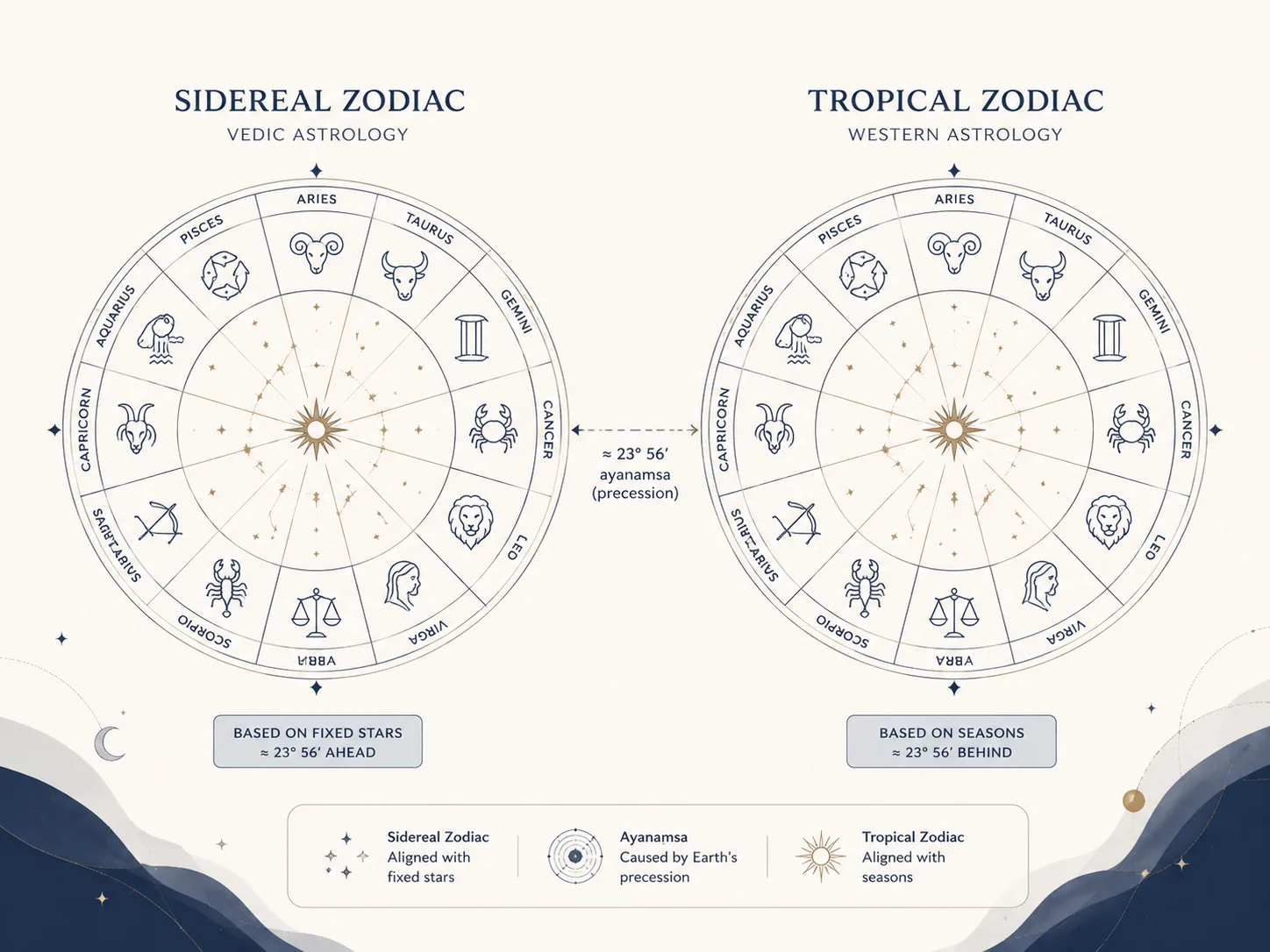
Vedic astrology (Jyotish) is a system from ancient India that maps planetary positions at your birth to interpret personality, timing, and life patterns. The main technical difference is the zodiac itself: Vedic astrology uses the sidereal zodiac, while Western astrology uses the tropical zodiac.
That distinction matters more than it sounds like it should. Because the sidereal system accounts for the slow shift of the stars over centuries, your Vedic Moon sign or Ascendant can land in a different sign than your Western sun sign — often by about one sign over. Vedic astrology also leans much more heavily on the Moon sign (Rashi) and on planetary periods (Dasha) for timing, tools that Western astrology barely touches.
What Is a Kundli, and Do I Need One to Get Started?
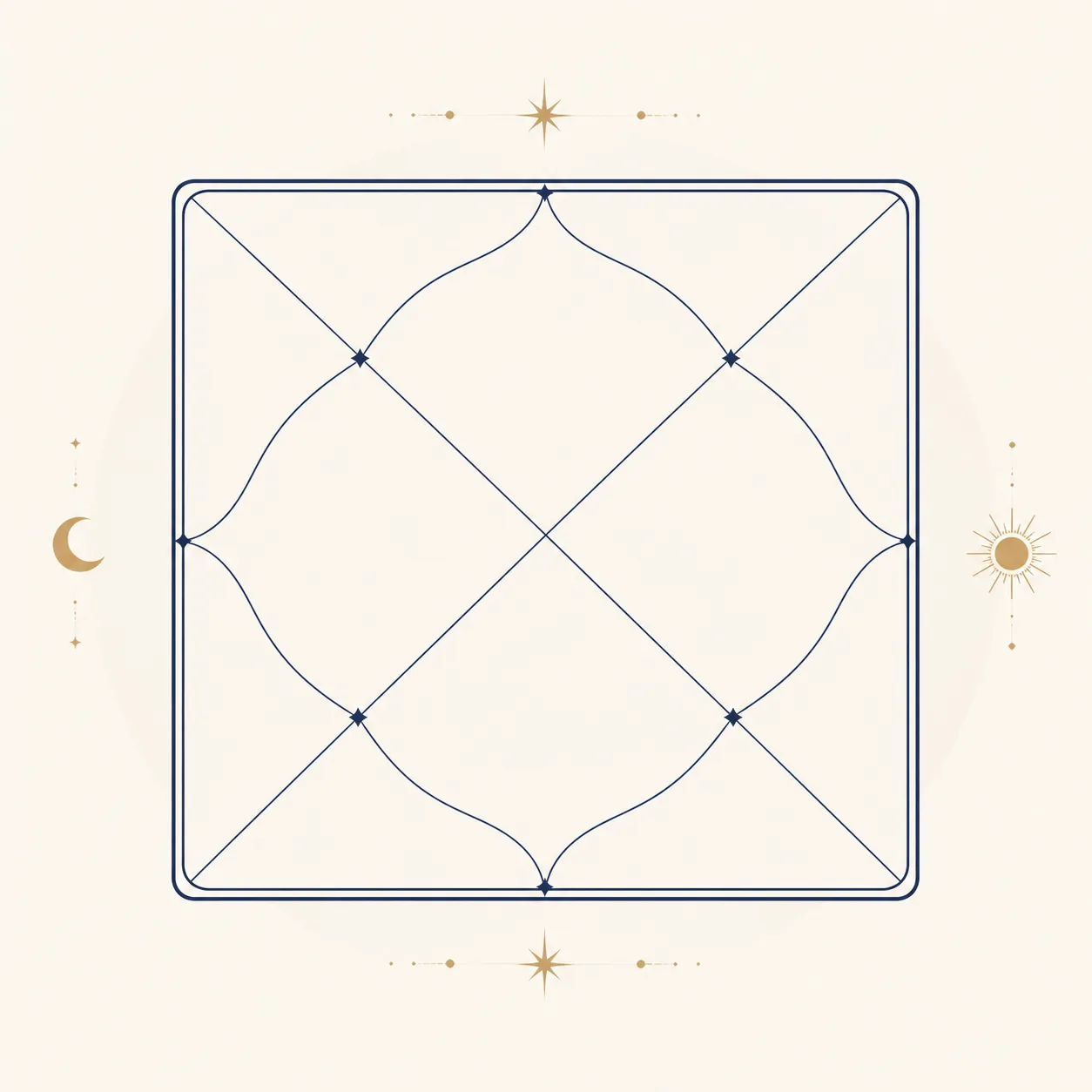
A Kundli is your Vedic birth chart. It's a snapshot of where each planet sat in the sky at your exact time, date, and place of birth, mapped across twelve houses.
You don't need to understand a Kundli fully before generating one. Most beginners just look at their chart, note their Ascendant, Moon sign, and Sun sign, and build understanding from there. Haven't generated yours yet? Our Kundli tool creates one instantly from your birth details.
Do I Really Need My Exact Birth Time?
Yes. Birth time determines your Ascendant (Lagna), which shifts roughly every two hours and anchors your entire house system. Even a small error can change key placements.
If you only know an approximate time, that's still useful for broad patterns like your Moon sign and planetary periods. But house-based readings — career, marriage, property — get less precise without an exact time. Hospital records or family memory are usually good enough. It doesn't need to be perfect, just as accurate as you can reasonably get.
What Is a Dosha, and Should It Worry Me?
A Dosha is a specific planetary placement pattern in your chart, like Mangal Dosh or Kaal Sarp Dosh. It's something to understand, not something to fear.
Doshas get an outsized reputation online because "your life is ruined" headlines perform well. In practice, a Dosha is one data point among many in a chart, and it's almost always softened or cancelled by other placements. What it actually means for you depends on the full context of your birth details, never on the label by itself.
Can Astrology Predict Exactly What Will Happen in My Life?
No. Vedic astrology points to tendencies, timing windows, and probable themes rather than guaranteed outcomes.
A birth chart works more like a weather forecast than a script. It tells you the conditions you're likely working with, not the one certain event that's going to happen on one certain day. That's also why we're careful about how our AI Chat tool talks about the future: it can point out patterns and timing, but it won't promise a guaranteed result.
What's the Difference Between My Moon Sign and My Sun Sign?
Your Sun sign reflects your core identity in Western astrology. Your Moon sign (Rashi) reflects your emotional nature, and it's the sign Vedic astrology actually uses for everyday predictions like horoscopes.
That's why a Vedic daily horoscope organized by Moon sign can feel more emotionally accurate than a generic Western horoscope organized by Sun sign. They're measuring different things, and Vedic practice has always treated the Moon as the more personal marker.
Is Astrology Scientifically Proven?
No, and we won't pretend otherwise. Astrology isn't scientifically validated the way physics or medicine are. We present it as a reflective, symbolic framework that many people find useful for self-understanding and for timing decisions.
That's a fair question, and starting from skepticism is reasonable. We'd rather be upfront about the distinction than oversell certainty we can't back up. Our Myth vs. Fact series goes further into this if you want the longer version.
How Often Should I Check My Horoscope or Panchang?
Check daily Panchang details (Tithi, Nakshatra, Rahu Kaal) when you're planning something specific, like a start date or an important conversation. Not as a daily anxiety ritual.
A horoscope or Panchang is a planning tool, not a permission slip you need before living your day. Many readers check it a few times a week, around decisions that actually matter to them. That's a healthier rhythm than checking it compulsively every morning.
Where Should a Complete Beginner Start?
Generate your Kundli. Learn your Ascendant, Moon sign, and Sun sign. Read one concept at a time instead of trying to absorb the whole system at once.
Astrology has a steep vocabulary curve, and that's normal. Our Beginner Learning Hub is built for exactly this: one term explained clearly at a time, each one linking to the next, so you're never dropped into jargon without context.
Conclusion
None of these questions have dramatic answers, and that's on purpose. Vedic astrology is a language for understanding patterns in your life, not a source of fear and not a guarantee machine. The more clearly you understand the basics, the more useful your chart becomes as a tool.
Ready to see your own chart instead of just reading about one? [Generate your free Kundli] and start connecting these answers to your actual birth details.
FAQs
Is Vedic astrology the same as Chinese astrology? No. Vedic astrology is rooted in Indian tradition and uses planetary positions and the sidereal zodiac. Chinese astrology uses a twelve-year animal cycle tied to birth year, not planetary placement.
Can I get an accurate Kundli without my exact birth time? You can generate one, but house-based details like career, marriage, and property will be less precise without an exact time. Your Moon sign and broader planetary periods stay fairly reliable even with an approximate time.
Does everyone have a Dosha in their chart? Many people do. It's common, not automatically negative, and its impact depends on the full chart, not the label in isolation.
How is Vedic Shruti's AI Chat different from a horoscope app? It explains patterns and timing in plain language based on your actual chart, using the same no-fear, no-overpromising approach as the rest of our content.