
What Is a Mahadasha?
A Mahadasha is the major planetary period your birth chart is currently running — one of nine cycles, each ruled by a different planet, lasting anywhere from 6 to 20 years. Your Dasha Calculator result shows which planet is active now, and for how much longer, based on your Moon's position at birth.
Think of it less as a prediction and more as a lens: it tells you which planetary theme is dominant in this chapter of your life, not what will happen in it.
How the Vimshottari Dasha System Works
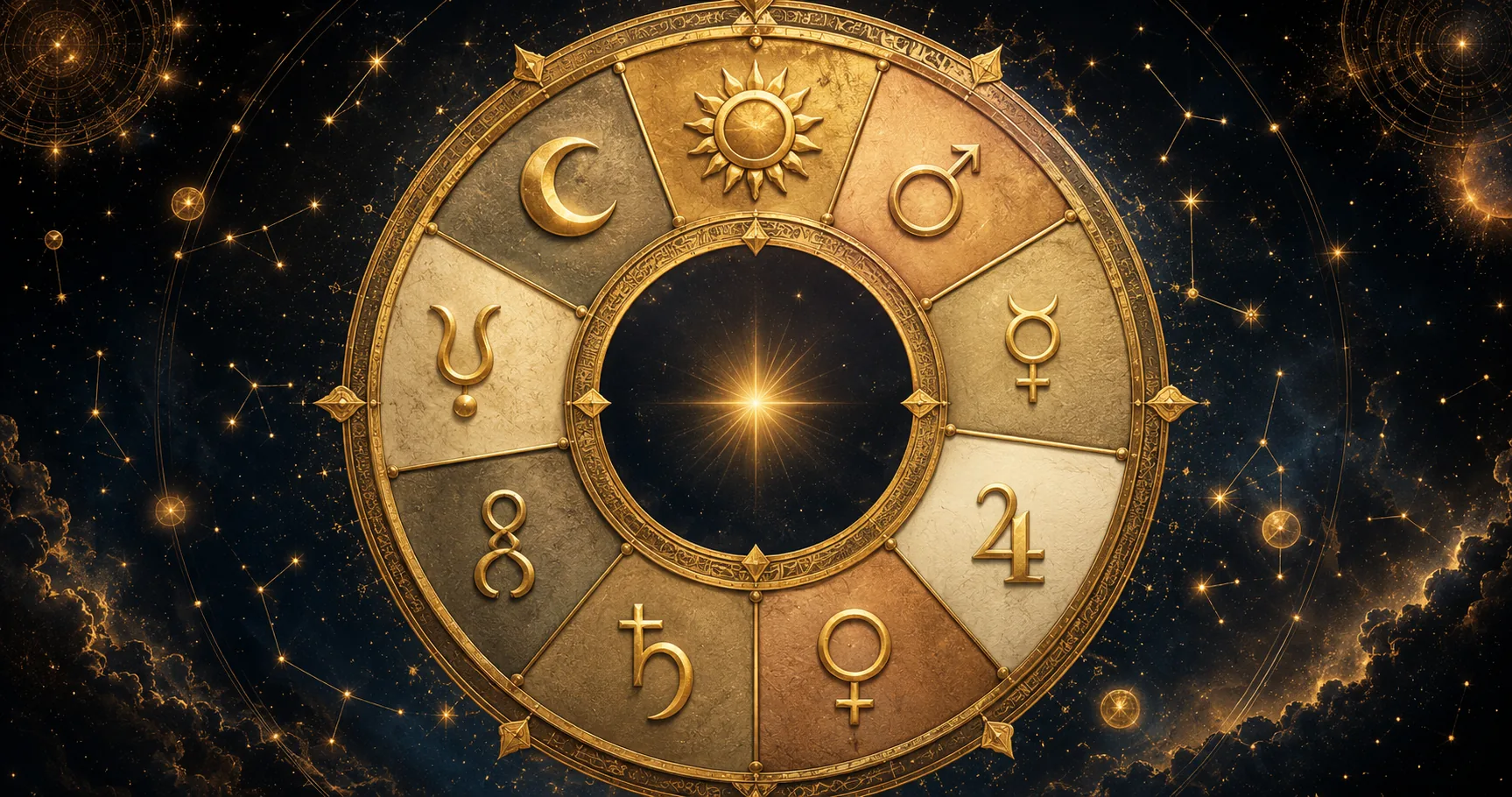
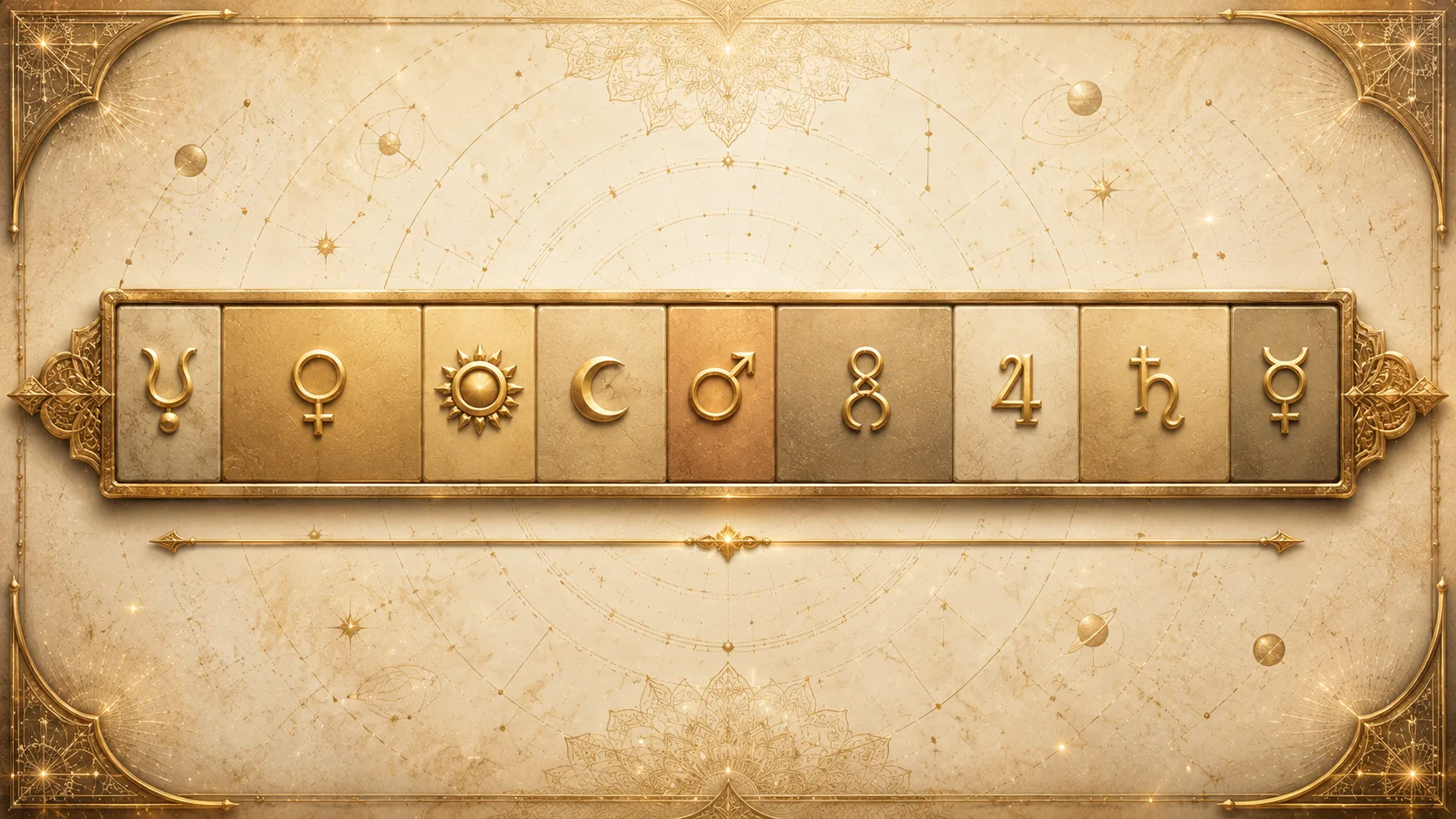
The Vimshottari Dasha system divides a 120-year cycle across the nine Vedic planets — Ketu, Venus, Sun, Moon, Mars, Rahu, Jupiter, Saturn, and Mercury, in that fixed order, each ruling a fixed number of years. Where you start in that sequence depends on the Nakshatra (lunar mansion) your Moon occupied at birth — not your date of birth alone. That's why the calculator needs an accurate birth time: shift the Moon's Nakshatra, and the entire starting point shifts with it.
Once your starting planet is set, the sequence runs in the same fixed order for everyone — only the starting point and exact dates differ from chart to chart.
How to Read Your Mahadasha Result, Step by Step
- Locate your current Mahadasha Lord. This is the planet named at the top of your result — the one governing your present period.
- Note the start and end dates. Every Mahadasha has a defined window; knowing where you are inside it (early, middle, late) matters as much as which planet it is.
- Read the general theme, not a forecast. Each planet has a broad domain — career, relationships, health, inner life — but the result shows a theme, not a scripted outcome.
- Cross-check with your house placements. A Mahadasha lord's effect depends heavily on which house it rules and sits in in your specific chart — this is why two people in the same planet's Mahadasha can have very different experiences.
- Look at the sub-period, if shown. Some results also show your current Antardasha (sub-period) — a finer layer we cover in a dedicated guide (linked below).
What Each Mahadasha Tends to Bring
In broad, non-deterministic terms, Vedic astrology associates each planetary period with a general area of focus:
- Sun: authority, recognition, self-definition
- Moon: emotional life, home, routines
- Mars: drive, courage, sometimes conflict
- Rahu: ambition, disruption, unconventional
- Jupiter: growth, learning, expansion
- Saturn: discipline, delay, long-term structure
- Mercury: communication, analysis, commerce
- Ketu: introspection, detachment, closure
- Venus: relationships, comfort, creativity
These are tendencies observed and discussed within the tradition, not guarantees — the same planet's period can look very different depending on the rest of the chart.
Common Mistakes People Make Reading This Result
- Treating the Mahadasha lord as automatically "good" or "bad." Every planet's period has both easier and harder stretches within it.
- Ignoring the sub-period (Antardasha). The Mahadasha sets the tone; the Antardasha often explains what's actually happening month to month.
- Assuming an inaccurate birth time won't matter. Even a shift of a few minutes can move the starting Nakshatra and change the entire sequence.
- Reading the result in isolation.** A Mahadasha means more when read alongside the houses and planets it touches in your own Kundli.
What a Mahadasha Doesn't Tell You
A Mahadasha result is a timing framework, not a fixed script — it won't tell you an exact event, a guaranteed outcome, or a date something will happen. Vedic astrology treats it as one layer of context among several, meant to help you understand a period, not predict it with certainty. If you want to go deeper than the headline result, the AI Astrology Chat can walk through your specific chart with you, and Kundli Matching or the full Kundli report add the layers a Mahadasha alone won't cover.
FAQs
Q: How long does a Mahadasha last?
A: Between 6 and 20 years, depending on the ruling planet — the exact length is fixed for each planet within the Vimshottari system.
Q: Can my Mahadasha change if my birth time is wrong?
A: Yes. Since the starting Mahadasha depends on the Moon's Nakshatra at birth, an inaccurate birth time can shift both the starting planet and every date after it.
Q: Is a "bad" Mahadasha something to worry about?
A: No single Mahadasha is inherently good or bad — each period has easier and harder phases, and the surrounding chart shapes how it plays out.
Q: What's the difference between Mahadasha and Antardasha?
A: The Mahadasha is the major, multi-year period; the Antardasha is a shorter sub-period within it, ruled by a different planet, that adds finer detail to the same window.
CONCLUSION
Your Mahadasha result is a starting point for understanding a chapter of your chart — not a verdict on it. Read it alongside your houses, your Antardasha, and the rest of your Kundli, and it becomes a genuinely useful lens rather than a source of worry. Curious what your current Mahadasha means for your specific chart? Run the Dasha Calculator or ask the AI Astrology Chat to walk through your result with you — no guesswork, no drama.