Understanding Your Horoscope Report
Reading your horoscope report can seem daunting at first, especially for beginners. However, understanding this fascinating tool can provide you with profound insights into your life path, personality traits, and potential challenges. This guide will help you navigate your horoscope report and enhance your understanding of Vedic astrology.
What is a Horoscope
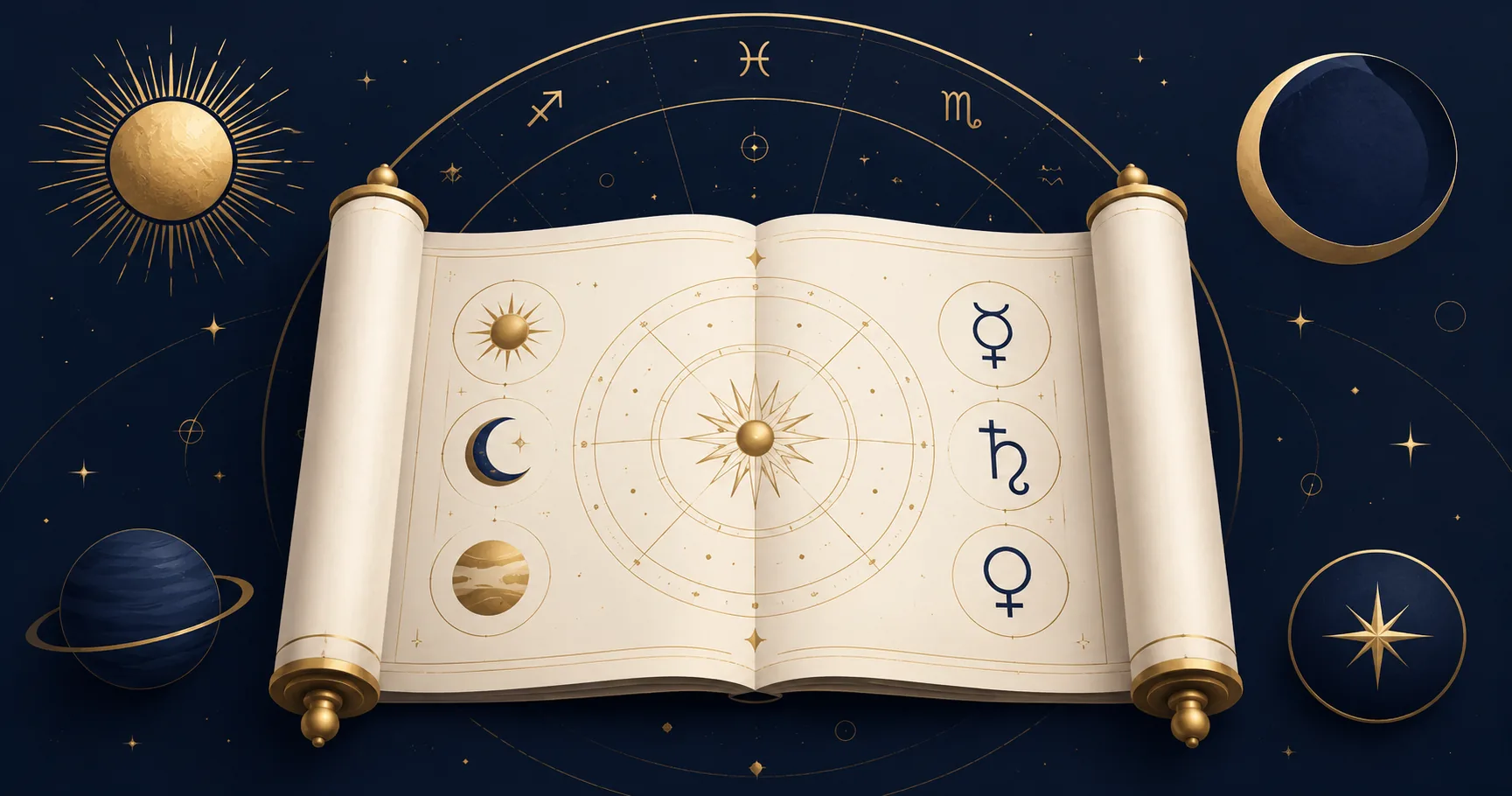
A horoscope report, often referred to as a Kundli or birth chart, is a snapshot of the celestial bodies' positions at the moment of your birth. This document outlines various astrological factors that influence your life, including:
- Planets: The nine planets in Vedic astrology (Sun, Moon, Mars, Mercury, Jupiter, Venus, Saturn, Rahu, and Ketu) each have unique significances.
- Houses: The horoscope is divided into 12 houses, each representing different aspects of life such as career, relationships, and health.
- Zodiac Signs: The 12 zodiac signs, through which the planets transit, influence various personality traits and life events.
Understanding these components is crucial for interpreting your horoscope report effectively.
Kundli vs. Horoscope
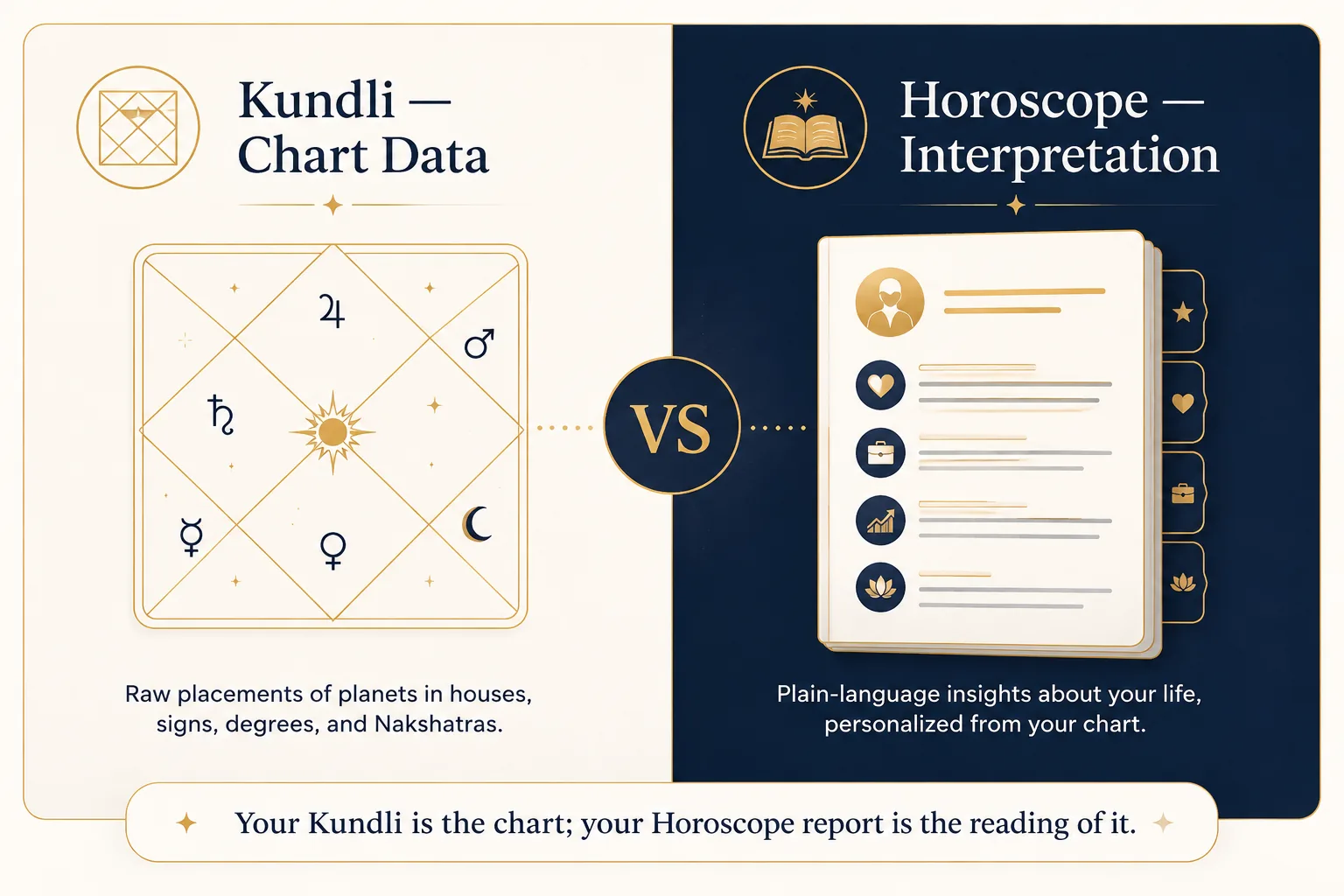
While the terms "Kundli" and "horoscope" are often used interchangeably, they have distinct meanings in Vedic astrology:
- Kundli: This refers specifically to the birth chart created based on your exact birth time and place. It serves as the comprehensive astrological foundation for your predictions.
- Horoscope: This term can refer to daily, weekly, or monthly predictions based on the transitory positions of the planets concerning your Kundli.
In essence, your Kundli is the static representation of your astrological makeup, while your horoscope offers dynamic predictions and insights based on current planetary movements.
Components of Your Horoscope Report
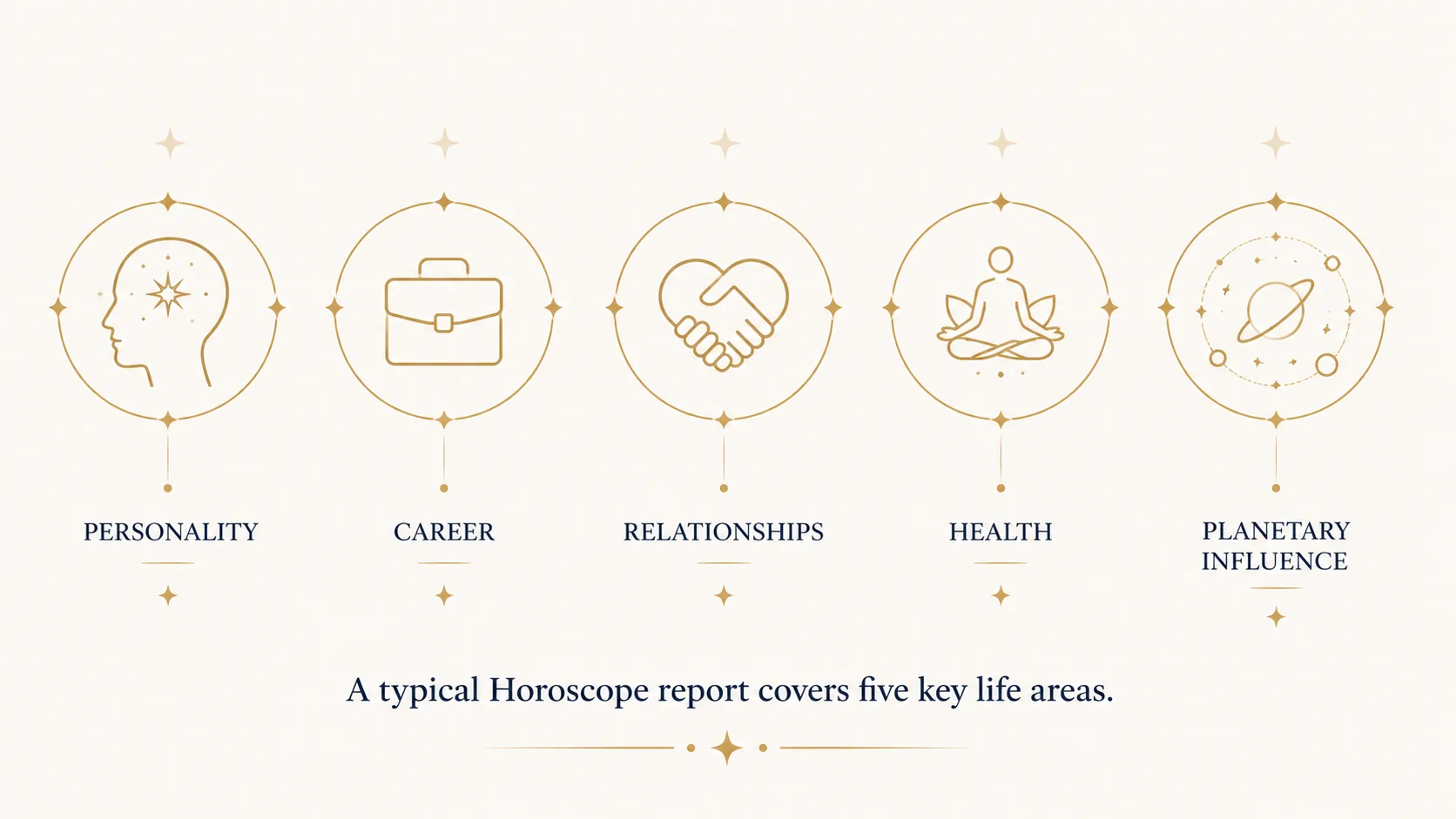
When you receive your horoscope report, it typically includes several key components:
1. Planetary Positions
This section shows the placement of planets in various houses at your birth. Each planet's position can indicate different traits or influences:
- Sun: Represents your core self and identity.
- Moon: Governs your emotions and subconscious.
- Mars: Associated with energy, aggression, and action.
- Jupiter: Symbolizes wisdom, growth, and expansion.
2. Houses and Their Meanings
Each of the 12 houses represents specific life aspects. Here is a brief overview:
- 1st House: Self, personality, and appearance.
- 4th House: Home, family, and emotional security.
- 7th House: Partnerships and marriage.
- 10th House: Career and public image.
3. Zodiac Signs
Your report will include details on which zodiac signs the planets occupy. Each sign has its unique characteristics, which influence the planets' effects.
4. Dasha System
The Dasha system outlines the planetary periods that govern different phases of your life. Understanding your current and upcoming Dashas can help you align your actions with favorable astrological influences.
5. Aspects
This section discusses how planets interact with each other. For instance, if two planets are in "aspect," they influence each other’s energies, shaping your experiences.
How to Read Your Horoscope Report
Step-by-Step Approach
-
Start with the Basics: Familiarize yourself with the layout of your horoscope report. Identify the planets, houses, and signs.
-
Interpret Planetary Positions: Look at where each planet is positioned. Note the qualities associated with each planet and how they relate to the houses they occupy.
-
Examine the Houses: Analyze the meanings of the houses where the planets are located. For example, if Mars is in your 10th house, it may indicate a career driven by ambition and assertiveness.
-
Consider the Zodiac Signs: Reflect on the characteristics of the signs that host your planets. For example, if your Moon is in Taurus, you may have a strong need for security and comfort.
-
Look at Aspects: Pay attention to how planets aspect one another. Positive aspects may indicate ease and support, while challenging aspects can reveal potential obstacles.
-
Understand the Dasha: Review your current Dasha and assess how it interacts with the planetary positions in your report. This can give insight into the timing of significant life events.
Free Horoscope Reading
Many websites offer free horoscope readings, which can be a great way to get started. However, remember that these readings are often generalized. For a more personalized and accurate analysis, consider consulting a professional Vedic astrologer who can interpret your unique horoscope report.
Conclusion
Reading your horoscope report can unlock valuable insights into your life, helping you understand your strengths, weaknesses, and potential life paths. By familiarizing yourself with the key components and systematically interpreting them, you can gain a deeper understanding of yourself and the influences that shape your experiences.
FAQ
Q: Can I read my horoscope report without prior knowledge of astrology?
A: Yes, while it may take time to understand all the terms, following a structured approach can help you interpret your horoscope report effectively.
Q: How often should I check my horoscope?
A: It’s beneficial to review your horoscope regularly, especially during significant astrological events or changes in your Dasha periods.
Q: What is the difference between Vedic astrology and Western astrology?
A: Vedic astrology (Jyotish) focuses on the sidereal zodiac and considers the Moon's position, while Western astrology uses the tropical zodiac and emphasizes the Sun's position.