
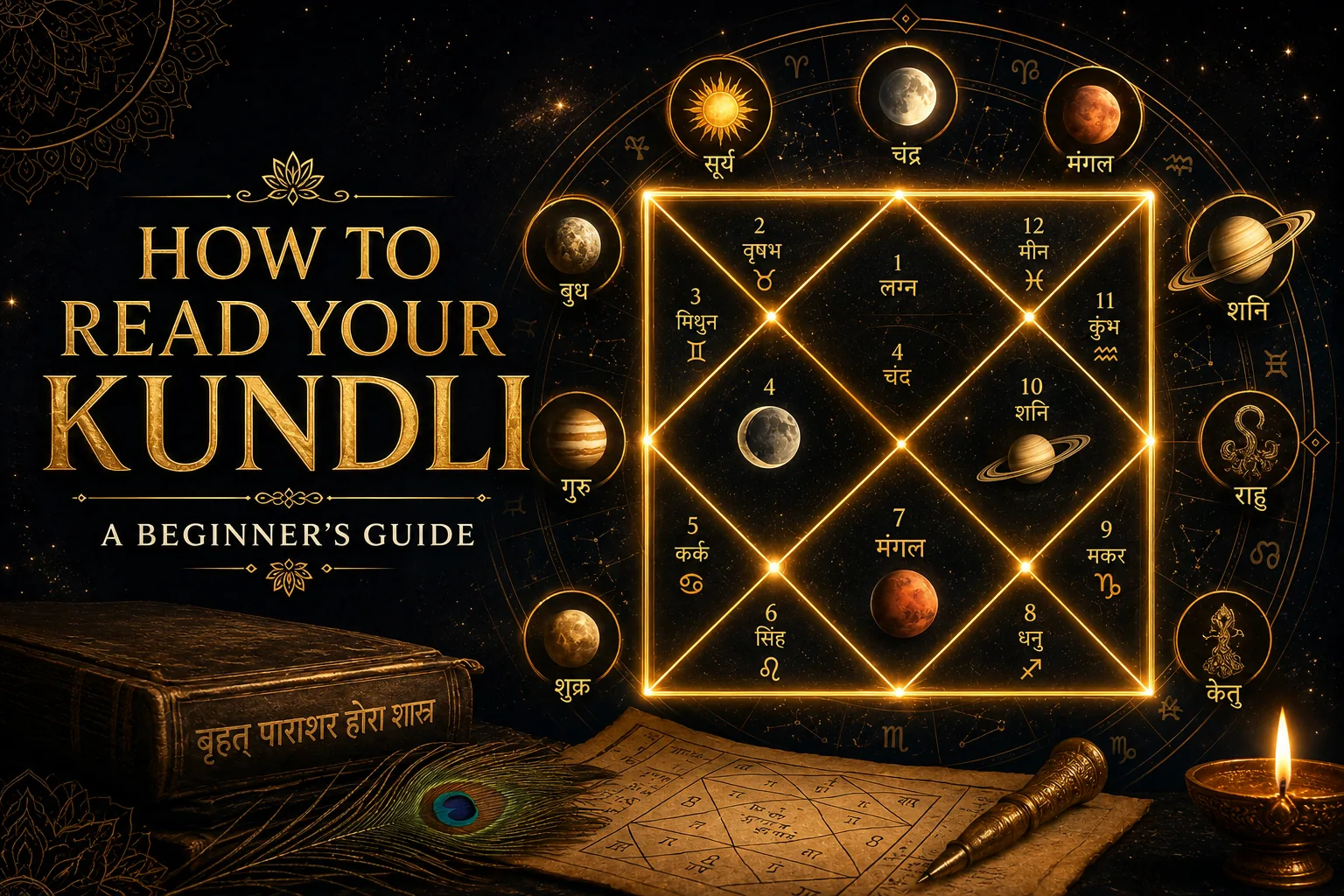
Understanding the Basics of Kundli
A Kundli, also known as a Janam Kundli or birth chart, is a fundamental tool in Vedic astrology. It is a graphical representation of the positions of celestial bodies at the time of your birth, providing insights into your personality, life events, and destiny. Understanding how to read your Kundli can empower you to make informed decisions in life. This guide will walk you through the essential components and how to interpret them.
Key Components of a Kundli
Before diving into reading your Kundli, it's crucial to familiarize yourself with its basic components:
- Houses: The Kundli comprises 12 houses, each representing different aspects of your life, such as career, relationships, and health.
- Zodiac Signs: Each house is associated with one of the 12 zodiac signs, which influence the characteristics of the house.
- Planets: The nine planets in Vedic astrology (Sun, Moon, Mars, Mercury, Jupiter, Venus, Saturn, Rahu, and Ketu) play a significant role in shaping your personality and experiences.
- Aspects: The angles that planets make with each other can affect their influence, which is also a crucial aspect of reading your Kundli.
How to Read Your Kundli
Step 1: Obtain Your Kundli
To read your Kundli, you first need to generate it using your birth date, time, and place. Numerous online platforms and astrologers can help you create a detailed Kundli.
Step 2: Identify the Ascendant (Lagna)
The Ascendant, or Lagna, is the zodiac sign rising on the eastern horizon at the time of your birth. It is the starting point of your Kundli and sets the tone for your personality and life path.
- How to Find It: Look for the first house in your Kundli chart. The sign occupying this house is your Lagna.
Step 3: Analyze the Houses
Each of the 12 houses in your Kundli represents different aspects of life:
- 1st House (Self): Personality, appearance, and health.
- 2nd House (Wealth): Finances, possessions, and family.
- 3rd House (Communication): Siblings, communication skills, and short journeys.
- 4th House (Home): Home life, mother, and emotional security.
- 5th House (Creativity): Education, children, and romance.
- 6th House (Health): Enemies, health issues, and daily work.
- 7th House (Partnerships): Marriage and business partnerships.
- 8th House (Transformation): Inheritances, transformations, and secrets.
- 9th House (Philosophy): Luck, spirituality, and higher learning.
- 10th House (Career): Profession, status, and reputation.
- 11th House (Gains): Friendships, ambitions, and gains.
- 12th House (Losses): Expenditures, spirituality, and isolation.
Step 4: Examine Planetary Positions
Look at where the planets are located in your Kundli. The sign and house placement of each planet will significantly influence your life experiences:
- Benefic Planets (like Jupiter and Venus) generally bring positive influences.
- Malefic Planets (like Saturn and Mars) may indicate challenges but can also indicate growth through adversity.
Step 5: Consider Aspects and Dasha
- Aspects: Check how planets influence each other through aspects. For example, if Jupiter aspects your 7th house of partnerships, it may indicate a prosperous marriage.
- Dasha: The Dasha system indicates the timing of events in your life. Each planet's Dasha will bring different experiences based on its placement and strength in your Kundli.
Step 6: Reflect on the Overall Picture
After analyzing the individual components, reflect on the overall picture. Consider how the houses, planetary placements, and aspects interrelate to provide insights into your life journey.
Practical Tips for Beginners
- Start Simple: Focus on understanding one aspect at a time. Begin with identifying your Lagna and the basic meanings of the houses.
- Use Resources: Books, online courses, and YouTube channels on Vedic astrology can provide additional insights and tutorials.
- Seek Guidance: If you're overwhelmed, consider consulting a qualified astrologer who can help interpret your Kundli meaningfully.
Conclusion
Reading your Kundli can be an enlightening experience that offers clarity on your life’s purpose and challenges. By understanding the foundational elements of Vedic astrology, you can gain valuable insights that guide your decisions and help you navigate life's complexities. Remember, astrology is a tool for self-awareness, and your efforts to understand your Kundli can lead to personal growth and fulfillment.
FAQ
Q: What is the significance of the Lagna in a Kundli?
A: The Lagna represents your Ascendant sign, which influences your personality, health, and overall life path.
Q: How can I interpret the Dasha periods in my Kundli?
A: Each Dasha period corresponds to a planet, indicating which planetary energies will dominate your life during that time. Understanding the characteristics of the ruling planet will help you anticipate events.
Q: Can I read my Kundli without any prior knowledge of astrology?
A: While beginners can start reading their Kundli, a basic understanding of Vedic astrology principles will enhance your interpretation.