What is a Nakshatra?
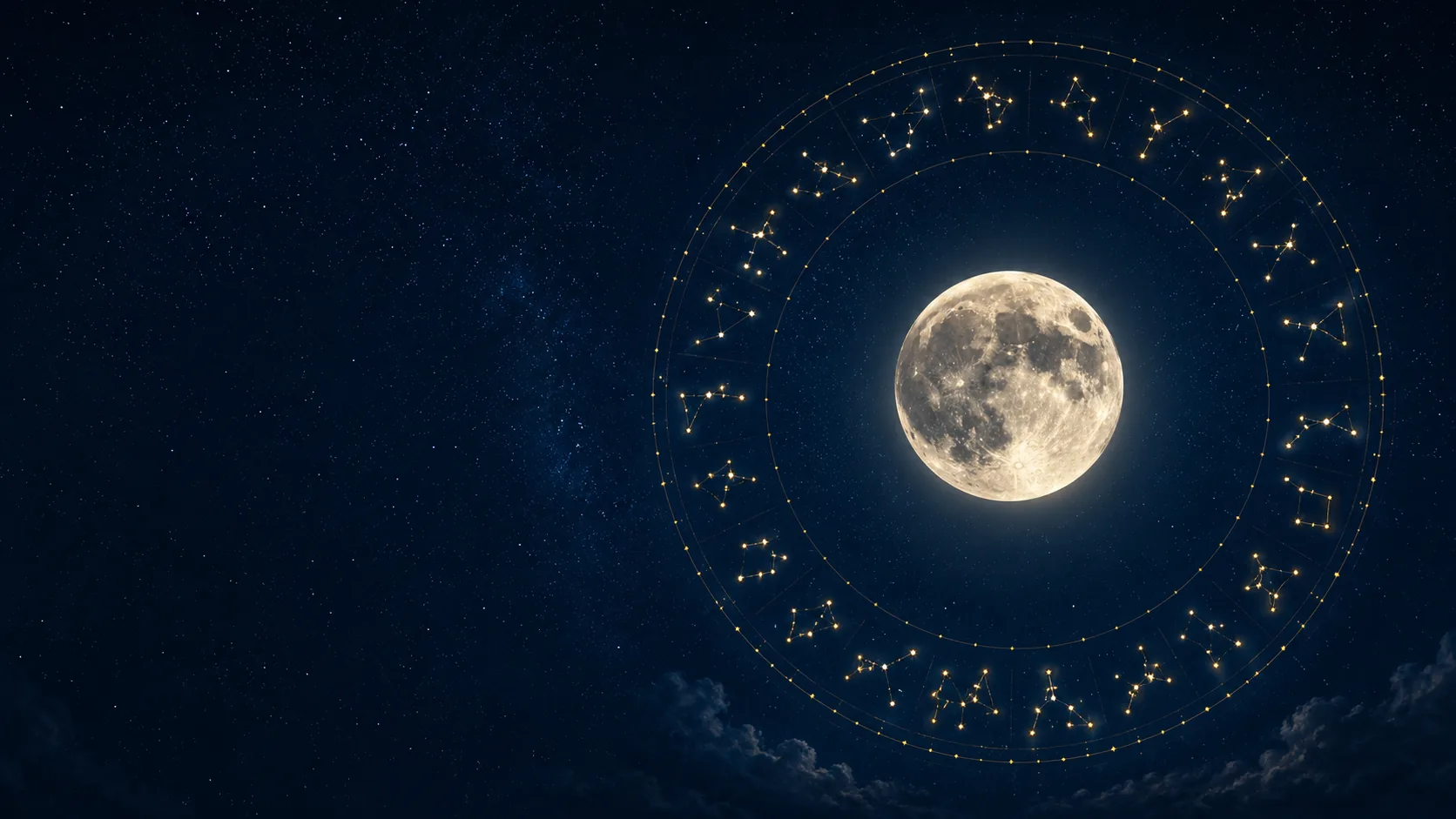
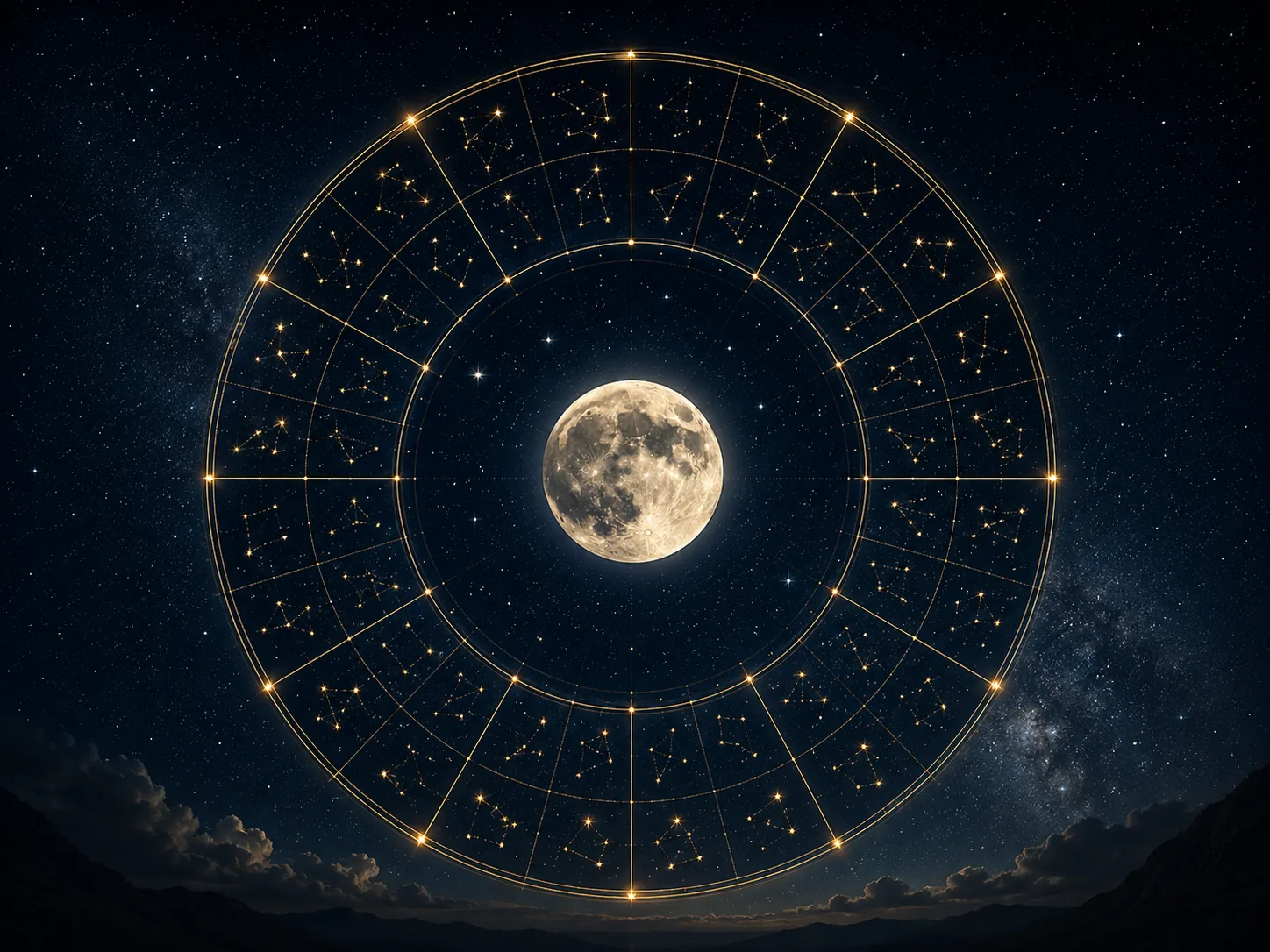
A Nakshatra is one of 27 fixed segments of the sky that the Moon passes through as it orbits the Earth, each spanning 13°20′ of the zodiac. In Vedic astrology, your Janma Nakshatra the one the Moon occupied at your birth adds a finer, more personal layer of detail to your chart than your Moon sign alone can offer.
Where a Moon sign (Rashi) tells you which of 12 broad zodiac signs the Moon was in, a Nakshatra narrows that down to a much smaller slice of sky, roughly nine Nakshatras per sign. This is one reason two people born under the same Moon sign can still read quite differently in a detailed Kundli.
The 27 Nakshatras at a Glance
The 27 Nakshatras run in sequence from Ashwini to Revati, each linked to a ruling deity, a ruling planet, and a symbolic theme. A few examples:
- Ashwini - ruled by Ketu, symbolized by a horse's head, associated with speed and initiative
- Rohini - ruled by the Moon, symbolized by a chariot or cart, associated with growth and material comfort
- Pushya - ruled by Saturn, considered one of the most nourishing Nakshatras, associated with care and stability
- Purva Ashadha - ruled by Venus, associated with invincibility and early success
- Revati - ruled by Mercury, the final Nakshatra, associated with completion and gentle transition
Each Nakshatra carries its own qualities, but no single Nakshatra should be read as "good" or "bad" in isolation. Its expression depends on the rest of the chart, which is exactly the kind of chart-specific nuance Vedic Shruti's readings are built to reflect.
Nakshatra vs Moon Sign (Rashi): What's the Difference?
Your Moon sign is one of 12 possible placements; your Nakshatra is one of 27. Think of the Moon sign as the chapter and the Nakshatra as the specific paragraph the Moon was "reading" at the moment you were born. Two people can share a Moon sign but sit in different Nakshatras and even within the same Nakshatra, a further subdivision (the Pada) adds one more layer of precision.
This is why astrologers often ask for your Nakshatra specifically, not just your sun or moon sign. It's a more precise anchor point for timing methods like Dasha and for compatibility methods like Kundli Matching.
Why Your Birth Nakshatra Matters
Your Janma Nakshatra plays a role in several places across a Vedic chart:
- Personality nuance : it colors how your Moon sign's traits actually show up day to day
- Dasha calculations : the Vimshottari Dasha system, one of the most widely used timing methods in Vedic astrology, starts from your birth Nakshatra
- Kundli Matching : Nakshatra compatibility (part of Ashtakoot Milan) is one of the eight factors checked in traditional matchmaking
- Naming conventions : In many regional traditions, the first syllable of a child's name is chosen based on their birth Nakshatra
None of this means a Nakshatra "decides" a life outcome on its own. It's one input among many that a fuller reading considers together.
The Four Padas of a Nakshatra
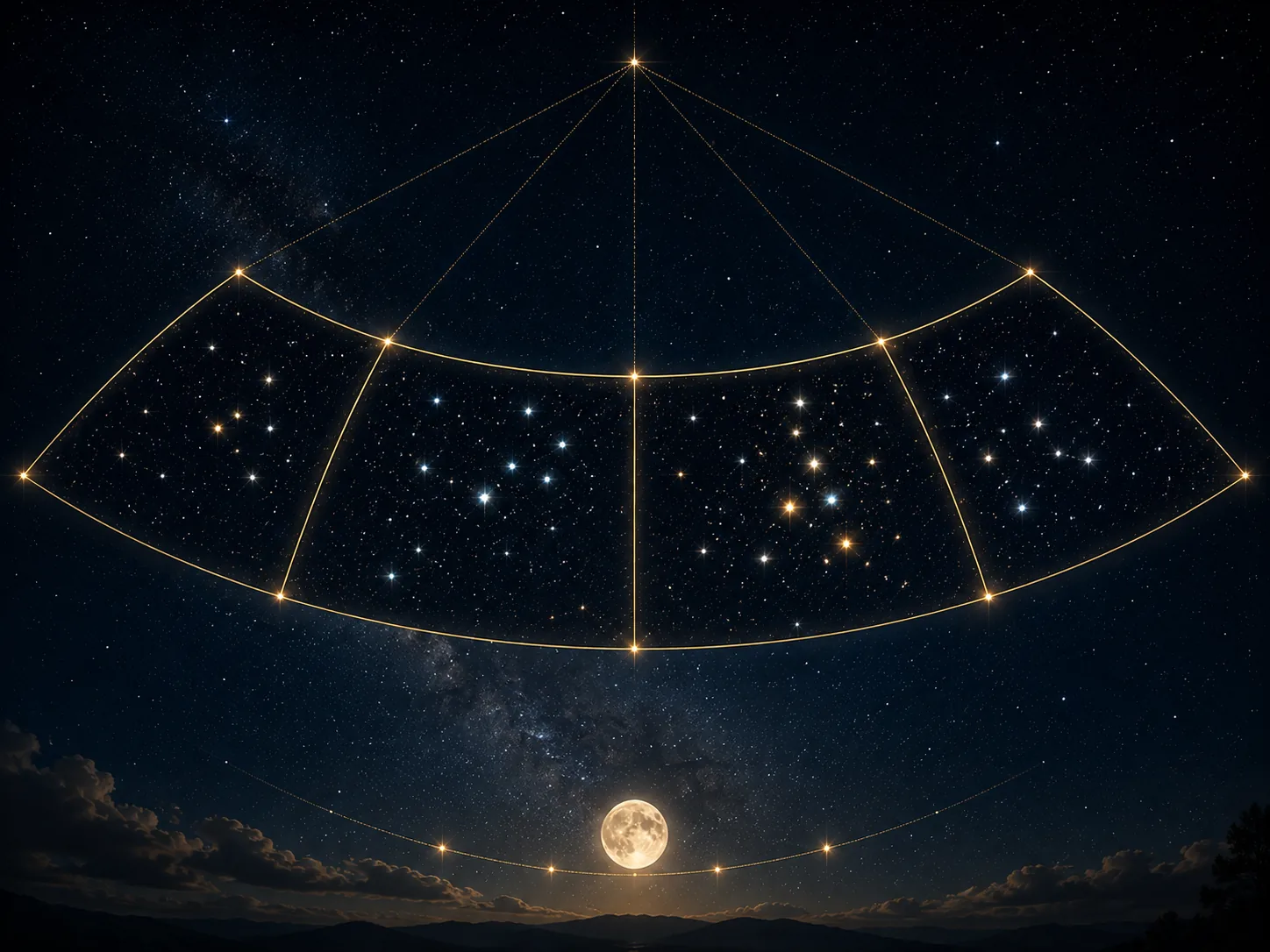
Each Nakshatra is further divided into four Padas (quarters) of 3°20′ each. Padas connect Nakshatras to the finer zodiac subdivisions used in classical Vedic astrology and are part of what gives a detailed Kundli its precision, this is also why an approximate birth time can shift a reading meaningfully, and an accurate birth time matters more than people often expect.
How to Find Your Nakshatra
Your birth Nakshatra depends on your exact birth date, time, and place, since it's calculated from the Moon's precise position at that moment. Rather than estimating from a general date range, the most reliable way to find yours is to generate your full chart.
Nakshatras and Muhurat, Matching & Dasha
Nakshatras aren't just a personality layer, they're load-bearing infrastructure across several Vedic Shruti tools. Panchang readings use the day's Nakshatra to help judge auspicious timing; Kundli Matching checks Nakshatra compatibility between two charts; and Dasha calculations begin counting from the Moon's Nakshatra at birth.
FAQs
What is a Nakshatra in simple words?
A Nakshatra is one of 27 star-based divisions of the sky the Moon moves through, used in Vedic astrology to pinpoint a more precise placement than a Moon sign alone.
How many Nakshatras are there?
There are 27 Nakshatras in total, from Ashwini to Revati, each spanning 13°20′ of the zodiac.
Is Nakshatra the same as Moon sign?
No. A Moon sign is one of 12 broader zodiac divisions, while a Nakshatra is one of 27 finer divisions roughly nine Nakshatras fall within each Moon sign.
Can I find my Nakshatra without my exact birth time?
An approximate time can give a rough idea, but Nakshatra and Pada calculations are sensitive to exact birth time, so a precise chart is far more reliable.
Why do astrologers ask for Nakshatra during matchmaking?
Nakshatra compatibility is one of the eight factors in Ashtakoot Milan, the traditional Kundli Matching method, used alongside other factors — not as a stand-alone verdict.
Conclusion
A Nakshatra isn't a replacement for your Moon sign. It's the finer-grained layer sitting underneath it, shaping everything from personality nuance to Dasha timing to compatibility matching. Understanding your Nakshatra is a natural next step after learning your Moon sign and houses, and it sets up the next piece in this series on Dasha, the planetary period system that starts counting from exactly this point. Curious which of the 27 Nakshatras is yours? Generate your free Kundli report to see your birth Nakshatra, Pada, and how it fits into your full chart.