
Understanding "Divorce Yoga": Context Over Conclusions
Why People Search This
Someone usually lands on this question at a hard moment a difficult marriage, a friend's chart that "someone read badly," or a late-night search after an astrologer used a heavy word in passing. The phrase "divorce yoga" sounds definitive, almost like a verdict. That's exactly the kind of framing Vedic Shruti tries to soften, not because the underlying astrology isn't real, but because a single combination in a birth chart was never meant to be read as a life sentence.
If this is where you're starting from, take a breath first. What follows is a calm, structural explanation not a prediction about your marriage.
What "Divorce Yoga" Actually Means
In classical Vedic astrology, there's no single official yoga called "divorce yoga." It's a popular umbrella term people use for a cluster of planetary combinations that are traditionally associated with strain, separation, or friction in marital life. The term itself is modern shorthand; the placements behind it are old.
At its core, this reading focuses on the 7th house.The house of partnership and marriage along with its ruling planet, and the condition of Venus (signifying love and relationship harmony) and Mars (signifying assertiveness and conflict). When these areas carry certain afflictions, some astrologers use "divorce yoga" as a quick label for that pattern.
That label is useful for conversation. It's a poor tool for prediction on its own.
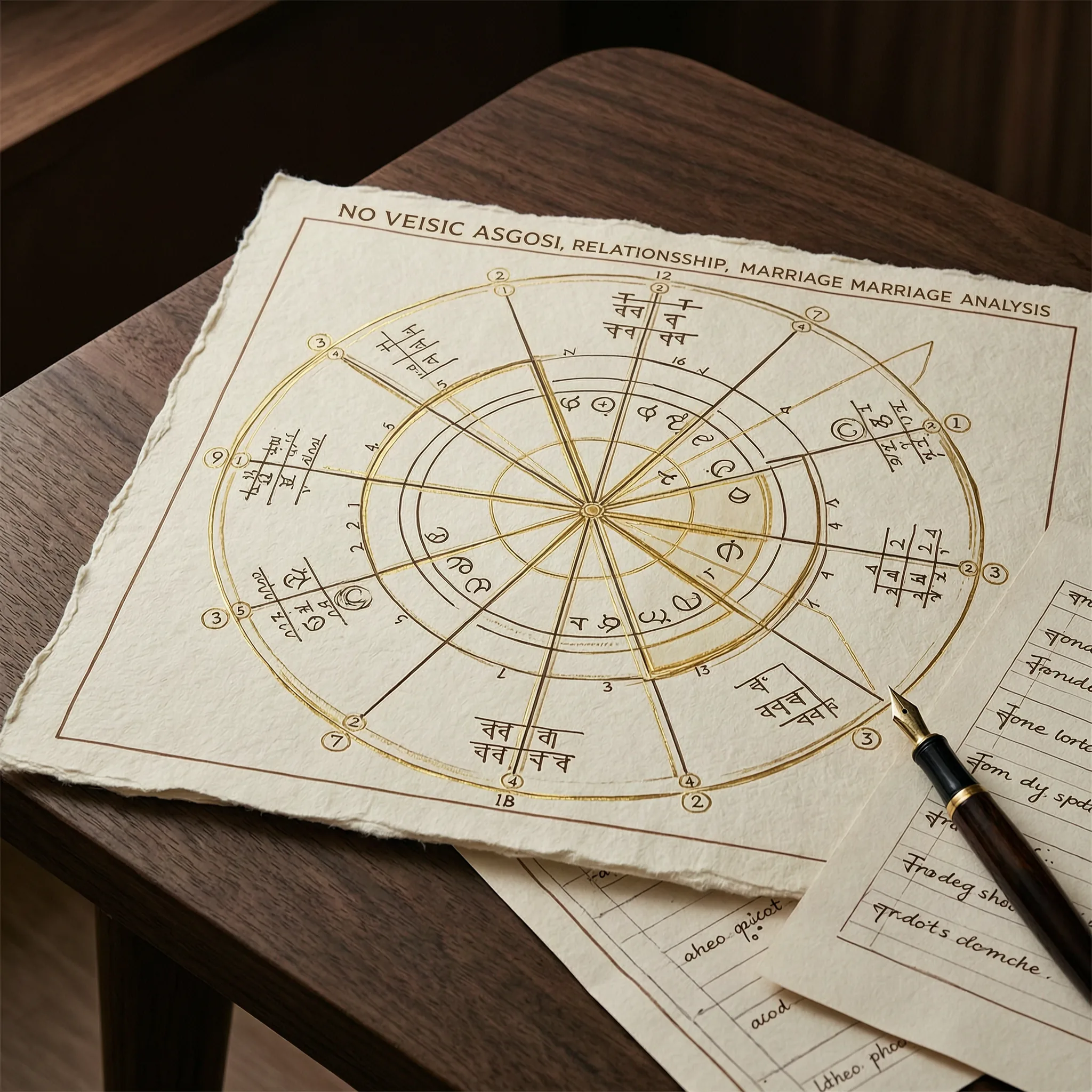
The Placements Commonly Linked to It
A few configurations tend to come up most often in this discussion:
Affliction to the 7th house or its lord : When the 7th house is heavily influenced by malefic planets, or its ruling planet sits in a weak or difficult position, classical texts note this as a marker worth watching not a guarantee of anything.
Mars-Venus tension : Mars represents drive and friction, Venus represents harmony and affection. When these two sit in difficult relationship to each other through conjunction, opposition, or mutual affliction. It's traditionally read as a signal of potential friction between partners, particularly around ego and compatibility.
8th house involvement : The 8th house governs transformation, sudden change, and endings. Its connection to the 7th house or 7th lord is one of the patterns astrologers watch when discussing relationship instability.
Manglik-related factors : A strong, unmitigated Mars affliction (often called Kuja Dosha or "Manglik" placement) is frequently folded into this conversation, though it deserves and gets its own dedicated explanation elsewhere on this site, since it's commonly misunderstood on its own.
None of these, alone, describes a marriage. They describe a tendency the chart may be carrying.
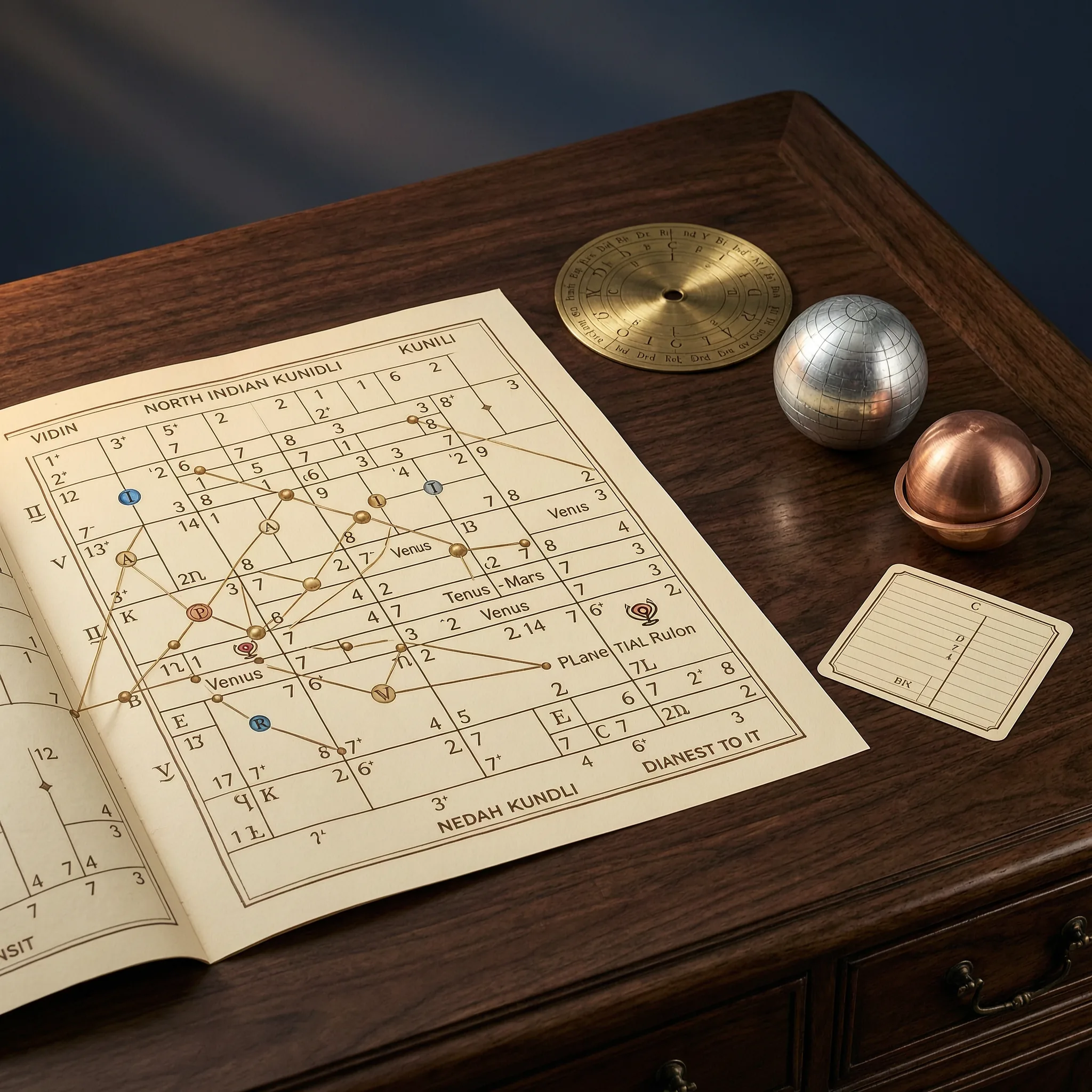
Why One Yoga Never Tells the Whole Story
This is the part most casual readings skip, and it's the part that matters most.
A birth chart is a system, not a checklist. A difficult 7th house can be significantly supported by a strong Jupiter, a well-placed Moon, or benefic aspects that stabilize the relationship house entirely. Classical astrology has always treated affliction and support as a balance sheet, not a single line item.
Timing matters just as much as placement. A chart can carry a challenging combination that simply never activates strongly, because the Dasha (planetary period) governing that phase of life doesn't bring it forward. Two people can have similar 7th-house patterns and live entirely different marital lives, because the periods running through their charts are different.
And critically a chart shows tendencies and potential friction points, not fixed outcomes. Communication, effort, personal growth, and circumstance all sit outside what a birth chart can measure. Treating any single yoga as destiny is the exact kind of fear-based reading Vedic Shruti avoids, because it isn't how serious astrology actually works, and it isn't fair to the person reading it.
What Actually Changes the Reading
If you're looking at your own chart, or someone else's, with this concern in mind, a few things shift the picture meaningfully:
-
The overall strength of the 7th house, not just whether one affliction is present.
-
Which Dasha and sub-period (Antardasha) is currently active, and whether it touches the 7th house at all.
-
Supporting benefic influences Jupiter's aspect, a well-placed Moon, or a strong 7th lord elsewhere in the chart.
-
Whether the affliction is isolated or repeated across multiple indicators (7th house, 7th lord, Venus, and Mars all agreeing tells a different story than just one of them).
This is why a proper reading looks at the whole chart together, rather than pulling one combination out of context.
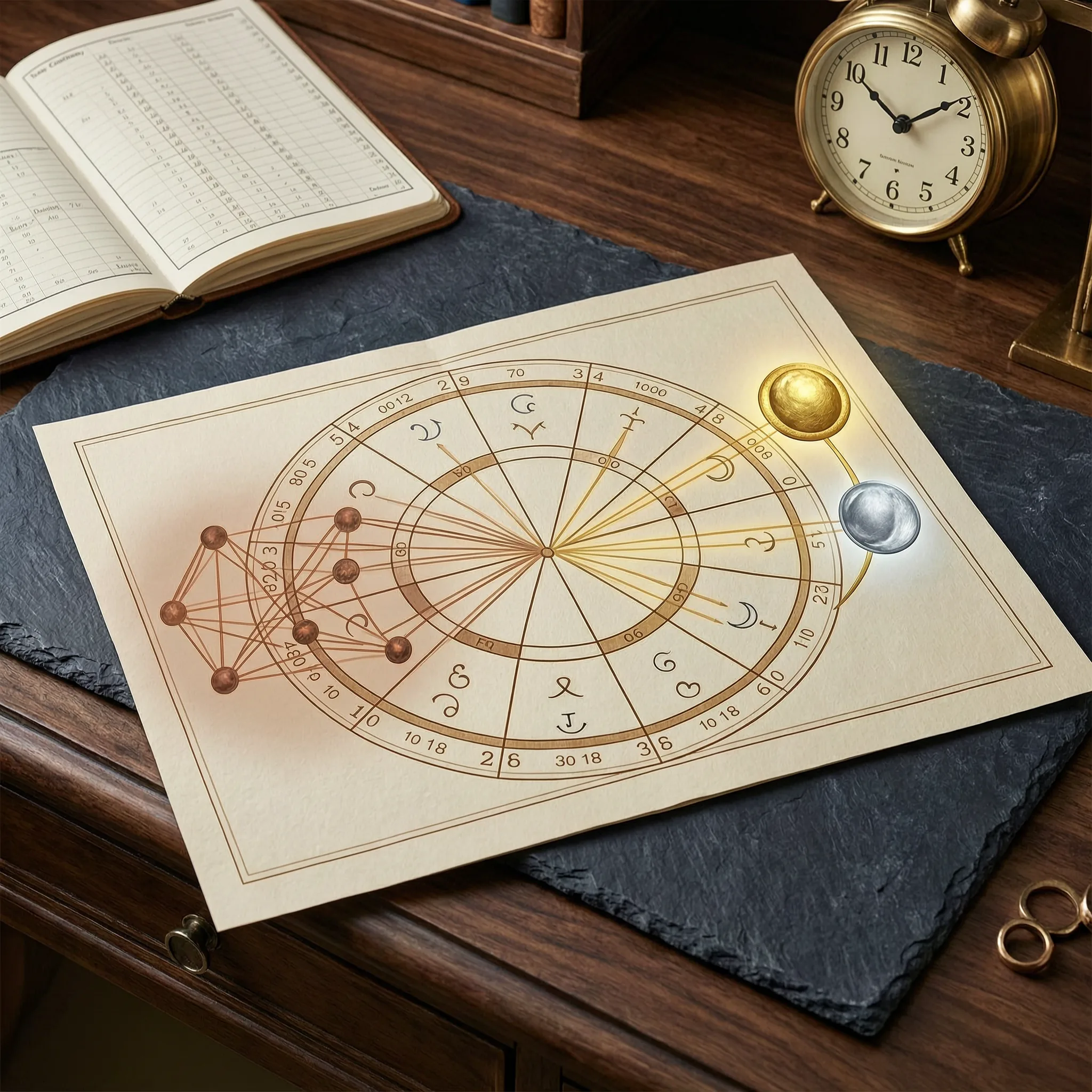
What to Do With This Information
If a chart genuinely does carry a challenging combination in this area, that's not something to be anxious about it's information. Classical astrology treats these patterns as areas worth conscious attention: communication, patience, and where appropriate supportive remedial practices, rather than a forecast to fear.
The most useful next step is simply seeing the full picture rather than one isolated placement. That's exactly what a complete chart reading is built to show how the 7th house, its lord, Venus, and Mars sit together, and what period of life is currently active.
FAQs
What is divorce yoga in astrology?
It's an informal term for a group of planetary combinations mainly involving the 7th house, its lord, Venus, and Mars that are traditionally associated with relationship friction. It isn't a single official yoga, and it doesn't predict divorce on its own.
Can divorce yoga be cancelled or reduced?
Classical astrology holds that supportive placements elsewhere in the chart a strong Jupiter, a well placed 7th lord, or benefic aspects can significantly soften a difficult combination. Timing (Dasha) also plays a major role in whether a pattern activates at all.
Does having this combination mean my marriage will fail?
No. It indicates an area worth attention, not a fixed outcome. Chart reading, effort, and circumstance all sit alongside not beneath astrological potential.
Which planets are most linked to marital friction in astrology?
Mars and Venus are the two most commonly discussed, along with the 7th house and its ruling planet. The 8th house is sometimes included when discussing sudden or significant change.
How can I check this in my own chart?
The clearest way is to look at the full picture house strength, planetary support, and current Dasha rather than isolating one placement.
Conclusion
"Divorce yoga" is a phrase that carries more anxiety than the astrology behind it warrants. What it actually describes is a set of chart factors worth understanding in context not a verdict, and never something to read in isolation. A calm, complete reading almost always tells a more nuanced story than a single alarming term suggests. Want to see how your 7th house, Venus, and Mars actually sit together and which Dasha period is currently active? Generate your free Kundli and read the full picture, not just one placement.