
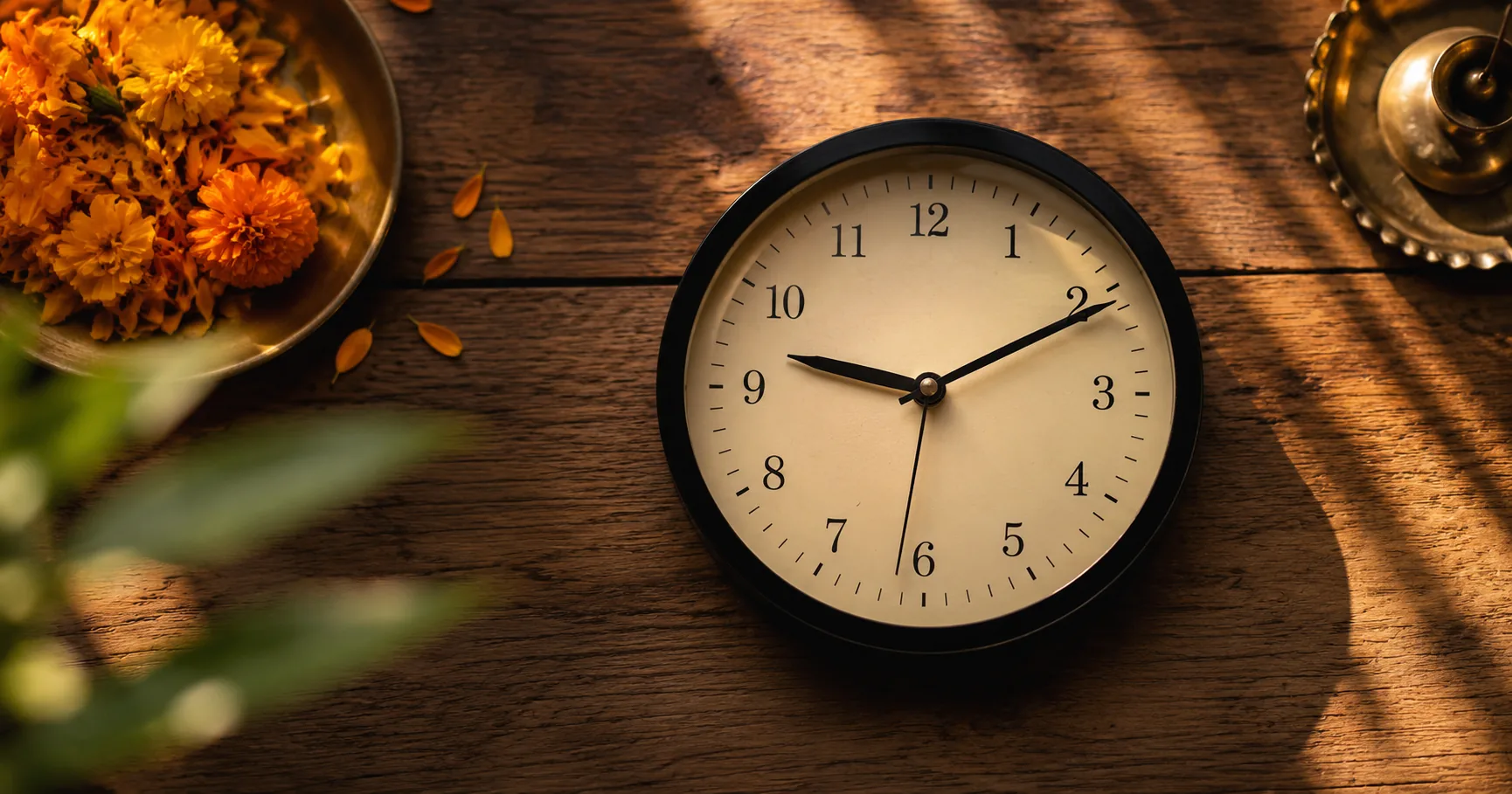
What is Rahu Kaal?
Rahu Kaal is a roughly 90-minute period that occurs once every day, considered inauspicious for starting new or important activities in Vedic astrology. It shifts to a different time slot depending on the day of the week and is calculated from local sunrise and sunset — which is why it looks different for every city and changes slightly with the seasons.
It's one of the most-searched daily astrology terms in India, right alongside Panchang and Choghadiya, mostly because it shows up quietly in everyday decisions — "should I sign this today," "is this a good time to start the drive," "should the shop open now." The answer is rarely dramatic. It's a scheduling habit, not a warning.
The Story Behind Rahu — Why This Period Exists
In Vedic astrology, Rahu is one of the nine grahas (planetary influences), though it isn't a physical planet — it's a shadow point in the sky, the northern lunar node, tied to the mechanics of eclipses. Rahu is associated with ambiguity, disruption, and things that don't go the way they're planned.
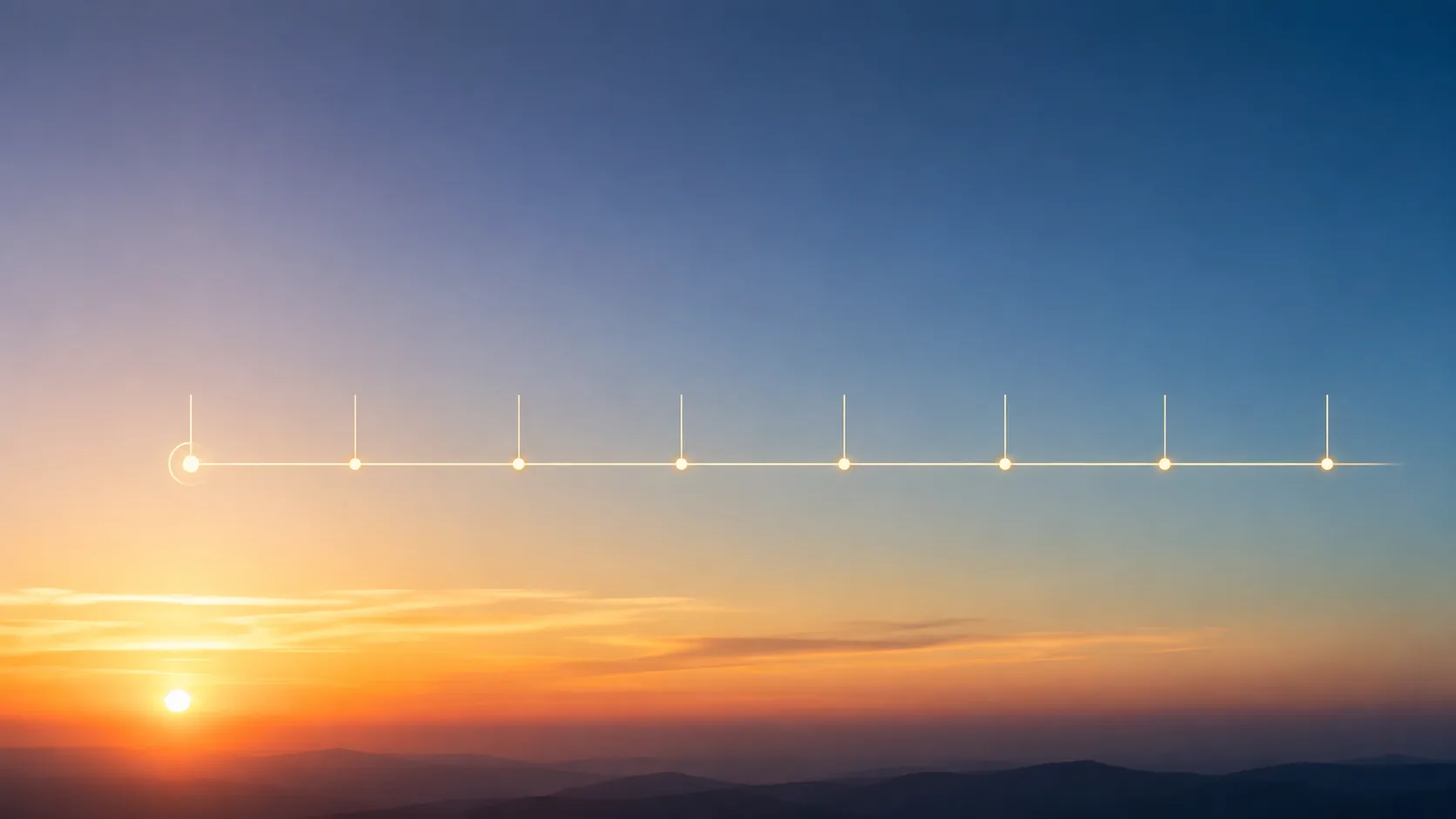
Each day of the week is traditionally assigned a period ruled by Rahu's influence. This period isn't fixed by clock time — it's fixed by position in the day, calculated as one of eight equal segments between sunrise and sunset. That's the part most explainers skip, and it's the part that actually matters for understanding why Rahu Kaal moves every single day.
How Rahu Kaal is Calculated Each Day
Here's the method, in plain terms:
Take the time between sunrise and sunset for that specific location. Divide it into eight equal parts (roughly 90 minutes each, give or take, depending on the season). Each day of the week has a fixed segment number assigned to it — for example, Monday's Rahu Kaal typically falls in the second segment of the day, while Saturday's falls in the ninth-hour-equivalent slot near the end. Because day length changes across the year and by latitude, the exact clock time for Rahu Kaal shifts slightly every single day — which is why a generic "Rahu Kaal is always 4:30–6:00 PM" claim floating around the internet is wrong for most days and most cities.
This is also exactly why Rahu Kaal, Panchang, and location-based sunrise/sunset data are inseparable — you genuinely cannot calculate one without the other.
What People Traditionally Avoid During Rahu Kaal
None of this is about fear — it's closer to a scheduling convention that's been passed down and still gets used out of habit and cultural continuity. Commonly, people avoid starting (not continuing) certain things during this window:
Starting a new business venture or signing new contracts Beginning travel for an important purpose Starting a wedding ceremony or major ritual Beginning any activity meant to be a fresh, ambitious start
Ongoing work, routine tasks, and anything already in motion are not affected — the convention is specifically about beginnings.
What Rahu Kaal Does Not Mean
This is the part worth being direct about: Rahu Kaal is not a period where "bad things happen." It's not a curse window, and missing it or ignoring it doesn't trigger misfortune. It's a traditional timing preference — similar in spirit to avoiding starting a big project on a Friday afternoon, except this one has a defined astronomical calculation behind it rather than a modern superstition. If a wedding, flight, or meeting has to happen during Rahu Kaal, it happens. The tradition is a preference, not a rule with consequences.
How to Check Today's Rahu Kaal
Because it depends on your city's sunrise and sunset, the only reliable way to check it is with a location-specific Panchang for the current date — not a generic chart. Vedic Shruti's Panchang tool calculates this automatically for your location, alongside Choghadiya, Tithi, and Nakshatra for the day, so you're not doing the eight-segment math by hand.
FAQs
Is Rahu Kaal the same time every day?
No. It's calculated as one segment of the daylight hours, so the clock time shifts daily based on your city's actual sunrise and sunset.
Can I still work during Rahu Kaal?
Yes. Ongoing and routine work is unaffected — the tradition is specifically about avoiding the start of new, significant undertakings.
Does Rahu Kaal happen at night too?
The most commonly followed calculation is for the daytime segment between sunrise and sunset. Some regional traditions also track a nighttime equivalent, but the daytime version is the one referenced in most everyday Panchang listings.
Is Rahu Kaal backed by astronomy?
The calculation method (dividing daylight into segments based on real sunrise/sunset data) is astronomically grounded. The interpretation of it as "inauspicious" is a cultural and astrological tradition, not a scientific claim.
Why does Rahu Kaal fall at a different time in every city?
Because sunrise and sunset differ by location, and the calculation is built entirely from those two local times.
Conclusion
Rahu Kaal is less mysterious once you see the mechanics: it's a fixed daily segment of real sunlight hours, assigned by weekday, used traditionally to time the start of important things. No fear, no drama — just a scheduling habit worth understanding rather than worrying about. Check today's Rahu Kaal, Choghadiya, and full daily Panchang for your exact location with Vedic Shruti's Panchang Tool →