
Misunderstood Astrology Terms Explained Clearly
Myth vs. Fact / Astrology Credibility
Why Astrology Vocabulary Gets Misunderstood
Most people don't meet Vedic astrology through a book or a teacher. They meet it through a worried aunt, a viral reel, or a one-line caption under someone's chart screenshot. That's how words like "dosha," "Sade Sati," and "retrograde" end up carrying more fear than meaning. Repeat a word enough times without its context and the original definition just quietly disappears. This piece is an attempt to put that context back, without the drama that usually comes attached.
"Dosha" Doesn't Mean Curse

"Dosha" might be the most misused word in popular astrology. Thrown around online, it sounds like a diagnosis — something wrong with you that needs fixing right now. What it actually describes is a specific planetary placement or combination that creates an imbalance, or a particular kind of pressure, in a chart. Not a moral failing. Not a sentence. Every chart has some doshas, the same way every body has some asymmetry. What matters is which dosha, how strong it is, and what else in the chart is modifying it. Read one placement in isolation and you get exactly the kind of fear-based interpretation that gives the word its bad reputation.
"Sade Sati" Doesn't Mean Seven Years of Misfortune
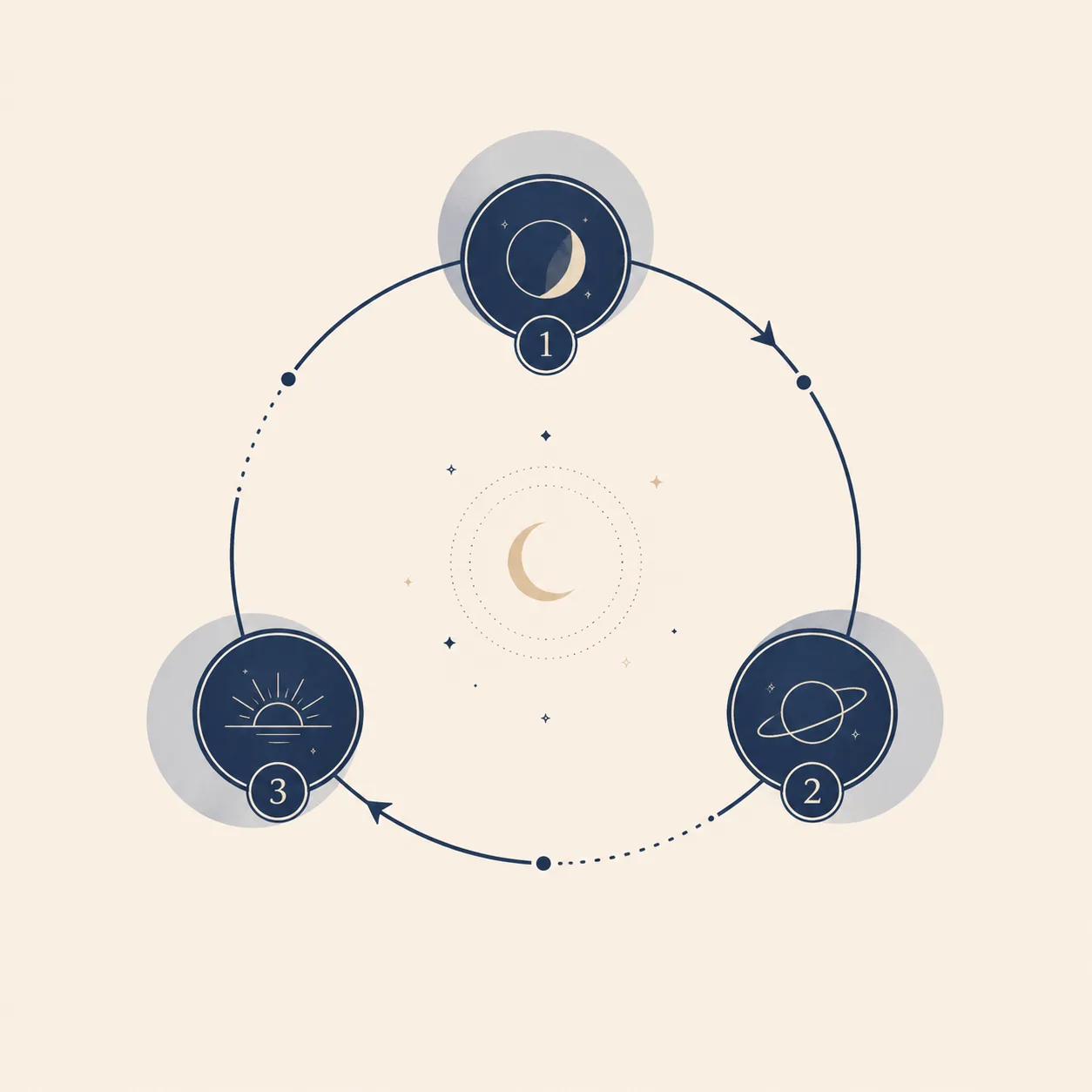
As a definition, Sade Sati is nothing more than a roughly seven-and-a-half-year period defined by Saturn's transit relative to a person's natal Moon sign. Popular content shortens that into "seven years of bad luck," and that's where the anxiety comes from. What the period actually indicates is significant restructuring — Saturn's themes are discipline, responsibility, and consolidation, not punishment. Plenty of people go through career growth, real maturity, or major life decisions during this window. It unfolds in three phases, not one long ordeal, and how it plays out depends on the rest of the chart and on the person's own choices as much as on Saturn itself.
"Retrograde" Doesn't Mean Everything Stops
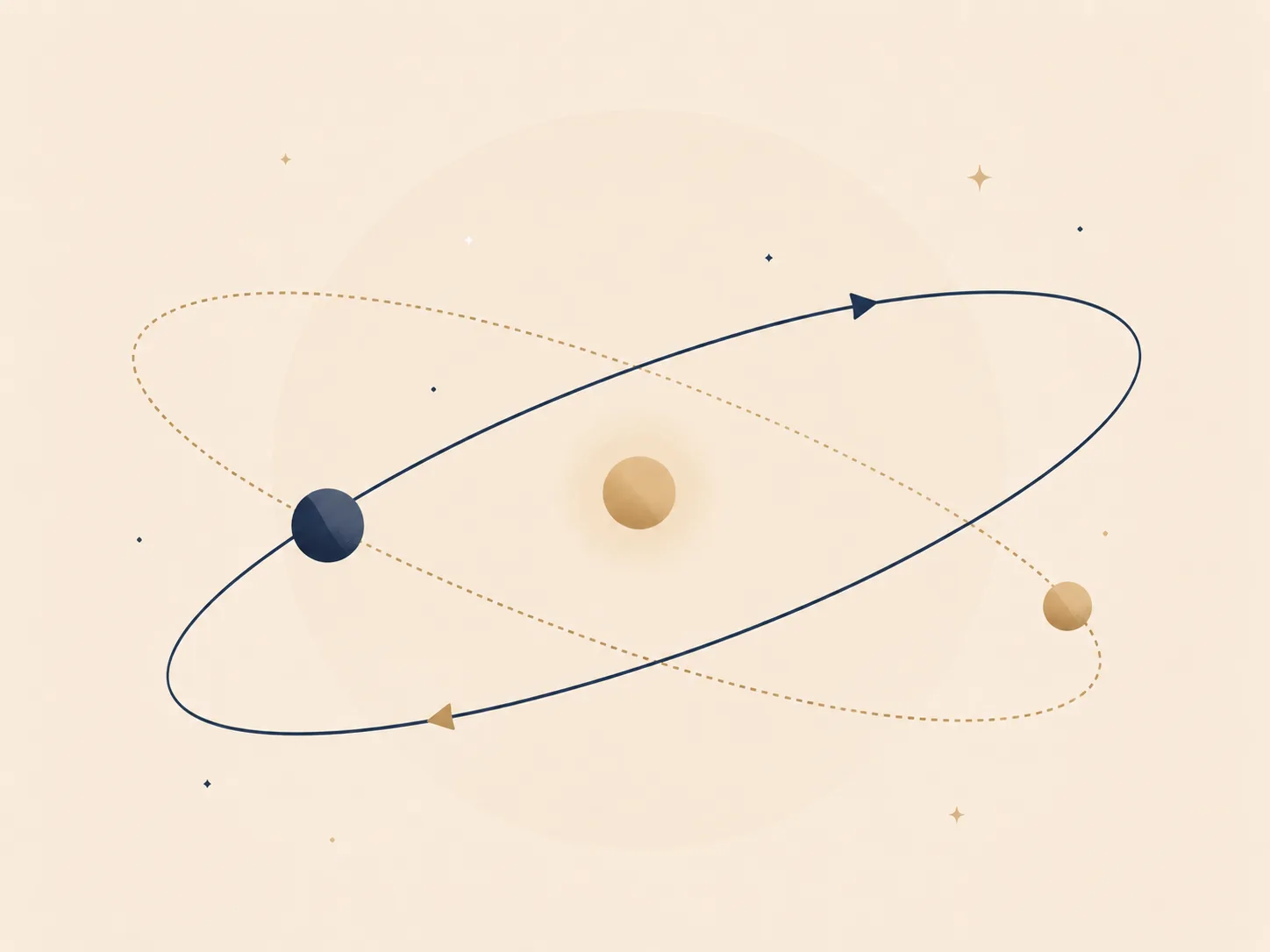
Borrowed heavily from Western pop-astrology, "retrograde" gets treated like a universal pause button: don't sign anything, don't start anything, don't send that text. Astronomically, retrograde motion is just the apparent backward movement of a planet as seen from Earth, caused by the difference in orbital speeds. Nothing supernatural about it. In Vedic astrology, a retrograde planet is read as working with unusual intensity or turned inward, not as a planet that's stopped functioning. Whether that matters much for a given person comes down to which planet it is and where it sits in their individual chart.
"Kundli Milan" Isn't Just a Pass/Fail Score
Kundli Milan, or chart matching, gets reduced constantly to a single number — the Gun Milan score out of 36 — as if it were a pass/fail exam for a relationship. That number is just the entry point. The full process, Ashtakoot Milan, weighs eight separate compatibility factors covering temperament, mental compatibility, health, and more. A weak score in one factor can be offset by strength elsewhere in both charts. Collapsing all of that into one number is exactly how a nuanced compatibility tool turns into an anxiety trigger.
"Nakshatra" Is More Than a Star Sign
People often use "Nakshatra" as a fancier synonym for zodiac sign. It isn't. A Nakshatra is one of 27 specific lunar segments the Moon travels through, each with its own ruling deity, symbol, and characteristics — far more granular than the 12 Rashis (Moon signs) most people already know. Two people can share a Moon sign and still land in completely different Nakshatras, which is exactly why the distinction matters so much in detailed compatibility matching.
Why the Words Matter as Much as the Meaning
None of this confusion comes from astrology being vague. It comes from short-form content squeezing a layered tradition into one scary word. The fix isn't to drop the vocabulary — it's to use it correctly. That's the standard we try to hold this blog to: no term gets used without being explained, and no placement gets discussed without the reminder that a real reading depends on the whole chart, not one word pulled out of it.
FAQs
Is a dosha always bad?
No. A dosha describes a kind of planetary pressure or imbalance, not a guaranteed bad outcome. Its real effect depends on the rest of the chart.
Does Sade Sati really last exactly 7.5 years for everyone?
The overall transit window is roughly 7.5 years, but it moves through three distinct phases, and how intense it feels varies from person to person.
Is a retrograde planet "broken" or non-functional?
No. Retrograde motion is an optical effect from Earth's point of view. The planet's energy is read as more internalized or intense, not absent.
Is a low Kundli Milan score a dealbreaker?
Not by itself. The 36-point Gun Milan score is one piece of an eight-factor system, and context across both charts counts for more than a single number.
What's the difference between Rashi and Nakshatra?
Rashi is one of 12 broader Moon-sign divisions. Nakshatra is one of 27 finer lunar segments the Moon passes through — a more detailed layer of the same system.
Conclusion
Astrology terms don't need to be intimidating. They need to be explained properly. Once you actually understand what "dosha" or "Sade Sati" describes, most of the fear built around it falls away on its own. Plain definitions first, nuance second, no drama.
Curious what these terms look like in your own chart? Generate your free Kundli report to see your actual placements, explained the same calm, clear way.