
The Question Behind the Question
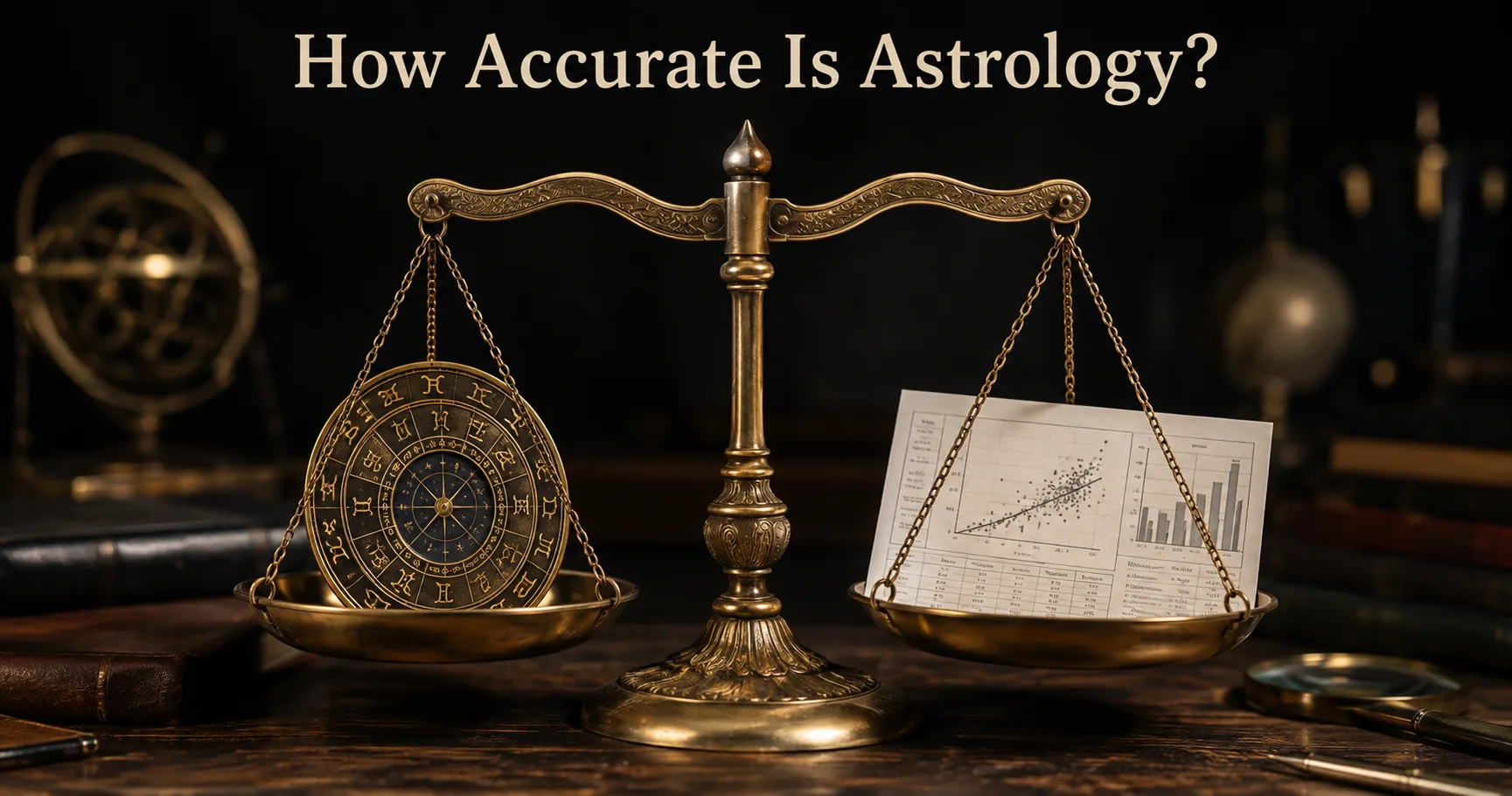
Most people don't actually ask "is astrology real" — they ask something narrower: does it work, and how much should I trust what it tells me? That's a fair, testable question, and it deserves a fair, testable answer rather than either blind defense or blanket dismissal.
What "Accurate" Even Means Here
Astrology can mean different things depending on what's being measured — predicting specific future events, describing personality traits, or offering a framework for reflection. Controlled studies have mostly tested the first two: can astrologers predict outcomes, and do birth charts correlate with measurable personality traits? The third — astrology as a reflective tool — is a different, less testable claim, and conflating the two is where a lot of the debate goes sideways.
What Controlled Studies Have Actually Found
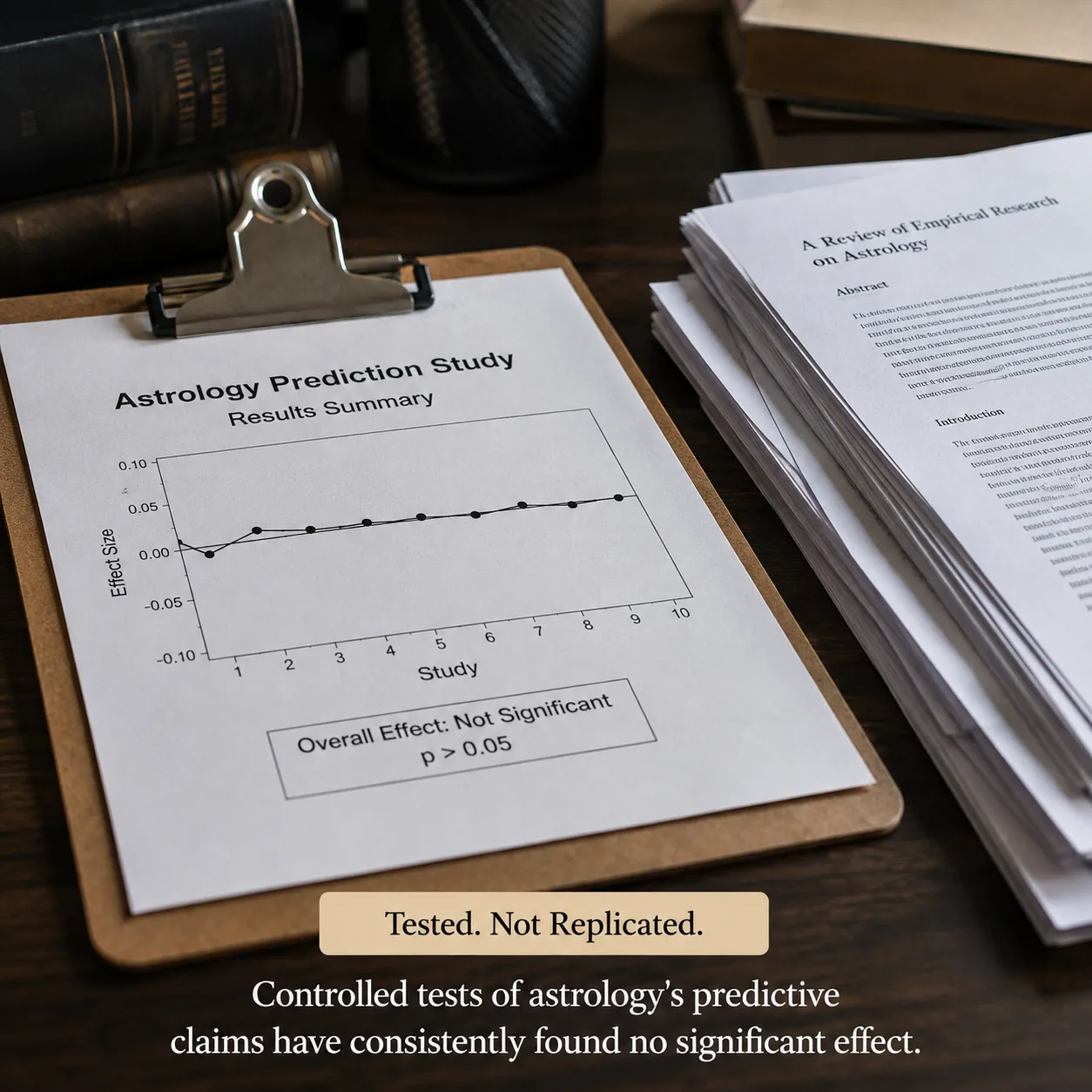
Several well-known controlled tests have looked at astrology's predictive and descriptive claims directly. In one widely cited 1985 experiment, astrologers were asked to match birth charts to personality profiles under blind conditions and performed no better than chance. Larger studies examining birth date against measured personality and intelligence, involving thousands of participants, have similarly found no meaningful statistical link. Claims tied to specific correlations — such as certain planetary positions and career choice — have also been retested and largely failed to replicate under stricter conditions.
The honest summary: when astrology's claims are set up as falsifiable, testable predictions, the evidence supporting them has consistently been weak to absent. That's not a controversial statement within the scientific community — it's close to consensus.
Why Astrology Can Still Feel Accurate
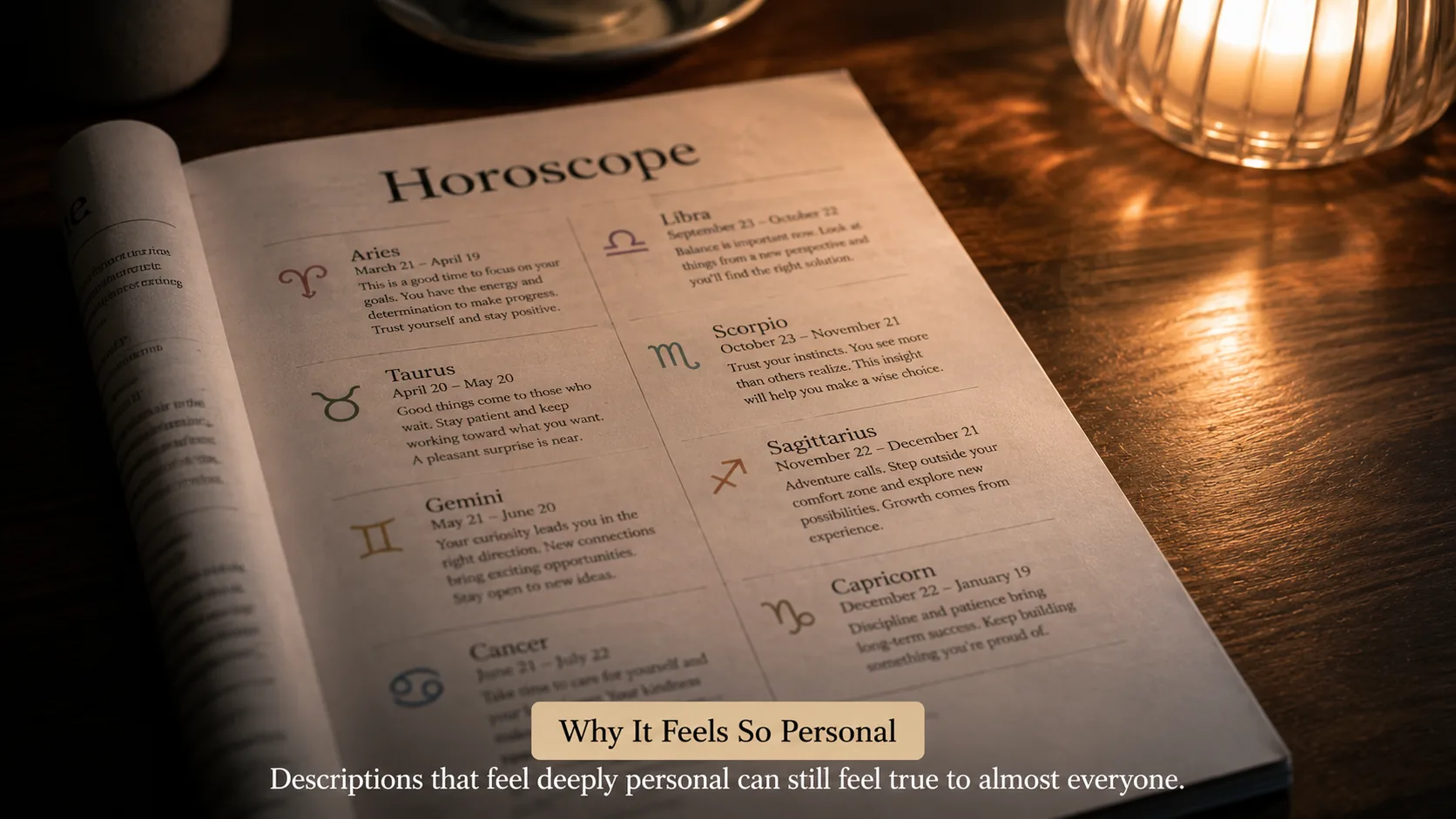
None of that explains why so many people experience astrology as personally accurate — and that part is worth taking seriously rather than dismissing. Psychological research on the "Barnum effect" shows that broad, flattering, or emotionally resonant descriptions feel personally true to almost everyone, astrology or not. Add to that confirmation bias — noticing the hits, forgetting the misses — and a genuinely accurate-feeling experience doesn't require the underlying mechanism to be scientifically valid.
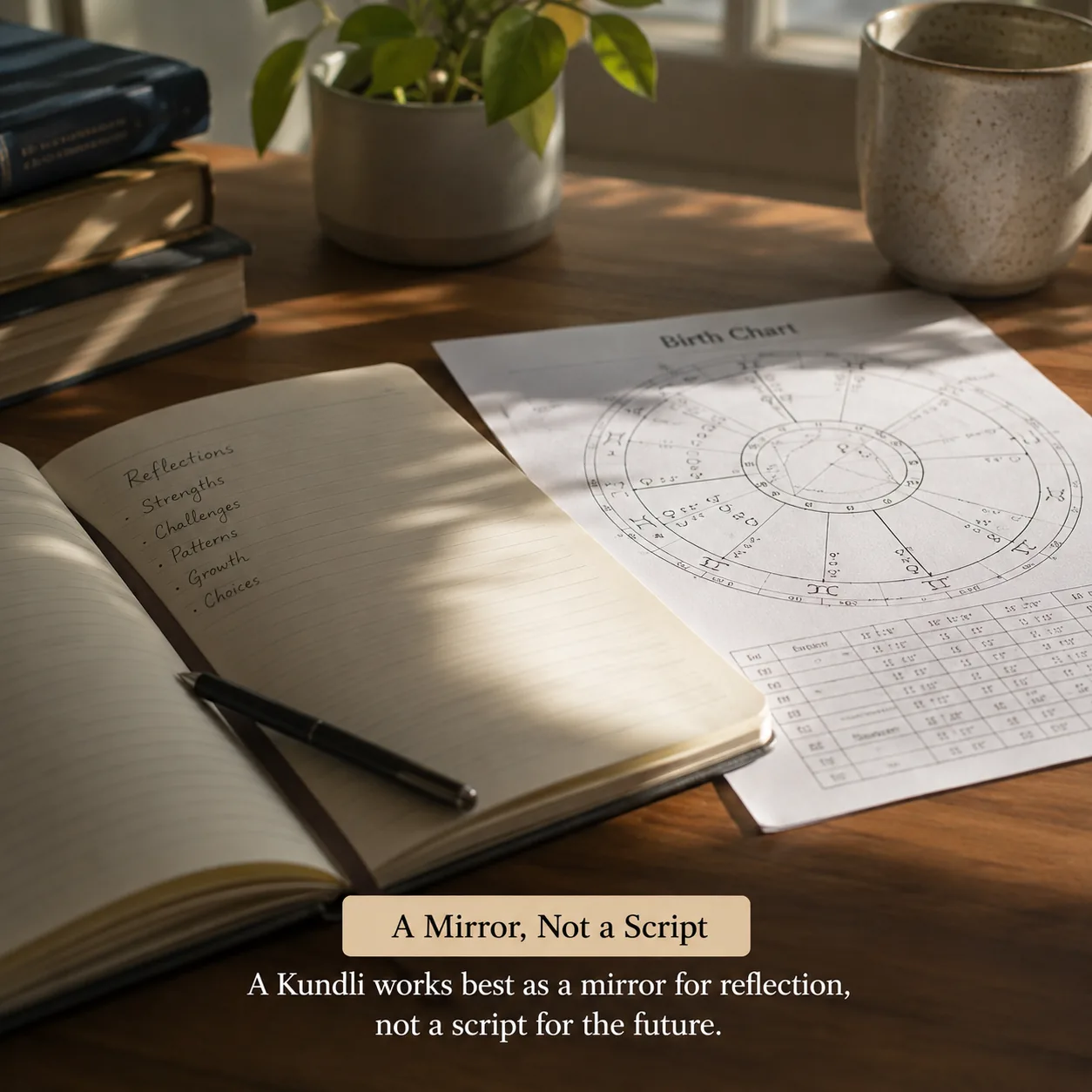
This is also where astrology's other function shows up: as a structured language for self-reflection. A Mahadasha framework or a house-by-house chart reading gives people a vocabulary for thinking through a life stage, a decision, or a pattern — useful independent of whether the planets are causally involved.
Where the Real Debate Sits Today
Scientific consensus treats astrology as a pseudoscience with respect to predictive and personality claims — it hasn't produced replicable evidence and hasn't been able to when tested rigorously. At the same time, a meaningful and growing share of people use it not as a predictive science but as an intentional, reflective practice — closer to journaling with structure than to forecasting. Both things can be true at once, and pretending otherwise flattens a more interesting, more honest picture.
What This Means for How You Use a Kundli
None of this means your Kundli is meaningless — it means it's most useful when you treat it the way it's actually built to be used: as a structured mirror for reflection, timing awareness, and pattern-spotting, not as a guaranteed forecast. That's also why every reading here comes with nuance and context instead of absolute claims, and why the AI Chat is built to explain a chart rather than promise an outcome.
FAQs
Q: Has astrology ever been scientifically proven?
A: No controlled study has found astrology's predictive or personality claims to hold up under blind, rigorous testing — this is close to scientific consensus.
Q: Why does my horoscope still feel accurate sometimes?
A: Broad, emotionally resonant descriptions tend to feel personally true to most people regardless of source — a well-documented effect separate from whether the astrology itself is valid.
Q: If it's not scientifically proven, is it pointless to read a Kundli?
A: Not necessarily — many people find real value in it as a structured framework for reflection and self-understanding, distinct from its predictive claims.
Q: Does Vedic astrology have better evidence than Western astrology?
A: No large-scale controlled study has found meaningfully stronger predictive evidence for one system over the other; the core testing challenges are shared across traditions.
CONCLUSION
The honest answer to "how accurate is astrology" has two parts, not one: as a predictive science, the controlled evidence doesn't hold up. As a reflective framework, its value depends entirely on how it's used — and that's a choice you get to make with clear eyes, not fear. Want a reading built for reflection, not fear? Explore your Kundli with context and nuance built in, or ask the AI Astrology Chat what your chart can — and can't — tell you.