
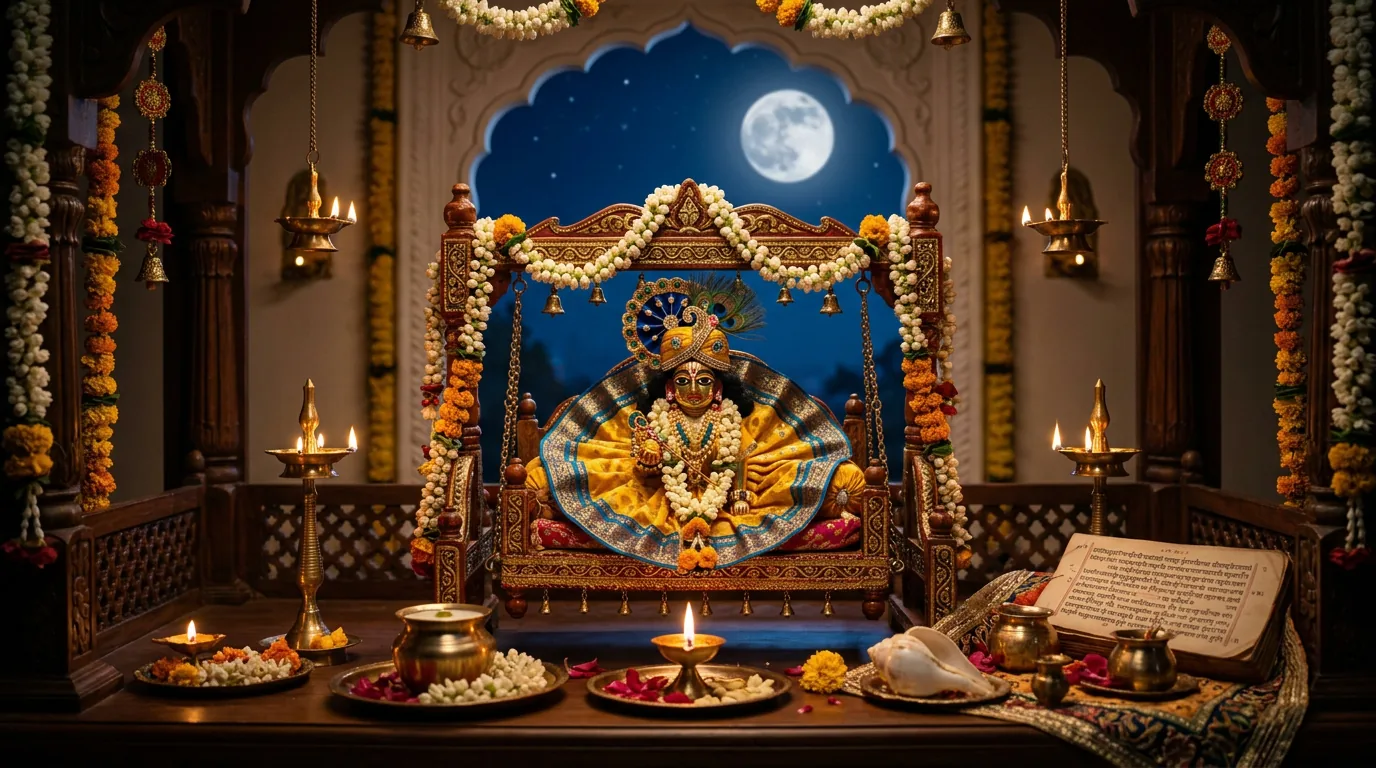
What Is the Janmashtami 2026 Date?
Krishna Janmashtami 2026 falls on Friday, 4 September, marking what tradition holds as Lord Krishna's 5,253rd birth anniversary. Because the central ritual, the midnight birth celebration happens after 12 AM, some dates online show 5 September too. The main observance and fasting day is 4 September; the midnight puja simply extends past it.
This overlap isn't a discrepancy to worry about. It's a natural feature of how tithis (lunar days) are calculated, and it's worth understanding rather than a cause for confusion.
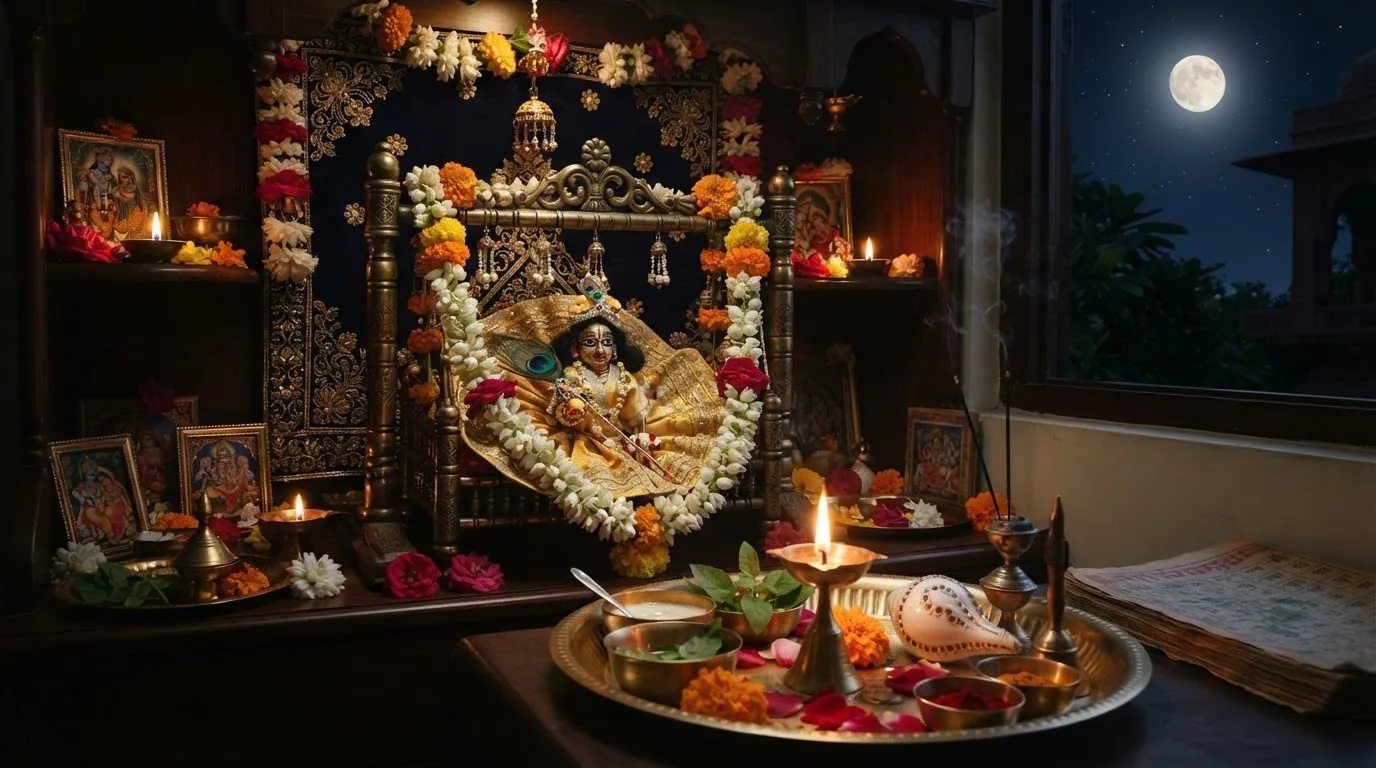
Nishita Puja Muhurat for Janmashtami 2026
The Nishita Puja, the main midnight worship is generally expected between roughly 11:15 PM on 4 September and 12:45 AM on 5 September, with the exact window narrowing to about 45 minutes depending on your city. For example, published city-wise estimates show Delhi around 11:57 PM–12:43 AM, while Kolkata's window runs earlier, closer to 11:13 PM–11:59 PM.
Because Nishita Kaal is defined as the midpoint of night for your specific location, it shifts with local sunrise and sunset there's no single muhurat that applies to all of India equally. For your exact city window, the Panchang tool gives you a location-specific calculation rather than a general estimate.
Why Nishita Puja Timing Changes by City
Nishita Kaal isn't a fixed clock time it's calculated as the middle point of the night for a given location, based on local sunset and the following sunrise. Cities further east (like Kolkata) see midnight fall earlier relative to IST than cities further west, which is why the puja window shifts by roughly 30–45 minutes across India. This is standard Panchang mathematics, not an inconsistency between sources.
Ashtami Tithi and Rohini Nakshatra Timings
Janmashtami is observed on Krishna Paksha Ashtami the eighth day of the waning moon in the month of Bhadrapada. For 2026, the Ashtami Tithi is expected to begin in the early hours of 4 September and extend until just after midnight on 5 September. Rohini Nakshatra, the lunar mansion under which Krishna is traditionally believed to have been born, begins later that same night and continues into 5 September.
The overlap of Ashtami Tithi and Rohini Nakshatra on the same night is considered especially significant this combination is one of the reasons the midnight hour carries such weight in the observance.
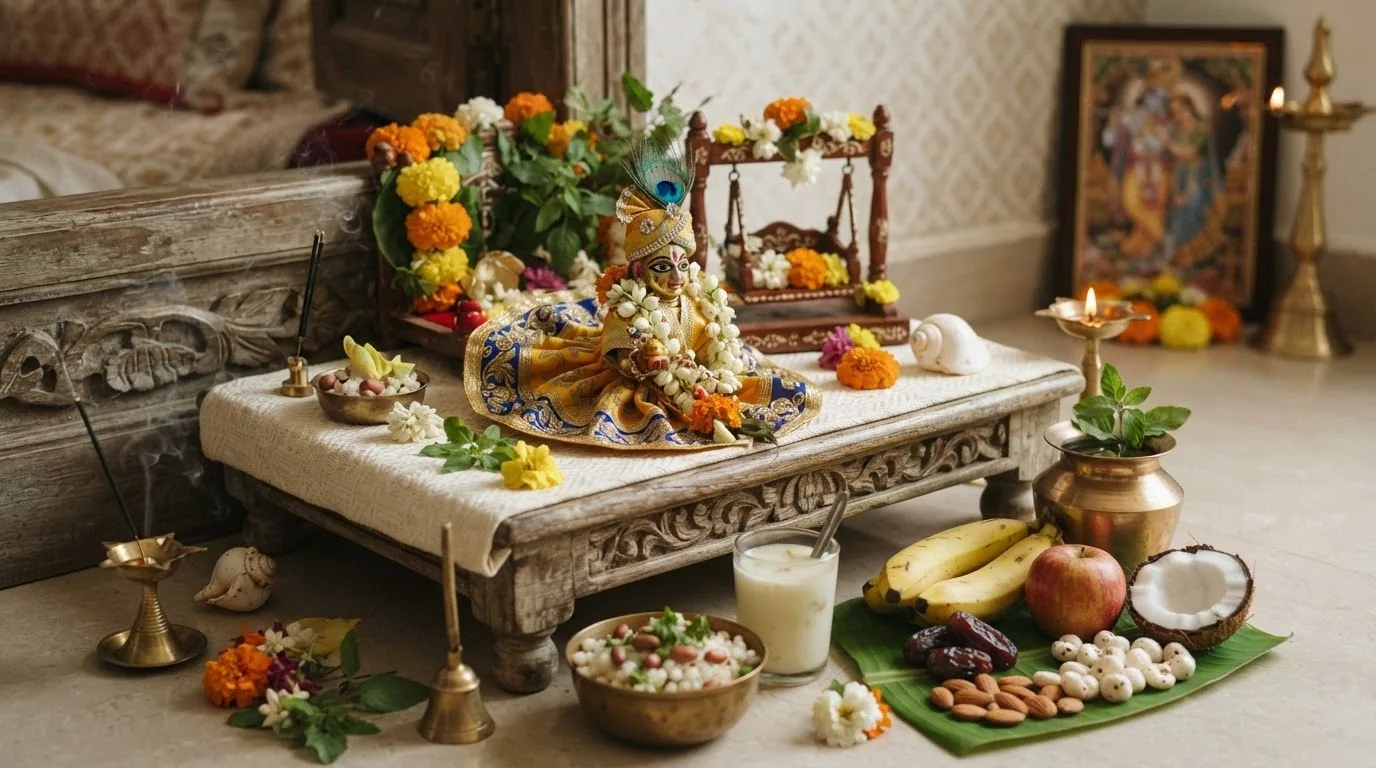
How Janmashtami Is Traditionally Observed
Most devotees observe a day-long fast, breaking it only after the midnight puja or the following morning, depending on family tradition. Common practices include:
-
● A Nirjala (complete) fast, or a Phalahar (fruit-only) fast with milk, dry fruits, and sabudana preparations
-
● Avoiding grains, lentils, onion, and garlic for the day
-
● Decorating and dressing an idol of Laddu Gopal in new clothes
-
● An evening or midnight Abhishek (ceremonial bath) with Panchamrit
-
● Chanting, bhajans, and reading the Krishna Janma Katha or Bhagavad Gita around midnight
There's no single "correct" way to observe the day households and regions vary, and that variation is part of the tradition rather than something to standardize.
Dahi Handi 2026
Dahi Handi, the community celebration involving human pyramids breaking a suspended pot of curd, is expected to take place the following day, Saturday, 5 September 2026, particularly in Maharashtra and other western states.
Planning Your Janmashtami with Panchang
If you want the Nishita Puja window calculated precisely for your own city rather than a general estimate, the [Panchang tool] gives you tithi, nakshatra, and muhurat timings specific to your location useful if you're organizing a puja for family or community and want to plan the evening around an exact window rather than a rough one.
FAQs
Is Janmashtami 2026 on 4 September or 5 September?
The main observance and fasting day is Friday, 4 September. The midnight Nishita Puja extends into the early hours of 5 September, which is why both dates appear online.
What time is Nishita Puja in my city?
It varies by roughly 30–45 minutes across India depending on your location's sunset and sunrise. Use a location-based Panchang tool for your exact window rather than relying on a single national time.
What is Ashtami Tithi?
Ashtami is the eighth day of a lunar fortnight. Janmashtami falls on Krishna Paksha Ashtami The eighth day of the waning moon in the month of Bhadrapada.
Why does Rohini Nakshatra matter for Janmashtami?
Krishna is traditionally believed to have been born under Rohini Nakshatra, so a year where Ashtami Tithi and Rohini Nakshatra overlap on the same night is considered especially auspicious.
When is Dahi Handi 2026?
Dahi Handi celebrations are expected on Saturday, 5 September 2026, the day after the main Janmashtami observance.
CONCLUSION
Janmashtami 2026 centres on the night of 4 September, with the exact Nishita Puja window depending on where you are. Rather than treating the date confusion or city-by-city variation as complicated, it helps to see both as part of how the Panchang works precise, location-specific, and consistent once you know how to read it. Check your city's exact Nishita Puja Muhurat and full Panchang for 4 September on the [Panchang tool] - no sign-up needed, just your location.