
AI Astrology: Can AI Really Read Your Kundli?
Quick answer: AI can calculate a technically accurate kundli in seconds and describe basic planetary placements correctly. What it still struggles with is weighing conflicting yogas the way a trained Vedic astrologer does, so an AI kundli reading is a solid starting point, not a replacement for one.
Type your birth details into an AI astrology app and within seconds you get a full kundli, complete with planetary positions, dasha periods, and a written prediction. It feels almost too easy, and it raises an obvious question: can AI really read your kundli the way a trained astrologer can? The honest answer is that AI is very good at the math behind a birth chart and still catching up on the judgment that Vedic astrology demands. Here's what AI kundli analysis can and can't do, how it works, and where you can actually try it.
What Is AI Kundli Analysis?
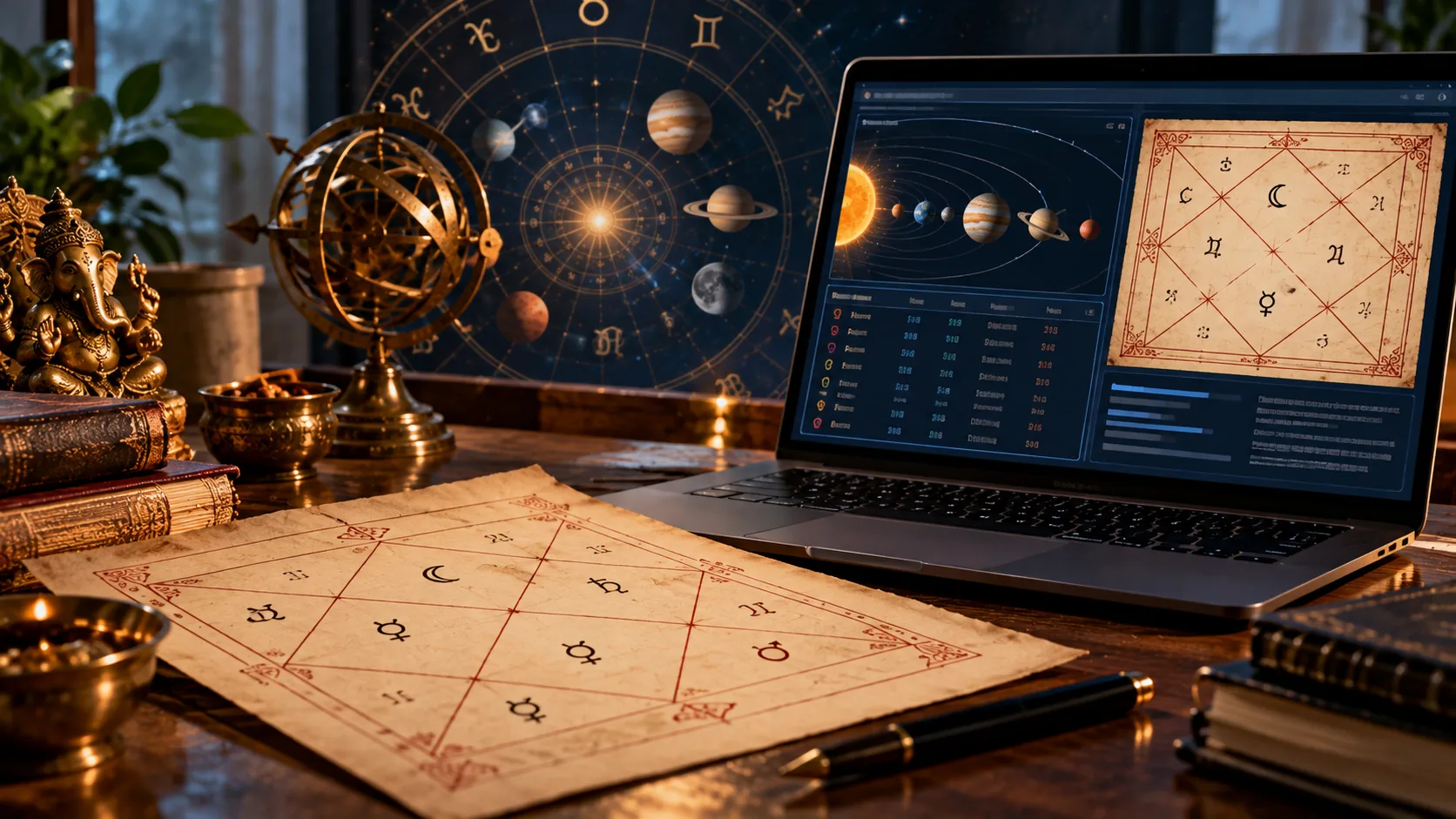
AI kundli analysis is the process of using software, often powered by a language model, to generate and interpret a Vedic birth chart. Unlike a chart handwritten by a local astrologer, an AI-generated one is really built in two separate layers.
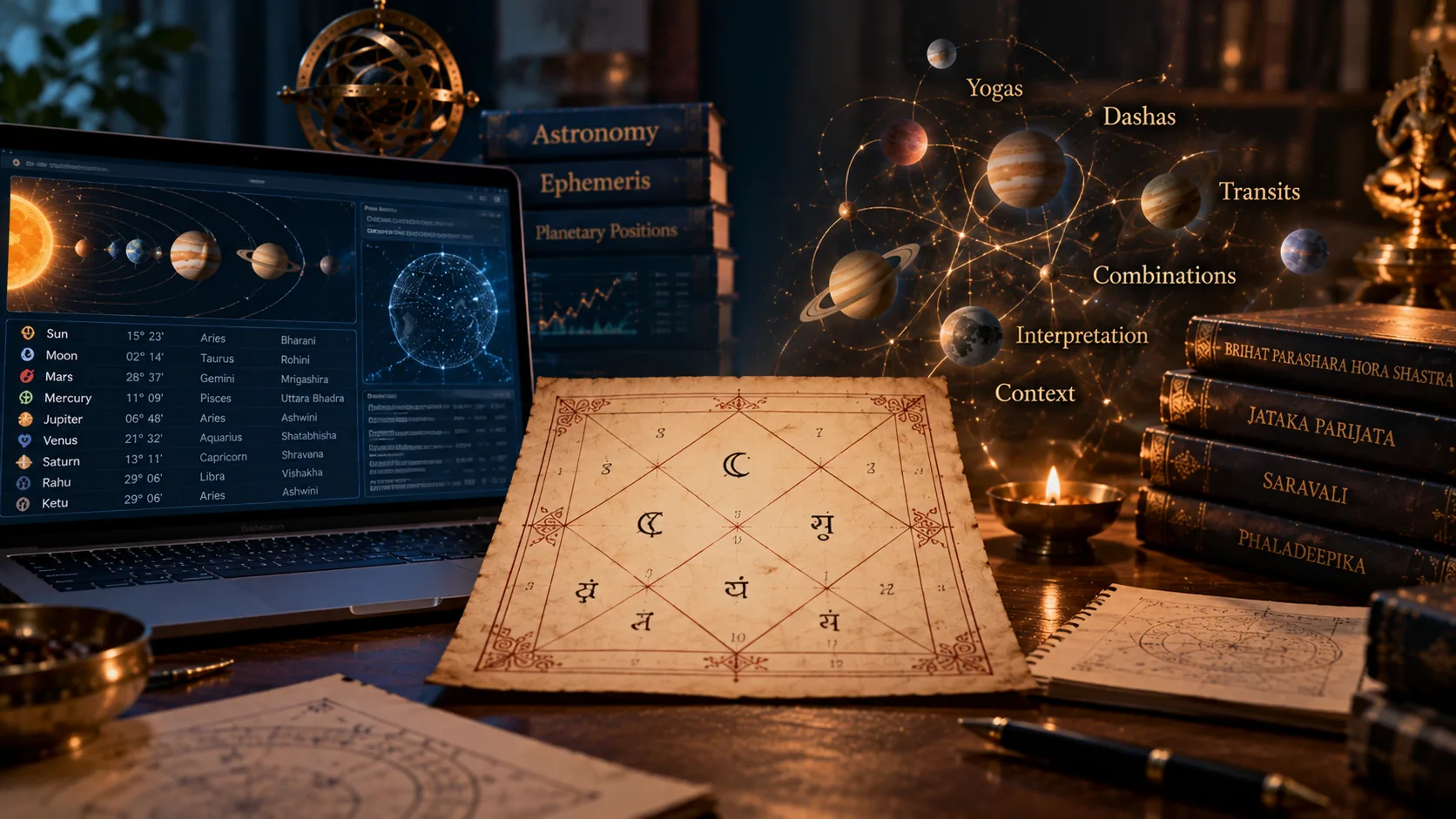
The first layer is pure astronomy. Your date, time, and place of birth get fed into an ephemeris calculation engine that plots the exact position of the Sun, Moon, and planets at the moment you were born. This part isn't guesswork — it's the same calculation professional astrologers rely on, just automated and instant. The second layer is language-based interpretation, where the AI reads those planetary positions and explains what they traditionally mean: your Lagna, your Moon sign, which house Saturn occupies, and how strong or weak each planet is considered to be.
This second layer is where ai astrology tools really differ from one another. Some simply plug numbers into fixed templates ("Mars in the 7th house often causes friction in marriage"). Better tools cross-reference several classical rules and try to weigh them against each other before giving you an answer, closer to how an experienced astrologer mentally juggles multiple yogas at once.
How Does AI Read Your Kundli?
When someone asks whether AI can read kundli, they're actually asking two different questions: can it calculate one, and can it interpret one. Calculation is settled science at this point — give any decent app your correct birth time and place, and it will place the planets exactly where a hand-drawn chart would. Interpretation is the harder half.
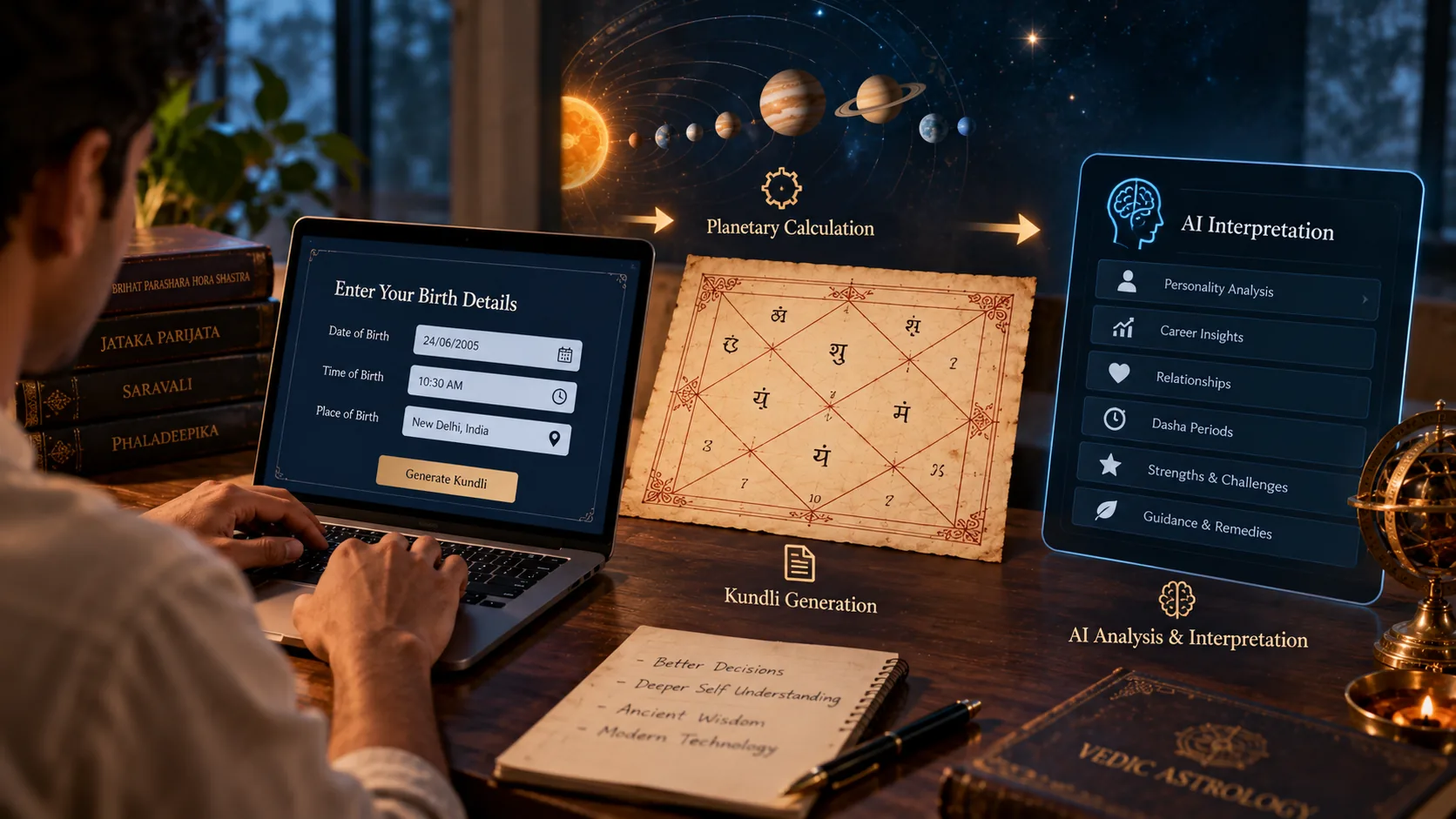
Here's roughly what happens during an ai kundli reading:
- You enter your date of birth, time, and place of birth.
- The app runs an astronomical calculation to fix planetary degrees, nakshatras, and house placements.
- A language model or rule-based engine matches those placements against a large database of classical interpretations, often drawn from Parashari and Jaimini principles.
- The system stitches these fragments into a readable ai kundli prediction, sometimes wrapping it in a friendlier, horoscope-style tone.
The result usually reads with a lot of confidence, but confidence isn't the same thing as correctness. AI can interpret planetary positions for a kundli reasonably well at a basic level — a Sun placed in the 10th house generally points to career ambition, for example. Where it struggles is with combination rules, where one yoga cancels or modifies another, which is exactly where classical Vedic astrology gets genuinely complicated. It also can't pick up on context the way a live conversation can, like your family history, past decisions, or the specific worry that brought you there in the first place.
Can AI Really Match a Trained Astrologer?
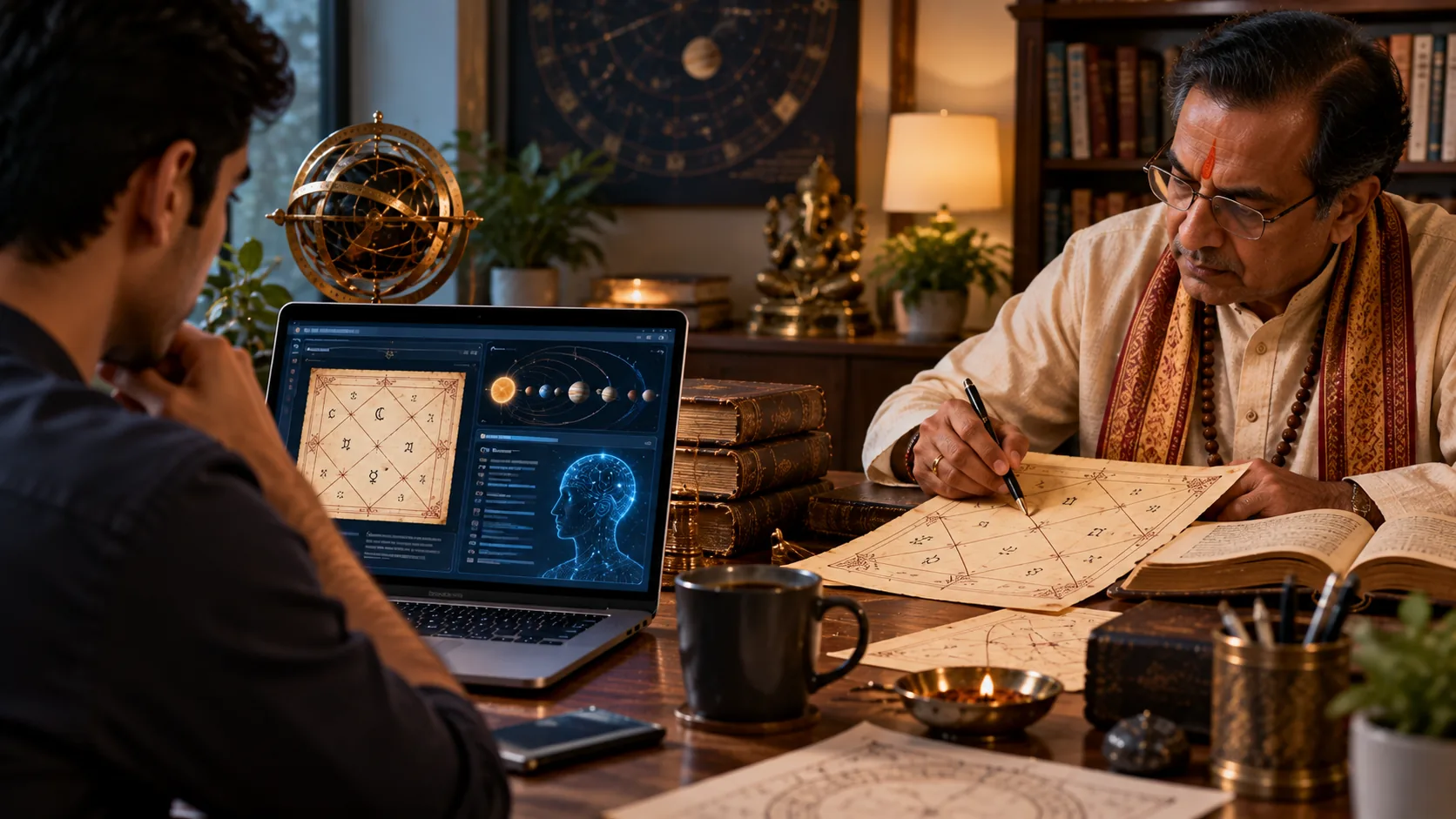
For quick, general-purpose answers, ai kundli analysis holds up fine. It's fast, usually free or cheap, and available at two in the morning if you're anxious before an exam or a big decision. Where it falls short is in the finer areas: timing events through dasha and transit combinations, resolving contradictions between competing yogas, or suggesting remedies backed by specific scriptural reasoning rather than a generic list.
If you want the speed of an app but with more grounding in classical texts, it's worth looking at platforms that pair automated chart generation with references to authentic scripture instead of generic templates. Vedic Shruti, for instance, is one option worth checking out if you'd rather see the shastric reasoning behind a prediction rather than just the headline result — it leans on the original texts instead of a rewritten summary of them.
Where to Get an AI Kundli Reading (Free and Paid Options)
If you're specifically looking for where to get a free AI generated kundli report, most major astrology apps and websites offer a basic version at no cost. A few broad categories to know before you pick one:
- Free basic tools usually give you your Lagna, Moon sign, and a short personality summary. Good for curiosity, often too generic for anything that actually matters.
- Paid detailed reports go further into dasha timelines, yearly predictions, and compatibility matching. Expect to pay once you go past the surface-level summary.
- Hybrid platforms let you download an AI-generated chart and then book a short call with a real astrologer to verify or expand on it — a reasonable middle ground when accuracy matters more than speed.
Whichever route you choose, enter your exact birth time. Even a fifteen-minute error can shift your ascendant and throw off the entire ai astrology kundli reading, since the Lagna is time-sensitive in a way most people don't expect.
What AI Gets Right — and Where It Still Falls Short
It helps to separate the two halves of a kundli reading rather than judging the whole thing as one block.
Where AI does well
- Calculating exact planetary degrees, nakshatras, and house placements without arithmetic errors
- Generating a chart in seconds instead of the twenty minutes a manual calculation used to take
- Explaining basic placements in plain language for someone new to Vedic astrology
- Staying available at any hour, with no waiting list or consultation fee for the basic version
Where AI still struggles
- Weighing two contradictory yogas against each other and deciding which one wins
- Timing events precisely through overlapping dasha and transit cycles
- Picking up on context you haven't typed in, like a recent life event or an unspoken worry
- Suggesting remedies with real scriptural backing instead of a generic, one-size-fits-all list
A useful way to think about it: an ai kundli prediction is closer to a well-organized summary of your chart than a consultation. It tells you what's there. It's less reliable at telling you what it means when three or four factors point in different directions at once, which happens in almost every real birth chart.
How to Choose a Reliable AI Astrology App
- Check whether the app uses sidereal (Vedic) calculations rather than tropical (Western) ones — Indian kundli readings should be sidereal.
- Look for tools that explain their reasoning instead of printing a flat verdict with no context.
- Make sure you can enter your exact birth time down to the minute, not just a rough time of day.
- Cross-check one or two major predictions against a second source before acting on them.
- Be cautious of apps that push expensive "remedies" immediately after your first free reading.
Frequently Asked Questions
Can AI accurately interpret my kundli based on traditional astrology?
AI can interpret individual planetary positions correctly but often misses how classical texts weigh conflicting yogas against each other. Treat an ai kundli reading as a starting point, especially for major life decisions.
What is AI kundli analysis?
AI kundli analysis uses astronomical calculations to build your birth chart, then applies a language model to describe planetary positions, houses, and doshas in plain, readable language.
Which AI astrology apps offer reliable kundli reading services in India?
Reliability varies widely by app. Look for ones that use sidereal calculations, accept minute-level birth time input, and explain their sourcing instead of just sounding confident.
Best apps for AI birth chart reading in India
The strongest apps combine accurate planetary calculation with clear explanations of house and sign placements, and ideally offer a way to consult a human astrologer for confirmation.
Are there any popular AI platforms that provide detailed kundli analysis?
Yes. Several platforms generate detailed, multi-page reports covering dasha periods, doshas, and compatibility, though depth and accuracy differ from one platform to the next.
Can AI interpret planetary positions for kundli?
Yes, AI can identify which house and sign each planet occupies and describe the general meaning. Interpreting how several placements interact together still tends to need a trained astrologer's judgment.
Can I get a personalized horoscope from an AI astrology service?
Most AI astrology services generate a horoscope from your exact birth details, offering daily, monthly, or yearly predictions tailored to your chart rather than a generic sun-sign horoscope.
Where to get a free AI generated kundli report?
Most astrology apps and websites offer a free basic kundli covering your Lagna, Moon sign, and a short summary. Detailed dasha and compatibility reports are usually paid.
The Bottom Line
AI has genuinely changed how quickly you can get a birth chart. For casual curiosity, that's a real convenience. But a kundli was never meant to be a checklist — it's a framework that experienced astrologers still debate over, planet by planet. Use ai astrology tools for a fast, judgment-free first read, and lean on a trained eye, or a scripture-based resource like Vedic Shruti, when the decision in front of you actually matters.