What Is Ashtakoot Milan? A Complete Guide to Guna Milan for Marriage
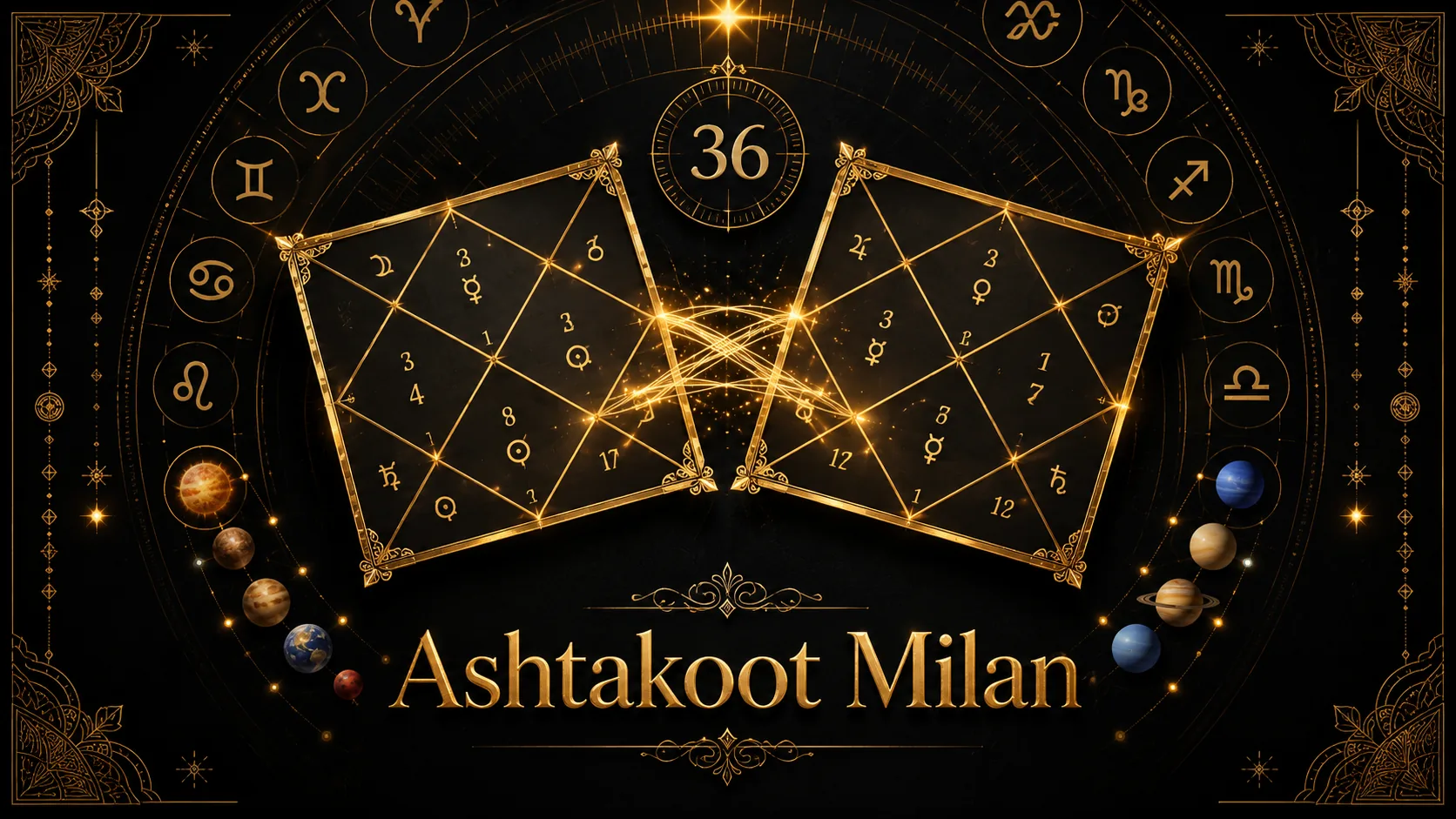
Marriage in Vedic astrology is about much more than love—it is about long-term compatibility, shared values, and harmony between two individuals. Ashtakoot Milan, also known as Guna Milan, is a traditional method of Kundli Matching used to assess marriage compatibility by comparing the birth charts of two people across eight compatibility factors, known as Kootas.
Each Koota contributes a fixed number of points, adding up to a maximum score of 36 Gunas. Generally, a higher score indicates stronger compatibility. However, Ashtakoot Guna Milan is only one part of a complete horoscope analysis and should always be considered alongside other astrological factors.
Why Is Ashtakoot Milan Important?
For centuries, Ashtakoot Milan has been an essential part of Hindu marriage traditions. It helps families and astrologers evaluate whether two individuals are likely to enjoy a harmonious and fulfilling married life.
Unlike general compatibility assessments, Guna Milan provides a structured scoring system based on the Moon Sign (Rashi) and Birth Star (Nakshatra) of both individuals. It evaluates emotional, mental, physical, spiritual, and family-related compatibility, making it one of the most trusted methods in marriage compatibility astrology.
While the score offers valuable insights, experienced astrologers also analyze Mangal Dosha, planetary placements, the Ascendant (Lagna), yogas, and Dasha periods before giving a final recommendation.
What Do "Koota" and "Guna" Mean?
Before understanding the scoring system, it's important to know these two Sanskrit terms:
- Koota: A compatibility category that evaluates one specific aspect of married life.
- Guna: The points awarded for each Koota based on how well the birth charts match.
Together, the eight Kootas contribute to a maximum score of 36 Gunas, forming the overall compatibility score.
What Are the 8 Kootas in Ashtakoot Milan?
Each Koota evaluates a different aspect of compatibility between two individuals.
| Koota | Maximum Points | What It Represents |
|---|---|---|
| Varna | 1 | Spiritual compatibility, values, and ego balance |
| Vashya | 2 | Mutual attraction, influence, and adjustment |
| Tara | 3 | Health, wellbeing, and fortune |
| Yoni | 4 | Physical attraction and sexual compatibility |
| Graha Maitri | 5 | Mental compatibility, friendship, and emotional understanding |
| Gana | 6 | Nature, temperament, and behavioral compatibility |
| Bhakoot | 7 | Love, family harmony, and financial prosperity |
| Nadi | 8 | Health, genetic compatibility, and future progeny |
| Total | 36 | Overall Guna Milan Score |
Among these eight Kootas, Nadi and Bhakoot carry the highest weight and are often considered especially important for long-term marital harmony.
How Is the 36-Guna Score Calculated?
The Ashtakoot Milan system compares the Moon Sign (Rashi) and Nakshatra of both partners.
Each Koota receives a score based on compatibility, and the points are added together to calculate the final Guna Milan score out of 36.
For example:
- Varna: 1/1
- Vashya: 2/2
- Tara: 2/3
- Yoni: 4/4
- Graha Maitri: 5/5
- Gana: 5/6
- Bhakoot: 6/7
- Nadi: 8/8
Total Score = 33/36, which is generally considered an excellent compatibility score.
How to Interpret the Ashtakoot Milan Score
The total score provides a general indication of marriage compatibility.
| Score | Meaning |
|---|---|
| Below 18 | Usually considered unsuitable without detailed horoscope analysis |
| 18–23 | Acceptable compatibility for marriage |
| 24–32 | Good compatibility with strong relationship potential |
| 33–36 | Excellent compatibility |
Although higher scores are generally viewed positively, no score alone can guarantee the success or failure of a marriage. A complete horoscope analysis is always recommended.
Is a Low Guna Score Always Bad?
No.
One of the biggest myths surrounding Ashtakoot Guna Milan is that a score below 18 automatically means the marriage should not happen.
In reality, many couples with moderate or lower scores enjoy successful marriages because other planetary combinations support the relationship. Likewise, a couple with a high Guna score may still experience challenges if there are significant doshas or unfavorable planetary placements.
This is why professional astrologers recommend full Kundli Matching instead of relying solely on the numerical score.
What Is Nadi Dosha?
Nadi Dosha occurs when both individuals belong to the same Nadi category during Ashtakoot Milan.
Since Nadi contributes the highest 8 points, it is considered one of the most influential compatibility factors in Vedic astrology.
Traditionally, Nadi Dosha is associated with:
- Health compatibility
- Family wellbeing
- Future children
- Long-term marital harmony
However, classical astrology also describes several cancellation rules and exceptions. Therefore, Nadi Dosha should always be interpreted in the context of the complete birth chart rather than in isolation.
Ashtakoot Milan vs. Full Kundli Matching
Although these terms are often used interchangeably, they are not the same.
| Ashtakoot Milan | Full Kundli Matching |
|---|---|
| Evaluates 8 compatibility factors | Examines the complete birth charts |
| Based on Moon Sign and Nakshatra | Considers all planets, houses, yogas, and doshas |
| Gives a score out of 36 | Provides a detailed relationship analysis |
| Acts as the first compatibility check | Offers a complete marriage assessment |
Think of Ashtakoot Milan as the first step, while complete Kundli Matching provides the full picture before marriage.
Common Myths About Ashtakoot Milan
A higher score guarantees a successful marriage.
No. A happy marriage depends on communication, trust, shared values, mutual respect, and many astrological factors beyond the Guna score.
A low score means the marriage will fail.
Not necessarily. Many lower-scoring matches have favorable planetary combinations that outweigh the numerical score.
Only Guna Milan matters.
Ashtakoot Milan is important, but astrologers also analyze Mangal Dosha, Navamsa Chart, planetary strengths, yogas, and Dasha periods before making a recommendation.
Frequently Asked Questions (FAQs)
What is a good Ashtakoot Milan score?
A score of 18 out of 36 is generally considered the minimum acceptable score. Scores between 24 and 32 are regarded as good, while 33 or above is considered excellent.
Can a couple marry with a low Guna score?
Yes. A lower score does not automatically rule out marriage. A detailed horoscope analysis may reveal strong compatibility despite a lower Guna score.
Is Ashtakoot Milan the same as Kundli Matching?
No. Ashtakoot Milan is only one method within the broader Kundli Matching process. Complete matching also considers planetary positions, doshas, yogas, and Dasha periods.
What is Nadi Dosha in Ashtakoot Milan?
Nadi Dosha occurs when both partners belong to the same Nadi category. Since it carries the highest weight in the scoring system, it is traditionally linked to health and progeny, although several exceptions may apply.
Final Thoughts
Ashtakoot Milan remains one of the most trusted methods of marriage compatibility astrology in Vedic traditions. By evaluating eight important compatibility factors and assigning a score out of 36 Gunas, it provides a structured foundation for understanding the strengths and challenges of a relationship.
However, no numerical score can fully determine the success of a marriage. A complete Kundli Matching—including planetary positions, doshas, yogas, and Dasha analysis—offers a much more accurate and holistic understanding of relationship compatibility.
If you're considering marriage, think of Ashtakoot Guna Milan as an important first step rather than the final verdict.
Disclaimer: Vedic Shruti provides astrology-based insights for reflection and entertainment purposes only. The information shared should not be considered medical, legal, financial, or professional advice.