
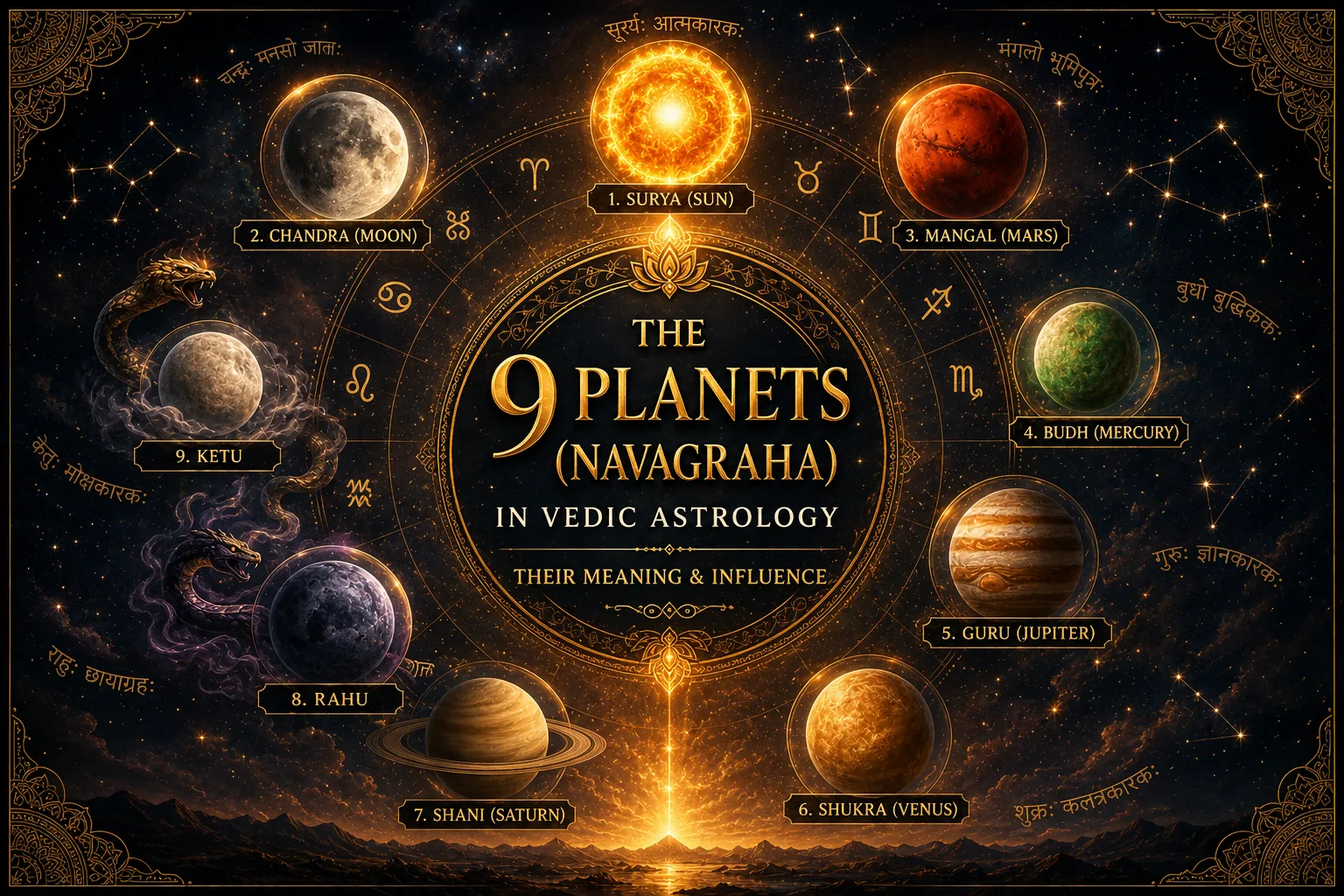
Understanding Navagraha: The 9 Planets in Vedic Astrology
In Vedic astrology, the concept of Navagraha, or the nine planets, plays a pivotal role in shaping an individual's destiny. Each planet has a unique significance and influence on various aspects of life. This article delves into the Navagraha, their meanings, and how they affect your birth chart.
The Navagraha Overview
The Navagraha consists of:
- Surya (Sun)
- Chandra (Moon)
- Mangala (Mars)
- Budha (Mercury)
- Brihaspati (Jupiter)
- Shukra (Venus)
- Shani (Saturn)
- Rahu (North Node of the Moon)
- Ketu (South Node of the Moon)
Each planet symbolizes distinct qualities and traits that influence your personality, relationships, and life events.
The Planets and Their Influence
1. Surya (Sun)
- Significance: Represents the self, vitality, and authority.
- Influence: It governs your ego, willpower, and self-expression.
- Practical Tip: To enhance the positive influence of the Sun, practice gratitude and spend time outdoors in sunlight.
2. Chandra (Moon)
- Significance: Represents emotions, instincts, and the mind.
- Influence: It governs your emotional well-being and intuition.
- Practical Tip: Meditate regularly to balance your emotions and strengthen your intuition.
3. Mangala (Mars)
- Significance: Symbolizes energy, courage, and action.
- Influence: It influences your drive, ambition, and assertiveness.
- Practical Tip: Engage in physical activities or sports to channel Mars' energy positively.
4. Budha (Mercury)
- Significance: Represents intellect, communication, and commerce.
- Influence: It governs analytical thinking, speech, and learning abilities.
- Practical Tip: Enhance your communication skills through reading and writing.
5. Brihaspati (Jupiter)
- Significance: Represents wisdom, spirituality, and growth.
- Influence: It influences higher learning, philosophy, and abundance.
- Practical Tip: Pursue educational opportunities and practice generosity to attract Jupiter’s blessings.
6. Shukra (Venus)
- Significance: Symbolizes love, beauty, and relationships.
- Influence: It governs romance, aesthetics, and harmony in relationships.
- Practical Tip: Cultivate love and appreciation in your relationships through acts of kindness and understanding.
7. Shani (Saturn)
- Significance: Represents discipline, responsibility, and time.
- Influence: It influences hard work, perseverance, and karmic lessons.
- Practical Tip: Embrace challenges as opportunities for growth and practice self-discipline.
8. Rahu (North Node of the Moon)
- Significance: Represents desires, ambitions, and illusions.
- Influence: It governs worldly pursuits and unconventional paths.
- Practical Tip: Stay grounded and avoid getting caught up in materialistic pursuits. Meditation can help balance Rahu's influence.
9. Ketu (South Node of the Moon)
- Significance: Represents spirituality, detachment, and liberation.
- Influence: It influences past life karmas and spiritual growth.
- Practical Tip: Engage in spiritual practices such as yoga and meditation to harness Ketu's positive attributes.
Understanding Your Birth Chart
The influence of the Navagraha is reflected in your birth chart, also known as the Janam Kundali. This chart is a snapshot of the sky at the exact moment of your birth and serves as a roadmap for your life's journey.
Key Components of a Birth Chart
- Houses: There are 12 houses in a birth chart, each representing different aspects of life (e.g., career, relationships, health).
- Signs: The zodiac signs where the planets are placed provide additional insights into their influence.
- Aspects: The relationships between planets (e.g., conjunctions, trines) illustrate how they interact and affect one another.
Interpreting Your Birth Chart
- Planetary Positions: Analyze the position of each Navagraha in your birth chart. Their placement in specific houses and signs can reveal strengths and challenges.
- Dasha System: This system outlines the planetary periods that govern different phases of your life. Understanding your current Dasha can provide insights into your present circumstances and future potential.
Practical Applications of Navagraha in Daily Life
Understanding the Navagraha can significantly impact your daily life and decision-making:
- Remedies: Implement specific remedies like gemstone wearing, chanting mantras, or performing rituals associated with each planet to mitigate negative influences.
- Timing: Use planetary transits to your advantage by planning significant events (e.g., marriage, starting a business) during auspicious times.
- Self-Awareness: Increase self-awareness by reflecting on the qualities and influences of each planet in your life.
Conclusion
The Navagraha are powerful entities in Vedic astrology, each with its unique significance and influence. By understanding these nine planets, you can gain insights into your personality, relationships, and life events. Utilizing this knowledge can help you navigate your life's challenges and enhance your strengths.
FAQ
Q: How can I find out the position of the Navagraha in my birth chart?
A: You can generate your birth chart online using your date, time, and place of birth. Several astrology websites offer free birth chart calculators.
Q: Are there specific remedies for each planet?
A: Yes, each Navagraha has associated remedies such as wearing gemstones, chanting mantras, or performing rituals. Consulting with an experienced astrologer can help identify the best remedies for you.
Q: How often do planetary influences change?
A: The influence of planets changes based on their transits and Dasha periods, which can vary from days to years. Regularly checking your birth chart can help you stay informed about these changes.