
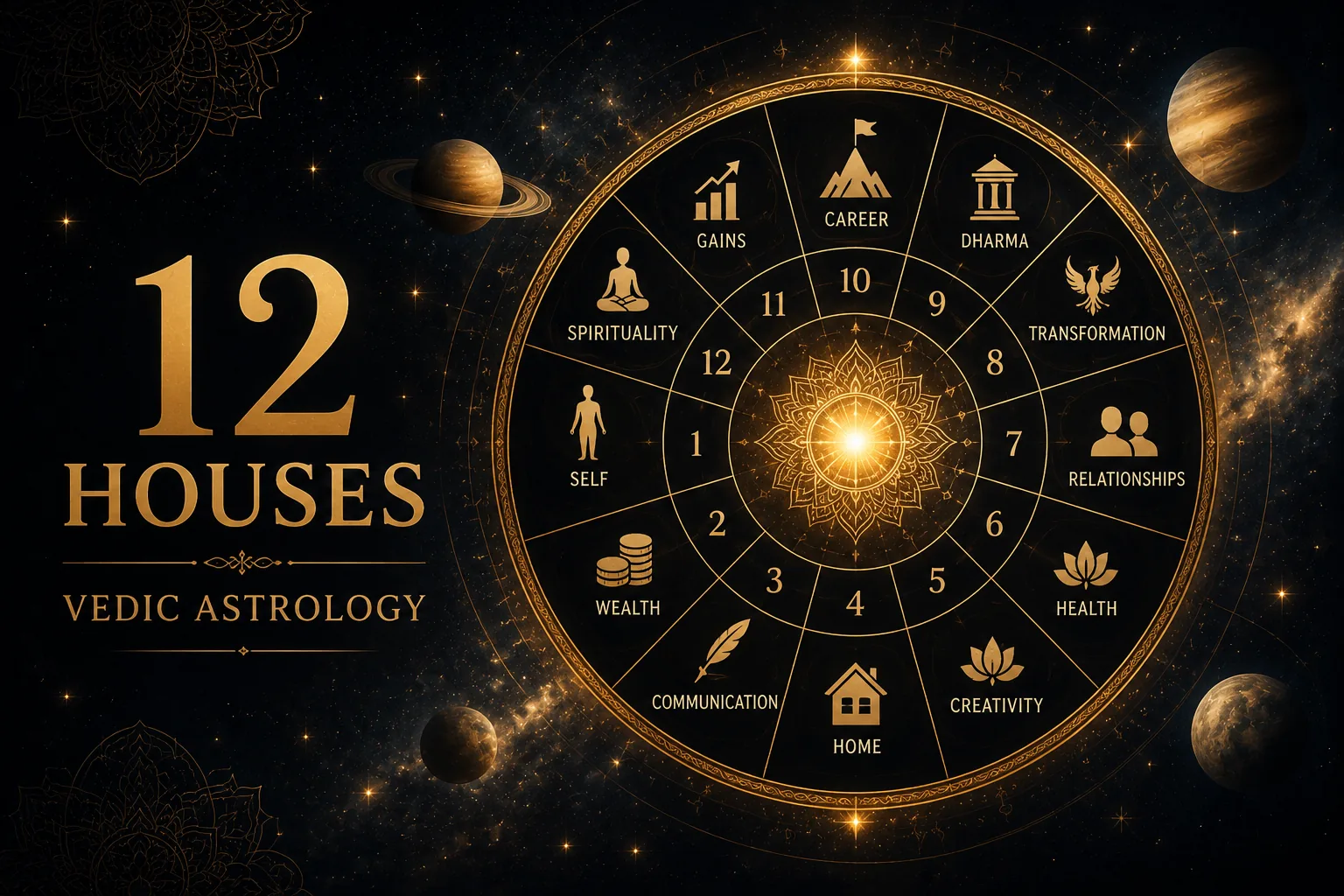
Understanding the 12 Houses in Vedic Astrology
In Vedic astrology, the birth chart, also known as the Janam Kundali, is a blueprint of an individual's life. At the core of this celestial map are the 12 houses, each representing different facets of our existence. Understanding the significance of these houses can provide valuable insights into personal strengths, challenges, and life’s journey.
The Significance of the Houses
Each house in Vedic astrology is associated with specific life themes and experiences. The placement of planets within these houses at the time of your birth influences your personality, relationships, career, and much more. Here’s a closer look at what each of the 12 houses reveals about your life:
1. The First House (Lagna or Ascendant)
- Themes: Self, identity, physical appearance, beginnings.
- Meaning: The first house is the most personal house in your birth chart. It represents your physical body, demeanor, and how you present yourself to the world. A strong Lagna can indicate confidence and a robust personality.
2. The Second House
- Themes: Wealth, possessions, family, speech.
- Meaning: This house governs your financial resources and material possessions. It also reflects your values and how you communicate. A well-placed second house can indicate financial stability and strong family ties.
3. The Third House
- Themes: Communication, siblings, courage, short trips.
- Meaning: The third house is about your immediate environment, communication style, and relationships with siblings. It highlights your ability to learn, express yourself, and take initiative.
4. The Fourth House
- Themes: Home, mother, emotional security, property.
- Meaning: This house represents your home life, emotional foundation, and relationship with your mother. It can indicate your comfort level and sense of belonging in your domestic environment.
5. The Fifth House
- Themes: Creativity, children, romance, education.
- Meaning: The fifth house is associated with creativity, self-expression, and the joys of life. It reflects our romantic endeavors, hobbies, and relationships with children.
6. The Sixth House
- Themes: Health, service, enemies, daily routines.
- Meaning: This house deals with health, work, and service. It highlights challenges, especially in terms of health issues or adversarial relationships. A well-aspected sixth house can indicate a strong work ethic and a focus on wellness.
7. The Seventh House
- Themes: Partnerships, marriage, contracts, public relations.
- Meaning: The seventh house represents all forms of partnerships, particularly marriage. It reflects your approach to relationships and how you handle commitments. A strong seventh house can signify harmonious partnerships.
8. The Eighth House
- Themes: Transformation, sexuality, inheritance, mysteries.
- Meaning: This house is linked to transformation, shared resources, and deep psychological issues. It often reveals our approach to intimacy and how we deal with loss and change.
9. The Ninth House
- Themes: Philosophy, religion, long-distance travel, higher education.
- Meaning: The ninth house represents your beliefs, higher learning, and adventure. It indicates how you seek truth and wisdom and often points to your relationship with spirituality and ethics.
10. The Tenth House
- Themes: Career, social status, authority, reputation.
- Meaning: This house is associated with your career and public image. It often reflects your ambitions, how you are perceived in society, and your professional achievements.
11. The Eleventh House
- Themes: Friendships, groups, aspirations, gains.
- Meaning: The eleventh house governs your social networks, friendships, and collective goals. It reveals how you connect with others and your hopes for the future.
12. The Twelfth House
- Themes: Isolation, spirituality, subconscious, endings.
- Meaning: This house is linked to the subconscious mind, spirituality, and isolation. It often points toward hidden strengths and weaknesses, as well as your connection to the spiritual realm.
Practical Application of House Meanings
Understanding the meanings of the 12 houses can help you interpret your Vedic horoscope. Here are some actionable steps to harness this knowledge:
- Self-Reflection: Examine the planets in each house and their aspects to gain insights into your strengths and weaknesses.
- Goal Setting: Use the themes of the houses to set personal goals. For example, if your fifth house is strong, focus on creative pursuits or family planning.
- Relationship Analysis: Look at the seventh and eleventh houses to understand your relationship dynamics and social connections.
- Career Planning: Analyze the tenth house to assess your career path and how to enhance your professional life.
Conclusion
The 12 houses in Vedic astrology provide a comprehensive framework for understanding various aspects of life. Each house holds unique meanings and insights that can guide you through personal growth and life decisions. By studying your birth chart and the placements of planets within these houses, you can gain a deeper understanding of your life's journey and the challenges you may face.
FAQ
Q: How do I find out which planets are in my houses?
A: You can generate your Vedic horoscope using your birth date, time, and place on various astrology websites or consult a qualified astrologer for a detailed analysis.
Q: Can the houses change over time?
A: The positions of planets can change due to their movement, but the houses in your birth chart remain fixed. However, transits can influence how these houses manifest in your life over time.
Q: What if I have no planets in a particular house?
A: A house without planets can still be significant, as its cusp (the beginning of the house) represents important life themes. Additionally, the ruling planet of that house can provide clues about its influence in your life.