
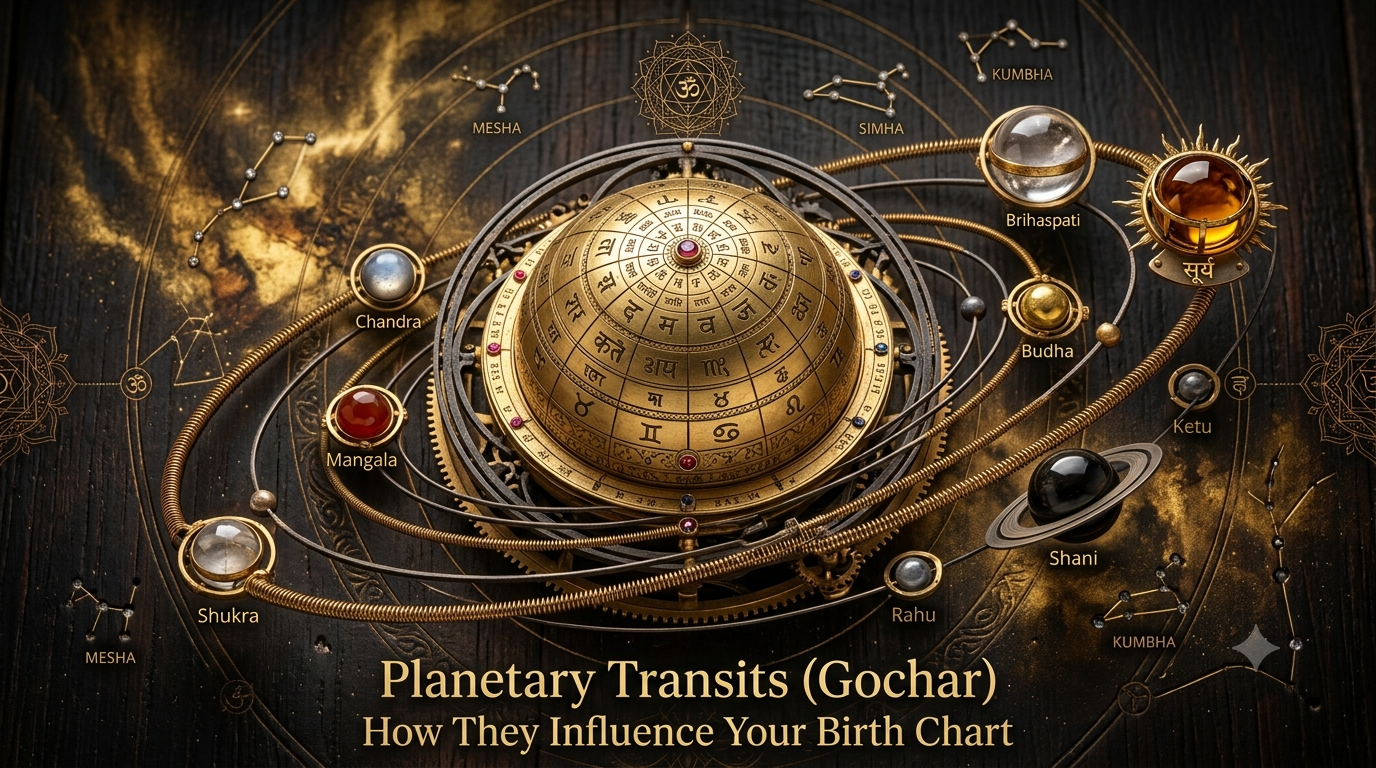
Understanding Planetary Transits in Vedic Astrology
In Vedic astrology, the concept of planetary transits, or Gochar, plays a crucial role in interpreting the dynamics of an individual's birth chart. These transits can significantly influence your life events, emotions, and overall destiny. Understanding how planetary movements affect your birth chart is essential for making informed decisions and navigating life’s challenges effectively.
What are Planetary Transits?
Planetary transits refer to the movement of planets through the zodiac signs and their impact on your natal planets as per your birth chart. Each planet moves at its unique pace, creating distinct energies that interact with your horoscope.
Key Points about Planetary Transits:
- Temporary Influence: Unlike the placement of planets in your natal chart, transits are temporary and can vary in duration.
- Cyclic Nature: Planetary cycles are predictable, allowing astrologers to forecast future influences based on past events.
- Personalized Effects: The impact of a transit varies based on the individual’s unique birth chart.
The Role of Gochar in Vedic Astrology
In Vedic astrology, Gochar specifically refers to the current movement of planets and their effects on the natal chart. This concept helps astrologers analyze how different planetary positions will influence an individual’s life.
Important Aspects of Gochar:
- Transiting Planets: Each planet has a distinct significance. For instance:
- Jupiter: Represents growth, prosperity, and wisdom.
- Saturn: Associated with discipline, restrictions, and hard work.
- Mars: Symbolizes energy, aggression, and action.
- Houses in Your Chart: The houses affected by the transiting planets can reveal specific life areas impacted during that transit.
How Planetary Movements Affect Your Birth Chart
Understanding how the movements of planets interact with your birth chart can provide valuable insights. The transiting planets create aspects (angles) to your natal planets, leading to various outcomes.
Types of Aspects:
- Conjunction: When a transiting planet aligns with a natal planet. This can amplify the energy of that planet.
- Square: When planets are 90 degrees apart, leading to tension and challenges.
- Trine: A 120-degree angle that signifies harmony and ease.
- Opposition: When planets are 180 degrees apart, often resulting in a push-pull dynamic.
Example of Planetary Influence:
- Jupiter Transiting the 7th House: This period may bring opportunities for relationships, partnerships, and marriage.
- Saturn in the 4th House: Could indicate challenges related to home and family, urging you to focus on responsibilities.
Practical Steps to Analyze Transits
To effectively analyze how planetary transits influence your birth chart, you can follow these practical steps:
- Know Your Birth Chart: Familiarize yourself with your natal chart, including the positions of the planets and the ruling houses.
- Track Current Transits: Utilize online resources or astrology software to observe current planetary positions.
- Identify Key Transits: Pay attention to the transits of major planets like Jupiter, Saturn, and Rahu/Ketu, as they tend to have more profound effects.
- Reflect on Timing: Note the timing of significant life events in relation to past transits to understand patterns.
- Consult an Astrologer: If you're unsure how to interpret transits, consulting a knowledgeable Vedic astrologer can provide clarity and guidance.
The Importance of Timing
In Vedic astrology, timing is crucial. The effects of transits can vary based on:
- Planetary Strength: A strong planet can produce more significant effects than a weak one.
- Dasha Periods: The Dasha system, which details planetary periods in your life, can indicate when transits will have more pronounced effects.
- Personal Readiness: Your emotional and psychological state can influence how you respond to transitory energies.
Dasha and Transit Interaction
- Jupiter Dasha with Saturn Transit in the 10th House: May indicate a time of professional growth but could also introduce challenges that require hard work.
Conclusion
Understanding planetary transits in the context of your birth chart is a powerful tool in Vedic astrology. By recognizing how these transient energies interact with your natal planets, you can better prepare for opportunities and challenges that lie ahead. Regularly monitoring transits can empower you to make informed choices and align your actions with cosmic rhythms.
FAQ
Q: How often do planetary transits happen?
A: Planetary transits occur continuously, with faster-moving planets changing signs every few weeks, while slower planets like Saturn or Jupiter may take years to transit through a sign.
Q: Can planetary transits predict specific events?
A: While transits can indicate periods of change or opportunity, they do not predict specific events with certainty. They highlight potential energies that may influence your life.
Q: What should I do during challenging transits?
A: During challenging transits, focus on self-reflection, patience, and practical actions. Engaging in spiritual practices like meditation or rituals can also help mitigate negative influences.