Why People With the Same Zodiac Sign Turn Out So Different
Ask any astrologer why two Geminis can be nothing alike, and you'll get some version of the same answer: the sun sign is only the headline. In Vedic astrology, it's the moon, the ascendant, the houses, and a handful of other placements that actually fill in the picture. Two people can share a birthday and still end up with almost nothing in common temperamentally, because everything else in their chart is doing its own thing.
The Birth Chart Is the Real Starting Point
The birth chart, or Janam Kundali, maps exactly where every planet sat in the sky the moment you were born. It's specific to that minute, in that place, which is why even siblings born a few years apart can have wildly different charts.
A few things inside it matter more than people expect. Where the planets fall matters a lot — two people can share a sun sign, but if one has Mars in Aries and the other has Mars in Pisces, they're going to handle conflict in completely different ways. The houses matter too. There are twelve of them, each tied to a slice of life like career, relationships, or health, and where your planets land in those houses shapes how you actually move through those areas. And then there are the aspects — the angles planets form with each other — which can either smooth things out or create friction depending on the combination.
Moon Signs Shape the Inner Life
If the sun sign is your headline, the moon sign is more like the footnotes — it's where your actual emotional wiring lives. Someone with a Cancer moon tends to be soft, protective, easily moved. Someone with a Sagittarius moon, even with the identical sun sign, might come across as restless and allergic to routine. Same sun, completely different inner tempo.
Stress reveals this even more clearly. A Scorpio moon tends to feel things at full volume and doesn't hide it well. An Aquarius moon does the opposite — steps back, gets analytical, treats the crisis like a puzzle instead of a wound. Neither is wrong. They're just wired differently underneath a shared sun sign.
The Ascendant Is the First Thing People Notice
The ascendant is whatever sign was climbing the eastern horizon the instant you were born, and it's basically the version of you that strangers meet first. It colors physical presence, mannerisms, the vibe you give off before anyone's had a real conversation with you.
A Leo ascendant tends to walk into a room and be noticed — confident, a little theatrical, hard to ignore. A Virgo ascendant does the opposite, hanging back, sizing things up, coming across as careful rather than commanding. Put those two ascendants on people with the exact same sun sign, and you'd struggle to guess they share anything astrologically at all.
Nakshatras Add Another Layer
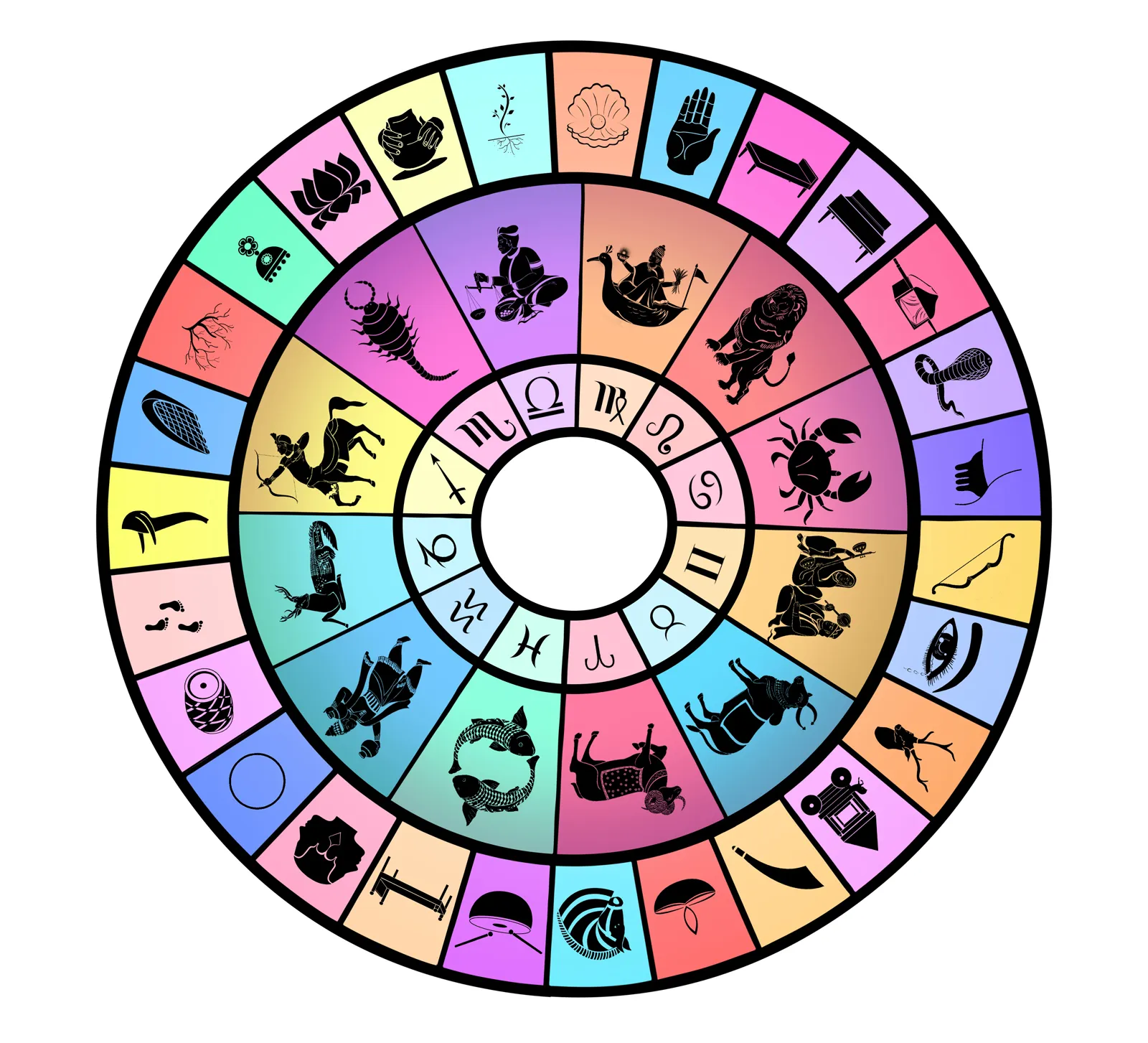
Vedic astrology goes a step further than most Western systems with nakshatras — 27 lunar mansions, each carrying its own flavor of traits. Even two people who match on both sun and moon sign can land in different nakshatras and come out behaviorally distinct.
Someone born under Rohini often leans creative and sensuous. Someone under Ashwini tends to run hot — quick, energetic, a bit impulsive. Nakshatras also shape compatibility in ways that sun-sign matching completely misses, which is part of why serious matchmaking in Vedic tradition goes well beyond "what sign are you."
If You Actually Want to Understand the Differences
Skip the sun-sign-only comparison. Get the full chart looked at — planetary positions, houses, aspects, the works. Check the moon signs side by side; that's usually where the emotional gap becomes obvious. Look at the ascendants, since that's the layer that explains why two people can feel like total opposites in a room even when their charts overlap elsewhere. And if you want to go deeper, the nakshatras are worth digging into, especially for compatibility questions.
None of this is about proving one person's chart is "better." It's just a more honest way of explaining why the sun sign alone never tells the whole story.
A Few Common Questions
Can two people with the same sun sign actually be compatible? Sure — compatibility rides on the moon sign, ascendant, and nakshatra just as much as the sun, sometimes more.
How do I find my moon sign? You need your birth date, time, and location. Most astrology sites and apps will calculate it for you in seconds.
Why does the ascendant get so much weight in Vedic astrology? Because it's the layer everyone else actually sees first — it shapes how you come across before your sun or moon ever gets a chance to.
Does birth time affect personality in astrology? Yes. Even a difference of a few minutes can change the Ascendant and house placements, which may influence personality interpretation in Vedic astrology.